


Plastic pollution continues to harm ecosystems, clog waterways, and threaten wildlife, creating an urgent need for sustainable alternatives. Enter cornstarch packaging—a groundbreaking solution that is transforming the way we approach sustainability. By offering a biodegradable and eco-friendly option, cornstarch packaging paves the way for reducing plastic waste and protecting the planet.
What is Cornstarch Packaging?
Understanding Cornstarch and Its Role in Biodegradable Packaging
Cornstarch, a natural carbohydrate extracted from the endosperm of corn kernels, plays a pivotal role in the development of biodegradable packaging. This plant-based material serves as a sustainable alternative to petroleum-based plastics, offering a solution that breaks down more easily in the environment. Cornstarch packaging is created by processing the starch into a polymer, which can then be molded into various forms, such as containers, bags, and wraps. Unlike traditional plastics, which can take hundreds of years to decompose, cornstarch-based materials degrade much faster, leaving behind minimal environmental impact. This makes cornstarch a crucial ingredient in the effort to reduce plastic pollution and promote eco-friendly practices.
The Concept of Polylactic Acid (PLA) and Its Applications
Polylactic acid (PLA) is a biodegradable polymer derived from renewable resources like cornstarch or sugarcane. Through a process called fermentation, cornstarch is converted into lactic acid, which is then polymerized to create PLA. This versatile material is widely used in the production of sustainable packaging due to its strength, flexibility, and ability to mimic the properties of conventional plastics. PLA is commonly found in items such as food containers, disposable cutlery, and even 3D printing filaments. Its applications extend beyond packaging, as it is also used in medical devices, textiles, and agricultural films.
One of the key advantages of PLA is its ability to break down under industrial composting conditions, turning into water, carbon dioxide, and organic matter within a few months. This makes it an attractive option for businesses and consumers seeking to minimize their environmental impact. However, it’s important to note that PLA requires specific conditions to decompose effectively, such as high temperatures and controlled humidity, which are typically found in commercial composting facilities. Despite this limitation, PLA remains a game-changer in the quest for sustainable materials, offering a practical and eco-friendly alternative to traditional plastics.

How is Cornstarch Packaging Made?
Simplified Steps in the Production Process
Creating cornstarch packaging involves a series of straightforward steps that transform natural resources into biodegradable materials:
-
Extracting Cornstarch: The process begins with harvesting corn and extracting the starch from the kernels. This involves separating the endosperm, which contains the starch, from the rest of the corn. The starch is then refined into a fine powder.
-
Fermenting Starch into Lactic Acid: The extracted cornstarch undergoes fermentation, where microorganisms break it down into lactic acid. This step is crucial, as lactic acid serves as the building block for creating polylactic acid (PLA), the primary material used in cornstarch packaging.
-
Polymerizing Lactic Acid into PLA: The lactic acid is then polymerized, a chemical process that links molecules together to form PLA. This creates a durable, flexible material that can be molded into various shapes and forms, mimicking the properties of traditional plastics.
-
Shaping and Molding: The PLA is processed into packaging products such as containers, bags, and wraps. Manufacturers use techniques like injection molding or extrusion to shape the material into its final form, ensuring it meets the desired specifications for strength and usability.
-
Final Touches and Distribution: Once the packaging is molded, it undergoes quality checks to ensure durability and functionality. The finished products are then distributed to businesses and consumers as an eco-friendly alternative to conventional plastic packaging.
Emphasizing Its Eco-Friendly and Renewable Nature
Cornstarch packaging stands out for its renewable and sustainable origins. Unlike petroleum-based plastics, which rely on finite fossil fuels, cornstarch comes from an abundant and renewable resource—corn. This makes the production process more sustainable and less harmful to the environment. Additionally, cornstarch packaging decomposes much faster than traditional plastics, breaking down into natural components like water and carbon dioxide under composting conditions.
The production process also minimizes environmental impact by reducing greenhouse gas emissions compared to conventional plastic manufacturing. By using plant-based materials, cornstarch packaging supports a circular economy, where resources are reused and waste is minimized. This eco-friendly approach not only addresses the growing plastic pollution crisis but also promotes a shift toward more sustainable consumption and production practices.
Types and Uses of Cornstarch Packaging
Types of Cornstarch Packaging
Cornstarch packaging comes in various forms, each designed to meet specific needs while maintaining its eco-friendly properties. Clamshell containers, often used for takeout meals or fresh produce, provide a sturdy and biodegradable alternative to plastic. Shopping bags made from cornstarch offer a sustainable option for carrying groceries or retail items, as they break down naturally after disposal. Takeaway containers, available in various sizes, are ideal for restaurants and food vendors seeking to minimize their environmental impact. Additionally, cornstarch-based wraps and films serve as alternatives to plastic wraps, providing flexibility and durability for food storage. These diverse options make cornstarch packaging a versatile solution for reducing plastic waste across multiple industries.
Uses of Cornstarch Packaging
Cornstarch packaging finds applications in a wide range of settings, making it a practical choice for both businesses and individuals. Grocery shopping becomes more sustainable with cornstarch shopping bags, which can carry heavy loads while decomposing naturally after use. In the food industry, restaurants and cafes use clamshell containers and takeaway boxes to package meals, ensuring that customers receive their food in eco-friendly packaging. Dining events, such as weddings or corporate gatherings, benefit from cornstarch cutlery and plates, which provide convenience without contributing to plastic pollution.
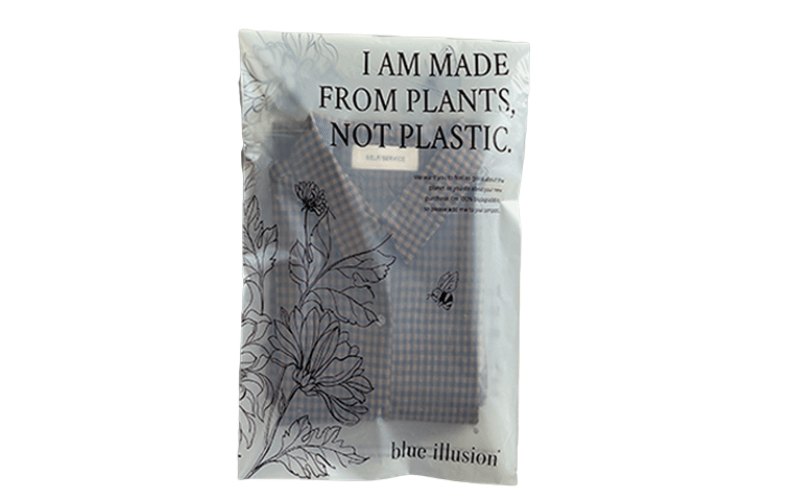
Shipping and logistics also rely on cornstarch-based materials, such as biodegradable packing peanuts and protective wraps, to safeguard products during transit while minimizing waste. Even the fashion industry has embraced cornstarch packaging, using it for apparel bags and product wraps to align with sustainable practices. These applications highlight the versatility of cornstarch packaging, proving that it can meet the demands of various industries while promoting environmental responsibility.

Advantages of Cornstarch Packaging
Renewability and Sustainability
Cornstarch packaging stands out for its renewable nature, as it is derived from corn, a widely available and sustainable resource. Unlike petroleum-based plastics, which rely on finite fossil fuels, cornstarch comes from an annually renewable crop. This makes its production more environmentally friendly and reduces dependence on non-renewable resources. By choosing cornstarch packaging, businesses and consumers support a sustainable cycle that minimizes environmental harm while promoting the use of plant-based materials.
Biodegradability and Compostability
One of the most significant advantages of cornstarch packaging is its ability to break down naturally. Under the right conditions, such as in industrial composting facilities, cornstarch-based materials decompose into water, carbon dioxide, and organic matter within a few months. This rapid biodegradability ensures that cornstarch packaging does not linger in landfills or pollute oceans like traditional plastics. Its compostable nature also allows it to enrich soil when properly disposed of, creating a closed-loop system that benefits the environment.
Non-Toxic and Safe for Use
Cornstarch packaging offers a non-toxic alternative to conventional plastics, making it safe for food storage and handling. Unlike some plastics that leach harmful chemicals, such as BPA or phthalates, cornstarch-based materials do not release toxins into food or the environment. This makes them an excellent choice for food packaging, takeaway containers, and other applications where safety is a priority. Consumers can use cornstarch packaging with confidence, knowing it poses no risk to their health or the planet.
Resistance to Oils, UV, and High Aroma Barrier
Cornstarch packaging provides practical benefits beyond its eco-friendly properties. Its resistance to oils and grease makes it ideal for food packaging, as it prevents leaks and maintains the integrity of the container. This feature ensures that even oily or greasy foods can be stored and transported without compromising the packaging. Additionally, cornstarch-based materials offer UV resistance, protecting the contents from harmful sunlight exposure.
Another notable advantage is its high aroma barrier, which helps preserve the freshness and flavor of packaged food. This property makes cornstarch packaging a reliable choice for storing aromatic foods, such as spices, coffee, or baked goods. By combining functionality with sustainability, cornstarch packaging meets the needs of both consumers and businesses while reducing environmental impact.
Challenges and Limitations
High Production Costs
Producing cornstarch packaging often involves higher costs compared to traditional plastic manufacturing. The reliance on agricultural resources, such as corn, and the complex processes required to convert starch into polylactic acid (PLA) contribute to these expenses. Additionally, fluctuations in crop prices can further increase production costs, making cornstarch packaging less accessible for small businesses or cost-sensitive industries. However, advancements in technology and scaling up production have started to reduce these costs. As demand for sustainable materials grows, economies of scale and innovations in manufacturing are expected to make cornstarch packaging more affordable over time.
Limited Infrastructure for Composting
Cornstarch packaging requires specific conditions, such as high temperatures and controlled humidity, to decompose effectively. These conditions are typically found in industrial composting facilities, which are not widely available in many regions. Without access to such facilities, cornstarch packaging may end up in landfills, where it decomposes more slowly and loses its environmental benefits. To address this issue, governments and organizations are working to expand composting infrastructure and educate consumers about proper disposal methods. Encouraging the development of home composting solutions and improving waste management systems can also help overcome this limitation.
Methane Emissions During Decomposition
While cornstarch packaging decomposes faster than traditional plastics, it can release methane, a potent greenhouse gas, if it breaks down in anaerobic conditions, such as in landfills. Methane emissions contribute to climate change, potentially offsetting some of the environmental benefits of using biodegradable materials. To mitigate this challenge, proper disposal in composting facilities is essential, as these facilities are designed to manage decomposition in a way that minimizes methane production. Additionally, researchers are exploring ways to enhance the biodegradability of cornstarch packaging to reduce its environmental impact further.
Solutions and Ongoing Improvements
The industry continues to address these challenges through innovation and collaboration. Researchers are developing more efficient production methods to lower costs and reduce reliance on agricultural resources. For example, some companies are exploring alternative feedstocks, such as agricultural waste, to produce PLA. Governments and private organizations are investing in composting infrastructure and promoting policies that support the adoption of biodegradable materials.
Education also plays a crucial role in overcoming these limitations. By raising awareness about proper disposal methods and the benefits of cornstarch packaging, consumers can make informed choices that maximize its environmental advantages. As the industry evolves, ongoing improvements in technology, infrastructure, and public awareness will help address these challenges and unlock the full potential of cornstarch packaging as a sustainable alternative.
How to Properly Dispose of Cornstarch Packaging
Composting Cornstarch Packaging
Composting serves as the most effective way to dispose of cornstarch packaging, as it allows the material to break down into natural components like water, carbon dioxide, and organic matter. Industrial composting facilities provide the ideal conditions for decomposition, including high temperatures and controlled humidity. These facilities ensure that cornstarch packaging decomposes within a few months, leaving no harmful residues behind. If you have access to a commercial composting facility, check local guidelines to confirm that they accept cornstarch-based materials.
For home composting, smaller items like cornstarch bags or thin films may break down over time, but the process can take longer due to lower temperatures and less controlled conditions. Shredding the material into smaller pieces can speed up decomposition. However, not all cornstarch packaging is suitable for home composting, so always verify the product’s compostability label before adding it to your compost bin.
Recycling Considerations
Recycling cornstarch packaging is less common, as it differs from traditional plastics and requires specialized facilities. Most recycling programs do not accept biodegradable materials like PLA, as they can contaminate the recycling stream. To avoid this issue, avoid placing cornstarch packaging in standard recycling bins unless your local program explicitly accepts it. Instead, prioritize composting as the primary disposal method.
Tips for Proper Disposal
Consumers can take several steps to ensure they dispose of cornstarch packaging responsibly:
- Check Local Guidelines: Research your area’s composting and recycling programs to understand what options are available for biodegradable materials.
- Separate Waste Properly: Keep cornstarch packaging separate from traditional plastics to prevent contamination in recycling or composting streams.
- Look for Labels: Check the packaging for labels indicating whether it is industrially compostable, home compostable, or recyclable.
- Use Composting Facilities: Whenever possible, take cornstarch packaging to an industrial composting facility to ensure proper decomposition.
- Educate Others: Share information about proper disposal methods with friends and family to encourage widespread adoption of sustainable practices.
By following these tips, consumers can maximize the environmental benefits of cornstarch packaging while minimizing waste and pollution. Proper disposal ensures that this eco-friendly material fulfills its potential as a sustainable alternative to traditional plastics.
The Future of Cornstarch Packaging
Advancements in Production Technology
The future of cornstarch packaging looks promising as advancements in production technology continue to address current challenges. Researchers are developing more efficient methods to convert cornstarch into polylactic acid (PLA), reducing energy consumption and production costs. Innovations in feedstock sourcing, such as using agricultural byproducts or non-food crops, aim to decrease reliance on corn and mitigate concerns about competing with food supply. These advancements make cornstarch packaging more accessible to businesses and consumers, paving the way for widespread adoption.
Additionally, manufacturers are exploring ways to enhance the durability and functionality of cornstarch-based materials. Improved formulations now offer better resistance to heat, moisture, and mechanical stress, making these materials suitable for a broader range of applications. As technology evolves, cornstarch packaging could replace traditional plastics in industries like food packaging, shipping, and even medical supplies, significantly reducing plastic waste.
Potential to Replace Plastic
Cornstarch packaging holds immense potential to replace conventional plastics, especially in single-use applications. Its biodegradable and compostable properties make it an ideal alternative for items like shopping bags, takeaway containers, and disposable cutlery. Governments and organizations worldwide are implementing policies to phase out single-use plastics, creating a growing demand for sustainable alternatives like cornstarch packaging.
However, replacing plastic entirely requires addressing scalability and infrastructure challenges. Expanding industrial composting facilities and improving waste management systems will play a crucial role in supporting the transition. As production scales up and costs decrease, cornstarch packaging could become a mainstream solution, reducing the environmental impact of plastic pollution.
Role in Creating a Circular Economy
Cornstarch packaging contributes significantly to the development of a circular economy by promoting resource efficiency and waste reduction. Unlike traditional plastics, which follow a linear lifecycle of production, use, and disposal, cornstarch-based materials fit into a regenerative system. After use, these materials decompose into organic matter, enriching the soil and supporting new plant growth. This closed-loop process minimizes waste and reduces the need for virgin resources.
By integrating cornstarch packaging into a circular economy, businesses and consumers can shift toward more sustainable consumption patterns. Governments and industries are increasingly recognizing the importance of circular systems, investing in research and infrastructure to support biodegradable materials. As awareness grows, cornstarch packaging will play a vital role in reducing environmental harm and fostering a more sustainable future.
Q: What is cornstarch packaging made of?
A: Cornstarch packaging is made from corn kernels, which are processed to extract starch. This starch is converted into a biodegradable and compostable material, offering an eco-friendly alternative to traditional plastics. By using renewable resources, cornstarch packaging helps reduce the environmental impact of plastic waste.
Q: What are the environmental benefits of using cornstarch packaging?
A: Cornstarch packaging reduces greenhouse gas emissions and lowers the carbon footprint compared to conventional plastics. It decomposes in compost heaps or landfills, returning nutrients to the soil. This sustainable option supports eco-friendly practices and helps combat plastic pollution.
Q: Is cornstarch packaging biodegradable?
A: Yes, cornstarch packaging is biodegradable. Microorganisms break it down into natural components, making it a compostable choice for those aiming to reduce their environmental impact. Proper disposal ensures it does not contribute to plastic pollution.
Q: What are the disadvantages of cornstarch packaging?
A: Cornstarch packaging has some limitations. It may lack durability in high-moisture environments and can cost more than traditional plastics. These factors may discourage some businesses from adopting it, despite its environmental benefits.
Q: How does cornstarch packaging compare to polystyrene?
A: Cornstarch packaging is far more eco-friendly than polystyrene, which has a significant negative environmental impact. Unlike polystyrene, cornstarch materials are biodegradable and compostable, making them a sustainable choice that reduces plastic waste and greenhouse gas emissions.
Q: Can cornstarch packaging be recycled?
A: Cornstarch packaging is not typically recyclable like conventional plastics. However, it is compostable and can break down in industrial composting facilities or home compost heaps. This makes it a practical alternative for businesses seeking to reduce waste sustainably.
Q: What types of products can use cornstarch packaging?
A: Cornstarch packaging is highly versatile and works well for various products, especially in the food industry. It is commonly used for takeaway containers, packing peanuts, and other biodegradable packaging solutions. Businesses can adopt it to align with sustainable practices.
Q: How does cornstarch packaging contribute to reducing plastic waste?
A: Cornstarch packaging offers a sustainable alternative to traditional plastics, reducing the amount of plastic waste in landfills and the environment. By choosing biodegradable cornstarch products, businesses and consumers can significantly decrease their reliance on non-biodegradable materials, supporting a greener future.
Conclusion
Cornstarch packaging offers numerous benefits, including its renewability, biodegradability, and ability to reduce plastic waste, making it a powerful tool in the fight against environmental pollution. By choosing sustainable alternatives like cornstarch packaging, businesses and consumers can take meaningful steps toward protecting the planet. Start adopting eco-friendly practices today and inspire others to join the movement for a greener future.