


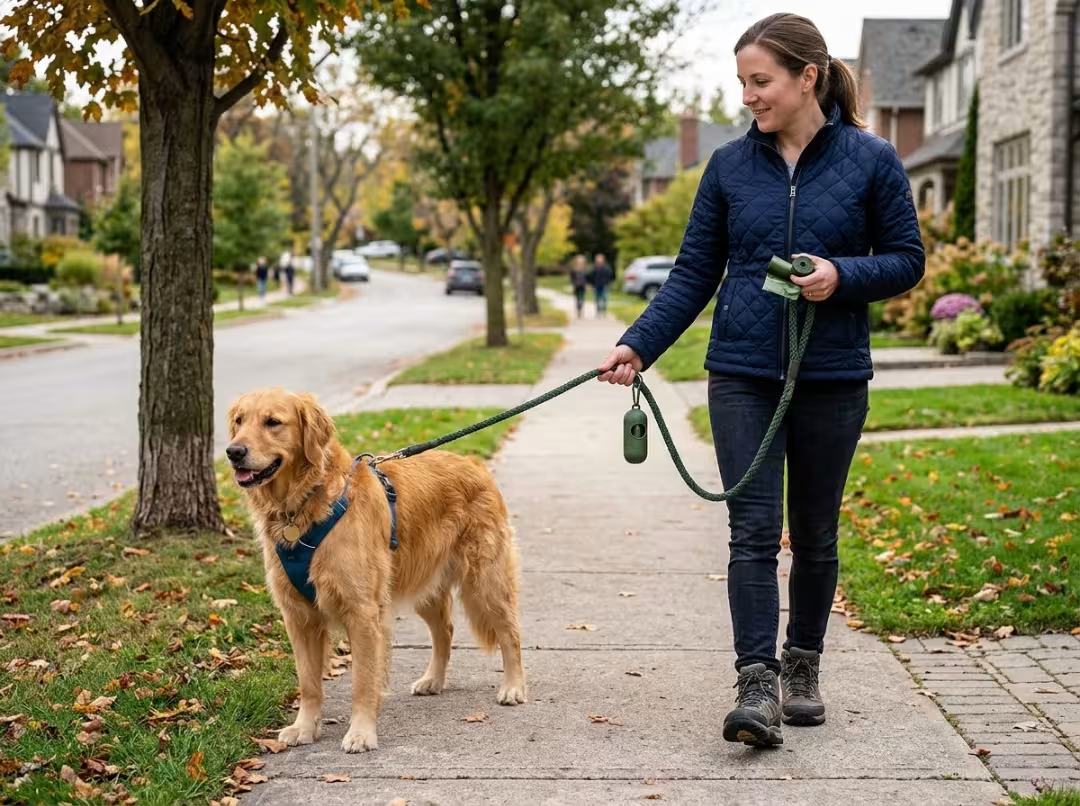
Most dog owners grab the nearest pack of dog poop bags without much thought, assuming they all do the same job. That assumption falls apart the moment you’re standing on a trail holding a torn bag with nowhere to wash your hands. Dog waste bags look identical rolled up in a dispenser, but the differences in material, size, and strength decide whether a bag actually survives the walk.
You’ve probably run into this already. An “extra thick” bag tears anyway, or a “biodegradable” one turns out to sit in a landfill for years, exactly the opposite of what the packaging promised. These aren’t bad-luck accidents. They’re the predictable result of buying based on labels instead of the details that matter.
The right choice comes down to three things: material, size, and strength. Marketing terms like “biodegradable,” “compostable,” and “plant-based” blur together in ways that mislead buyers who just want a bag that won’t fail them. This guide breaks down what to judge a bag on, what those material claims actually mean, how to match a bag to your dog and your walk, and how to test bags yourself before committing to a bulk order.
What Actually Matters When Choosing Dog Poop Bags
Ignore scent, color, and packaging design. Four factors decide whether a dog poop bag performs when you need it to: material, size, strength, and ease of use.
Material determines what happens after disposal — whether the bag breaks down meaningfully or just carries a green-sounding label. Size determines whether it can hold the waste without stretching thin or forcing you to double up. Strength determines whether it survives the trip from pickup to trash can without tearing or leaking through. Ease of use covers the practical stuff: tearing one off the roll, opening it one-handed, and tying it shut without fumbling in the cold.
Every section below applies this framework, starting with the part most labels get away with oversimplifying: what the material claims actually mean.
Materials Explained: What “Biodegradable” and “Compostable” Really Mean
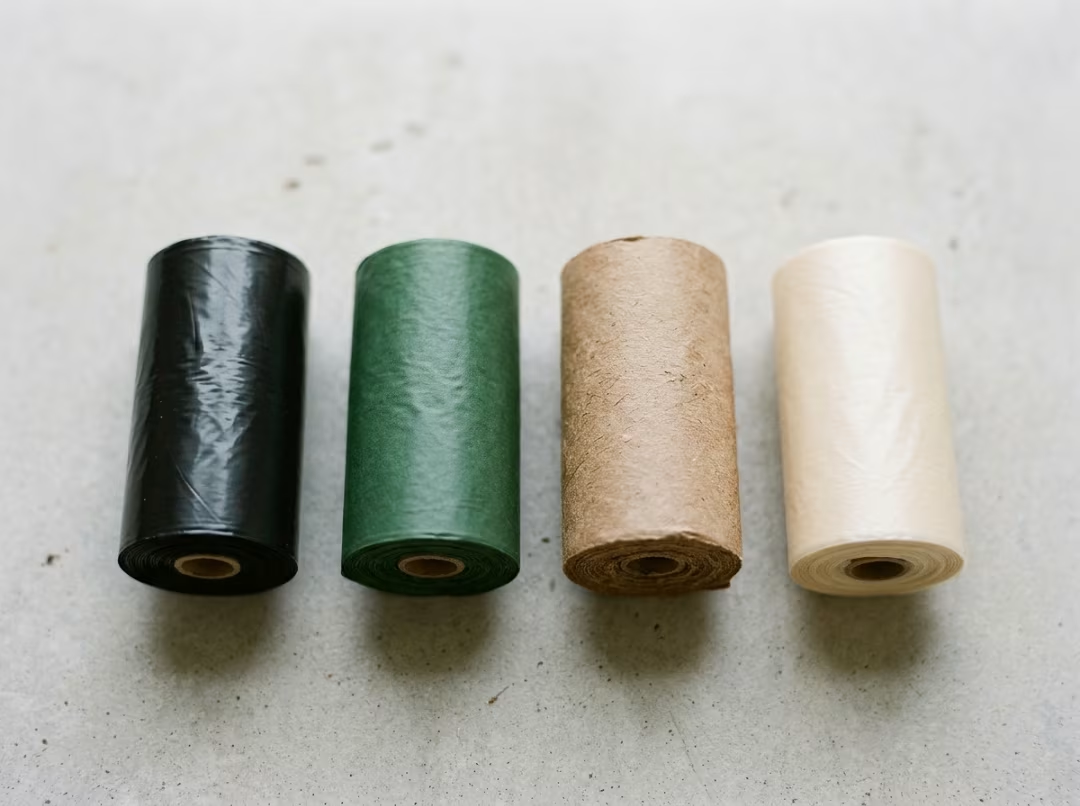
Four materials dominate the dog poop bag market, and each behaves differently once it leaves your hand.
Standard plastic bags are made from polyethylene, the same material as grocery bags. They’re strong, cheap, and widely available. The catch is longevity — they persist in landfills for centuries and break into microplastics along the way. For owners with no composting access, they’re a budget choice with a real environmental cost.
Biodegradable dog poop bags are marketed as the eco upgrade, but the label is doing a lot of unearned work. These are usually still plastic-based, with additives meant to speed up breakdown when exposed to oxygen, light, and microbes. Modern landfills are compacted and sealed to limit exactly those conditions, so a biodegradable bag buried there degrades at nearly the same slow pace as standard plastic.
Compostable dog waste bags go a step further. They’re made from plant-based polymers designed to decompose into non-toxic components. But “compostable” almost always means “industrially compostable” — these bags need the sustained heat and managed conditions of a commercial facility. Tossed in a backyard bin or a regular trash bag, they behave much like the biodegradable kind: slow and often incomplete.
Corn starch dog poop bags (also sold as plant-based or PLA-based) are made from renewable agricultural materials instead of petroleum. They’re usually compostable under the same industrial conditions and tend to feel thinner and more pliable. They’re a genuinely lower-impact option if you have composting infrastructure — but without it, that advantage largely disappears.
|
Material |
What It’s Made Of |
Breakdown Reality |
Best Use Case |
|---|---|---|---|
|
Standard Plastic |
Polyethylene (petroleum-based) |
Does not meaningfully break down; lasts centuries |
Budget-focused, no composting access |
|
Biodegradable |
Plastic with additives |
Needs oxygen and light most landfills don’t provide |
Marginal improvement over standard plastic |
|
Compostable |
Plant-based polymers |
Requires industrial composting facilities |
Households with municipal compost access |
|
Corn Starch / PLA |
Corn starch or similar renewables |
Compostable industrially; slow otherwise |
Composting access + preference for renewable sourcing |
Here’s the practical read: a dog poop bag’s environmental value depends entirely on what happens to it after you throw it away. Without composting infrastructure, “biodegradable” and “compostable” bags often perform no better than standard plastic. You’re paying more for the label, not the outcome.
Size and Format: Matching Bag Volume to Your Dog
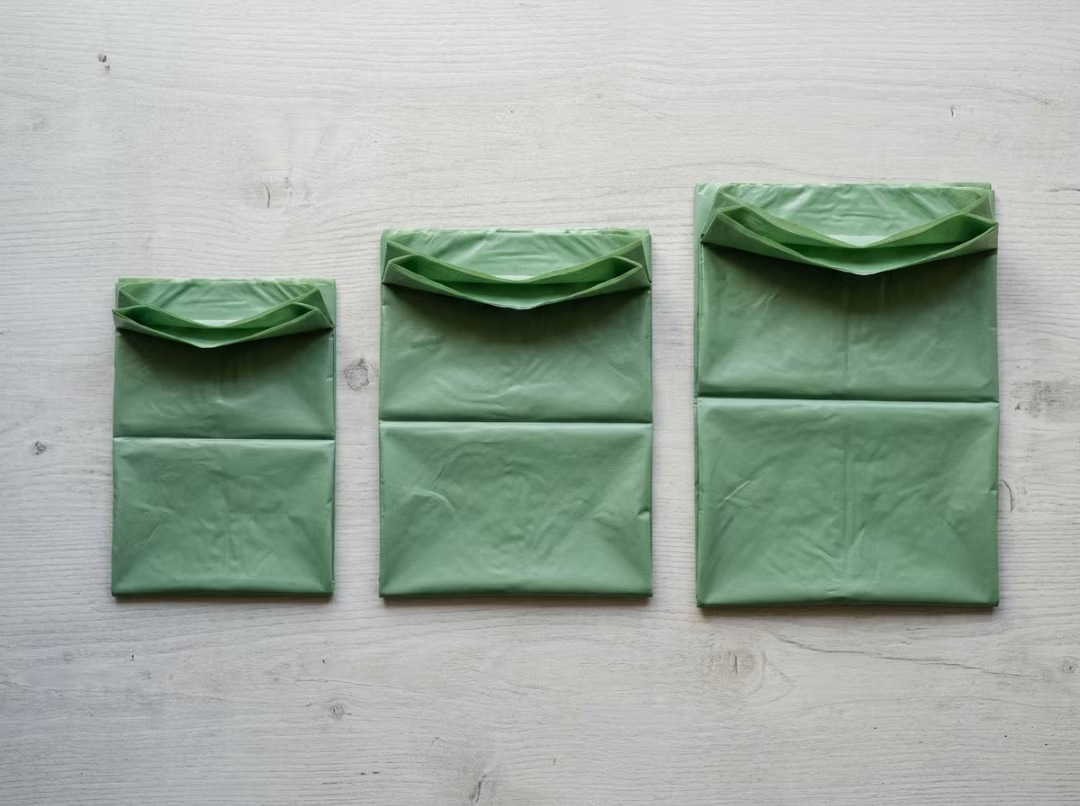
A bag built for a Chihuahua fails fast with a Labrador. Undersized bags stretch thin, split at the seams, or simply can’t hold the volume — and that leaves the mess on your hands.
Sizing is straightforward once you match it to your dog. Small breeds like Dachshunds and Chihuahuas do fine with standard or compact bags. Medium breeds like Beagles and Border Collies need standard-to-large sizing. Large breeds like Golden Retrievers and Great Danes, or anyone walking multiple dogs, should size up to extra-large or jumbo regardless of what the packaging calls “universal.”
Format is a secondary but real consideration. Roll dispensers that clip onto a leash are convenient for daily walks. Flat-pack bags work better stashed in a car or bag for longer outings. Scented bags mask odor in warmer months but add nothing to durability. None of these choices matter, though, if the bag itself can’t survive the walk — which is where most bags actually fail.
Strength and Leak-Proofing: What Fails in the Real World
A leak-proof dog poop bag earns that claim only if three things hold up: thickness, seam construction, and perforation quality. These are the real predictors of durability, not the word “thick” printed on the box.
Thickness is measured in mil (thousandths of an inch). Bags under 1 mil let moisture and odor through almost immediately — you’ll feel warmth and dampness in your hand within seconds. Bags in the 2-mil range or higher hold up far better under weight and movement.
Seam construction is where cheap bags fail first. A poorly sealed seam splits the moment weight settles into the bottom, usually right as you lift the bag off the ground. For a larger dog, look for reinforced or double-sealed seams.
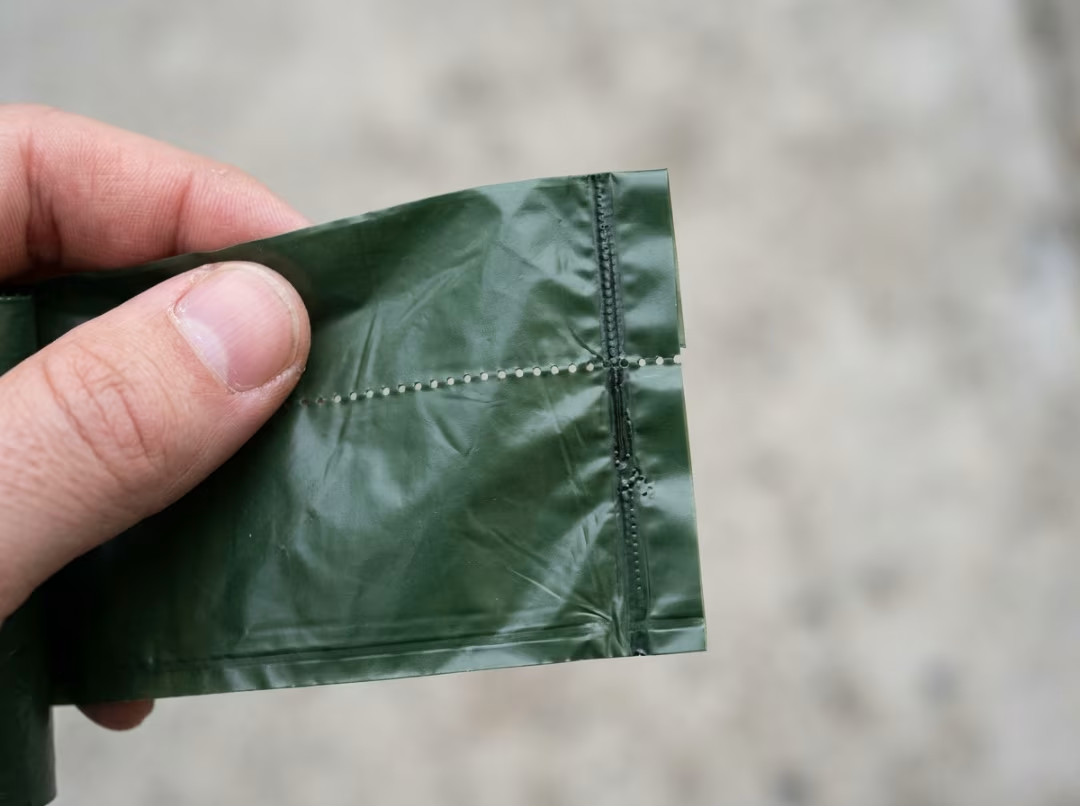
Perforation quality matters more than most buyers realize. The perforated line between bags needs to tear cleanly when you want it to and stay intact when you don’t. Poor perforations either rip the bag itself in half mid-use or refuse to separate from the roll when you’re in a hurry.
The word “leak-proof” means nothing on its own. It only holds up when thickness, seams, and perforations back it up — which is exactly what the home tests below will reveal.
Choosing by Scenario: Matching the Bag to the Walk
The right bag depends on your dog, your walk, and your disposal access. Map your routine to one of these:
Small dog, short neighborhood walks. Cost and convenience outweigh thickness here. A small dog’s waste volume is low enough that even a thinner, budget bag holds up for the short trip to the nearest trash can.
Large dogs or multi-dog households. Prioritize strength and size over price per bag. A torn bag with a large dog’s waste is a far bigger problem, so reinforced seams and higher mil thickness are worth the extra cost.
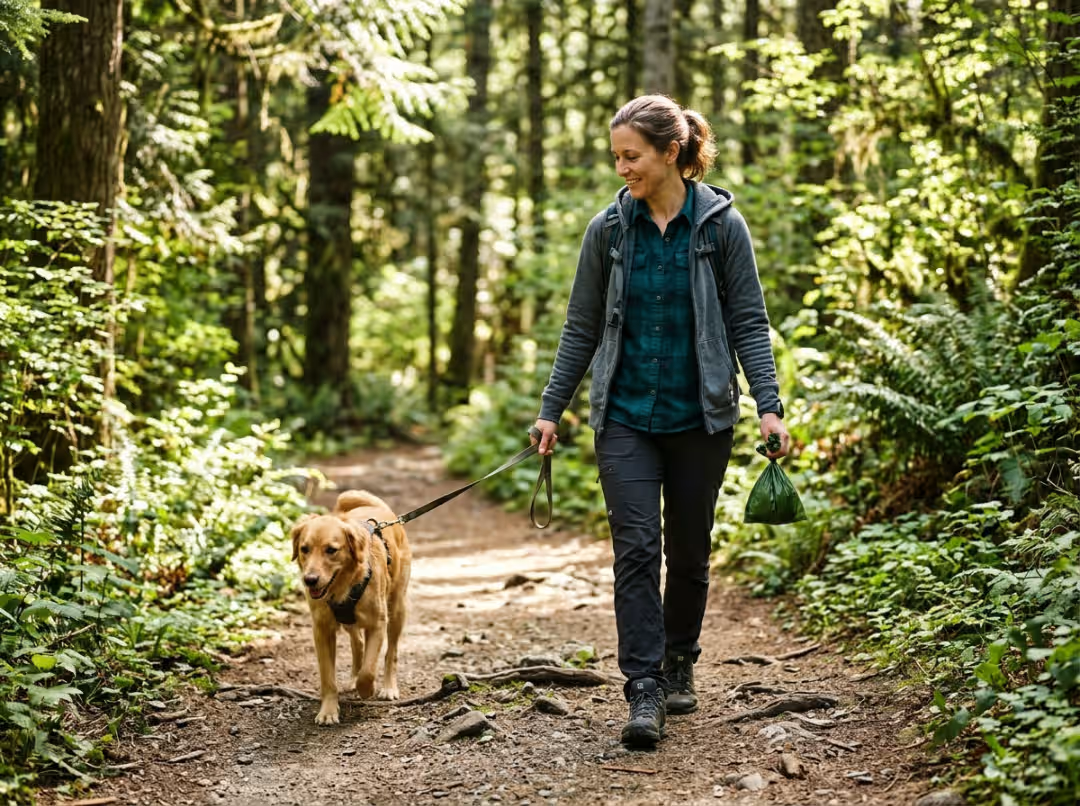
Off-leash adventures or hikes. Leak-proofing and durability matter most because disposal isn’t immediate — you may carry a filled bag for an hour or more before reaching a bin. Thin bags that survive a five-minute neighborhood loop can fail well before you’re back at the trailhead. Reach for premium, odor-containing options.
Municipal compost access vs. none. If your city or waste provider accepts compostable dog waste bags in its organics program, compostable bags are genuinely worth the premium. Without that access, you’re paying more for a label with no real benefit, since the bag ends up in the same landfill either way.
How to Test a Bag Before You Buy in Bulk
Before committing to a case, run three quick tests on a single sample. Each takes under a minute and tells you more than any packaging claim.
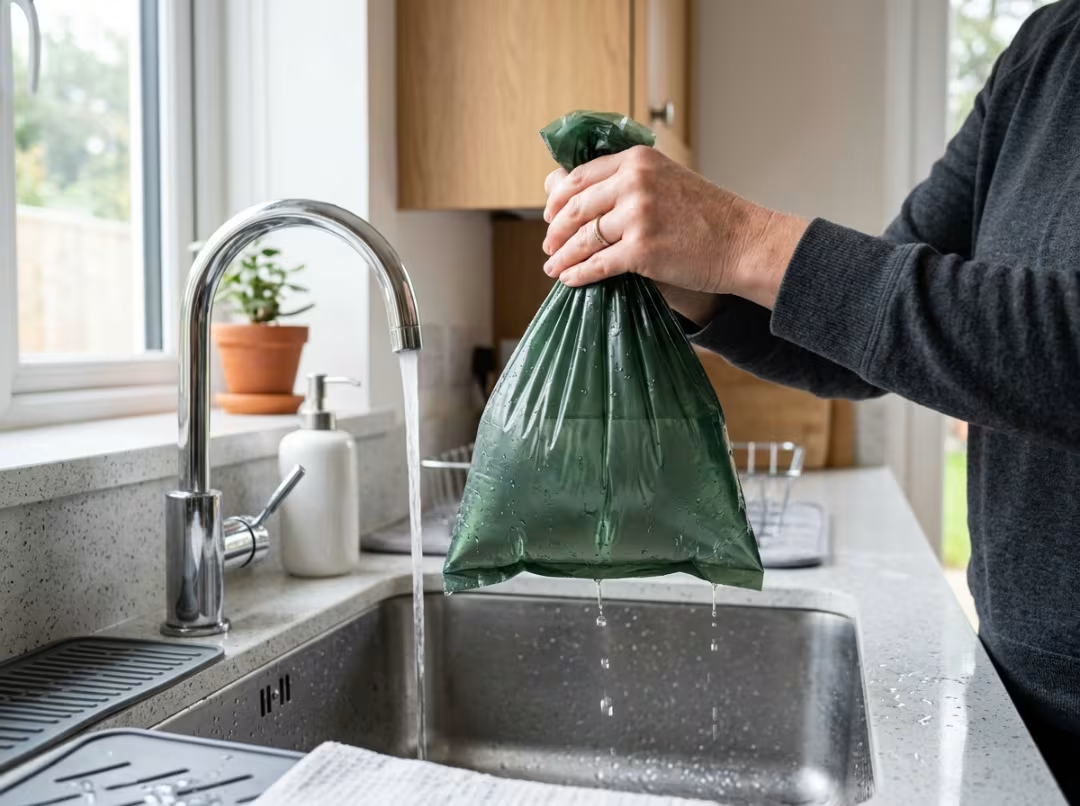
The Water Test
Partially fill a bag with water and hold it over a sink for 20 to 30 seconds. Any dampness or seepage through the material means it won’t hold up to real waste, which is denser and heavier.
The Stretch Test
Gently pull the bag at the sides and bottom. A quality bag gives slightly without thinning or showing stress marks. One that thins out or stretches unevenly is likely to tear under actual weight.
The Pull Test
Tear a bag off the roll the way you would on a walk, then tug gently at the seams and around the tie area. Weak perforations or seams will separate or start splitting under light pressure.
Running these on one sample bag is the shortcut that keeps you from committing to dozens of rolls that fail on the first walk.
Buying in Bulk: Cost-Per-Bag and Consistency
Bulk buying only saves money if you calculate it right. Divide the total price by the number of bags in the case to get the true cost-per-bag, rather than comparing roll prices at face value. A case with fewer, larger rolls can look cheaper while actually costing more per bag.
One risk worth flagging: batch-to-batch thickness inconsistency. Budget manufacturers in particular sometimes vary mil thickness between production runs, so a case that performs well can be followed by one that doesn’t. The rule of thumb: test a small pack from a new brand before committing to a multi-roll case, and recheck quality periodically even with brands you trust.
Frequently Asked Questions
Are biodegradable dog poop bags actually better for the environment?
Only marginally, and only in specific conditions. They need oxygen and light to break down, and most landfills are sealed to limit both. Buried there, they degrade at nearly the same slow rate as standard plastic. They pay off only if your local system uses industrial composting or incineration.
Do scented dog poop bags cause any issues?
Not really. Some owners find the fragrance a bit strong in enclosed spaces like a car. Functionally, scent has no effect on strength or breakdown.
Why do some dog waste bags tear so easily?
Usually one of two reasons: insufficient mil thickness or weak seam construction. Both are easy to catch with a quick stretch or pull test before buying in bulk.
Are corn starch dog poop bags safe to compost at home?
Generally, no. Most corn starch and PLA-based bags need the sustained high heat of industrial composting to break down fully. Home compost bins rarely reach the necessary temperature.
The Bottom Line on Choosing a Dog Poop Bag
Match the material to your actual disposal access, match the size to your dog, and never trust “thick” or “eco-friendly” on a label without checking the seams and perforation yourself. A quick water, stretch, and pull test on a sample bag tells you more than any packaging claim.
The best dog poop bag isn’t the most expensive or the most “natural” one — it’s the one that fits your dog, your walk, and your disposal situation. Once you’ve pinned down the material and strength that suit your routine, look for a tested product roundup in that category to find specific brands that hold up before you buy in bulk.