



A café owner gets the notice: plastic forks are out next month. She orders “biodegradable” cutlery online. The first hot soup order bends every spoon.
I see this often. Biodegradable cutlery isn’t one product. It sits inside a wider range of biodegradable tableware. Wood, bamboo, PLA, and CPLA differ in price, heat tolerance, and how they break down.
I help restaurants and event buyers make this switch every week. In this guide, I’ll help you:
- Compare the main materials
- Check real breakdown conditions
- Match cutlery to your menu
- Skip costly options that fail in service
Why Buyers Are Replacing Plastic Cutlery, and Why Many Still Get It Wrong
Regulation started the shift. The EU, Canada, and a growing list of US cities and states now restrict single-use plastic cutlery. But in my conversations with buyers, rules are rarely the only reason they switch.
Customers notice what you hand them. A shiny plastic fork in a kraft paper bag sends a mixed message. Diners who choose a restaurant for its fresh, local menu often expect the cutlery to match.
Event contracts now set the terms. More venues, universities, and corporate clients write “compostable service ware only” into catering agreements. If you can’t meet that rule, you can lose the booking.
Brand image is on the line. For a café or food truck, cutlery is one of the few items every customer touches. It shapes how people see your business, even if you never think about it.
So buyers move quickly. They search “biodegradable cutlery,” sort by price, and order the cheapest case. That’s where most problems begin.
“Biodegradable” doesn’t describe one product. It covers very different materials that behave in very different ways. Picture two forks, both sold as biodegradable cutlery:
- A birch wood fork holds up in hot chili. It can also break down in a well-managed backyard compost pile.
- A thin PLA fork may soften in hot soup. It also needs an industrial composting facility to break down as promised.
A third option might be a starch blend with no certification at all. It may contain conventional plastic fillers that never fully break down.
All three can carry the same green label. Yet one works for your menu, one fails in service, and one quietly ends up in landfill. Before you compare prices, you need to know what the word on the box actually promises.
What “Biodegradable Cutlery” Actually Means
When a buyer shows me a box of “eco” forks, I skip the green leaf on the front. I look for the conditions behind the claim. Every label makes a promise, and each promise only holds under certain conditions.
Three words cause most of the confusion. Once you can tell them apart, half the bad options drop off your list.
Biodegradable, Compostable, and Degradable Aren’t the Same
These terms sound close, but they make very different promises.
Biodegradable is the broadest claim. It only means microbes can break the material down at some point. It sets no timeline, no required environment, and no test. A wooden fork qualifies. In theory, so does a plastic fork that takes centuries.
Compostable sets a much higher bar. A compostable product must break down within a set time in a compost system. It also has to leave no toxic residue behind. Recognized standards back this claim, so you can check it.
Degradable is often the weakest of the three. Many “degradable” or “oxo-degradable” plastics are regular plastic with additives that make them crack apart faster. They break into small fragments, not into compost. The EU banned oxo-degradable plastics in 2021 for this reason. California also restricts “biodegradable” and “degradable” claims on plastic products.
So when a box says only “biodegradable,” I treat it as an unproven claim. It might be true. But the label alone doesn’t tell you where, how, or how fast.
Home and Industrial Composting Lead to Very Different Results
Even a real “compostable” claim leaves one big question open: compostable where? The answer changes everything.
Industrial composting runs hot and controlled. Facilities hold large piles at about 131–160°F for weeks. Crews manage oxygen and keep moisture near 50–60%. Heat-loving microbes thrive in those conditions.
Home composting depends on your yard and your habits. Most backyard piles stay well below 100°F. Moisture rises and falls with the weather. Turning happens when someone remembers.
That gap matters most for PLA and CPLA. Both come from the same plant-based polymer. CPLA is simply PLA that makers crystallize to improve heat resistance. To break down, PLA needs heat near its softening point, roughly 130–140°F. Heat and moisture first split its long chains into shorter pieces. Then microbes digest them.
A backyard pile rarely gets that hot. So a PLA or CPLA spoon in a home bin barely changes for months. I’ve seen spoons come out of garden compost after a year still looking almost new.
Wood, bamboo, and palm leaf behave differently. Microbes already know how to digest plant fiber. These materials can break down at home, just more slowly than in a facility.
Why Certification Matters More Than the Front of the Box
Anyone can print “compostable” on a carton. Certification shows whether the product earned that word. Look for these names:
- ASTM D6400: The main US standard for compostable plastics in industrial facilities
- EN 13432: The European standard for industrially compostable packaging
- BPI Certified Compostable: A North American mark that confirms testing to ASTM standards
- TÜV Austria OK compost INDUSTRIAL or OK compost HOME: The HOME mark confirms the item can break down at backyard temperatures
Under these standards, a product must fragment within about 12 weeks. It must also convert at least 90% to CO₂, water, and biomass within 180 days, and pass limits for heavy metals and plant toxicity.
Here’s what I tell buyers: certification is the minimum, not the full answer. Each certificate covers a specific product, often up to a set thickness. Match the certificate number to your exact item in the certifier’s online database.
Even then, a certificate can’t tell you whether your local facility accepts cutlery. It also can’t tell you whether a thin fork survives hot soup. You still need to check both.
The Cutlery Materials That Matter Most in Real Buying Decisions
Suppliers sell biodegradable cutlery in five main material families. In practice, a few of them handle most real orders. I’ll walk through each one the way I would with a buyer in my sample room: what it does well, where it lets you down, and who should buy it.
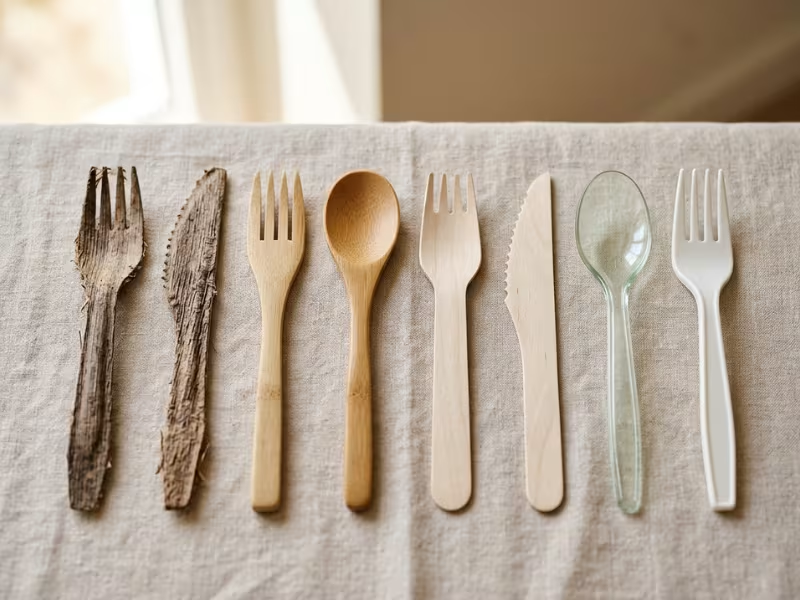
Wood Cutlery: The Simplest Option for Compost-Minded Buyers
Wood cutlery, usually birch, is the most straightforward option on the market. Makers cut thin sheets of wood, press them into shape, and sand them. Most pieces need no coating, binder, or plastic.
That simplicity brings real advantages:
- It handles heat well. A birch spoon won’t soften in hot soup or chili.
- It breaks down at home. In a well-managed backyard pile, a birch fork often breaks apart within a few months.
- Facilities rarely object. Sorters recognize wood at a glance, so it passes the tipping floor more easily than bioplastic.
Wood also has weak spots, and customers notice them fast.
Taste and texture come first. Some people dislike the dry, woody feel on their tongue, especially with ice cream or yogurt.
Splinters and rough edges show up in cheaper batches. Run your thumb along the tines and knife edge before you approve a supplier.
Breakage happens when the wood is too thin. A flat birch knife struggles with grilled chicken or thick steak.
Cost sits higher than plastic, often two to three times more per piece. For a busy takeout counter, that adds up.
I recommend wood for buyers who want home compostability and solid heat performance, and who can accept a plainer look.
Bamboo Cutlery: Stronger Feel, Higher Cost, More Premium Positioning
Bamboo cutlery feels like a step up the moment you pick it up. It’s denser and smoother than birch, with a more polished finish. Thicker handles make it feel closer to real flatware.
That quality comes at a price. Bamboo often costs noticeably more than birch per piece. Many buyers choose it for the impression it makes, not for function alone.
It fits best where presentation matters:
- Upscale catering and plated events
- Boutique hotels and premium meal kits
- Brands that want a “reusable-looking” disposable
Some sturdier bamboo pieces can even survive a few hand washes.
The detail that matters most is the surface treatment. Bamboo cutlery usually carries one of three finishes:
- Natural or carbonized: Heat-treated for a darker color, with no coating. This is the best choice for composting.
- Food-grade oil: A light finish that usually doesn’t affect breakdown.
- Lacquer or varnish: A glossier look, but it can slow composting and may not suit facilities that screen hard.
Ask your supplier which finish they use. A glossy sample often means lacquer.
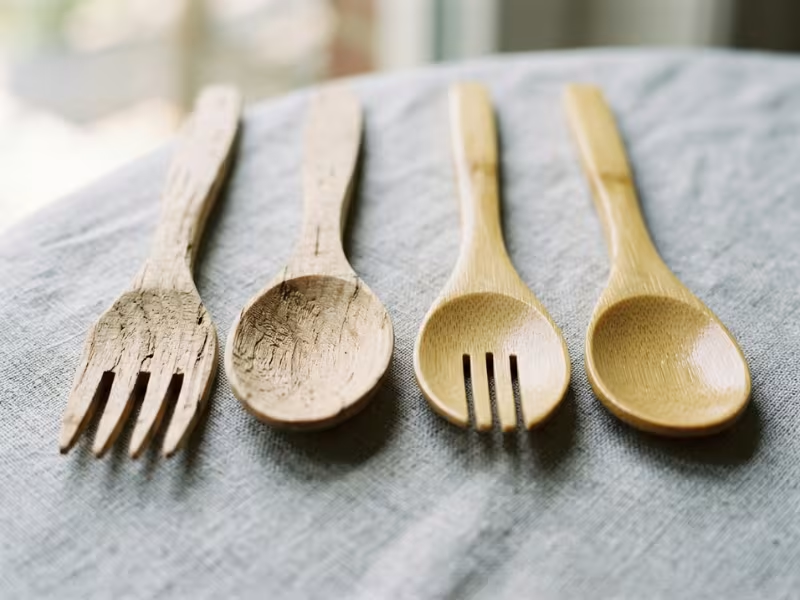
PLA and CPLA Cutlery: Practical, Common, but Highly Disposal-Dependent
PLA and CPLA look and feel the most like plastic. That’s why they sell so well. It’s also why buyers misunderstand them more than any other material.
Both come from polylactic acid. Makers usually produce it from fermented corn or sugarcane starch.
PLA is the basic form. It’s light, smooth, and relatively cheap among bioplastics. Its weakness is heat. PLA starts to lose stiffness well below hot soup temperature, so a thin PLA spoon can bend in a bowl of ramen.
CPLA is crystallized PLA. Makers add a mineral filler, such as talc, and heat-treat the material to stabilize its structure. CPLA usually holds up to hot food around 185°F. It feels stiffer, often comes in black or off-white, and costs more than standard PLA.
Here’s where buyers go wrong. Both PLA and CPLA usually carry an industrial composting certification only. They need about 131–160°F, sustained for weeks, to break down. In a backyard bin, they barely change. In a landfill, they behave a lot like regular plastic.
They also confuse sorters. A white PLA fork looks almost exactly like a polystyrene fork on a fast picking line. Many facilities pull them out to stay safe.
PLA and CPLA work well when:
- Your hauler confirms in writing that it accepts certified compostable cutlery
- You serve cold or warm food (PLA) or hot food (CPLA)
- Customers expect a plastic-like feel
They fail when:
- You have no industrial composting access
- You serve hot food with standard PLA
- Customers toss them into home compost bins
Starch Blends and Other Bioplastics: Read the Label Closely
“Cornstarch cutlery” sounds simple. In reality, this category has the widest quality range I’ve seen.
Most starch-based utensils mix plant starch with other polymers to gain strength. The partner polymer decides how the product behaves:
- PLA or PBAT blends can earn compostable certification.
- Polypropylene (PP) blends may contain roughly 30–50% conventional plastic. They can’t compost at all.
Both types can say “plant-based” or “biodegradable” on the box. They can look identical in a product photo.
So the material name tells you very little here. The certificate tells you much more. Ask for the exact formula, and look up the certificate number for that specific item. If a supplier says “cornstarch” but can’t show a BPI, EN 13432, or OK compost certificate, assume the product contains conventional plastic.
Price adds to the confusion. The cheapest “eco” cutlery on many marketplaces sits in this group, often because of the PP content.
Palm Leaf and Niche Alternatives: Useful, but Not Mainstream
Palm leaf cutlery comes from fallen areca palm sheaths that makers press with heat and water. Its rustic look suits weddings, garden parties, and display buffets, especially next to palm leaf plates. It also breaks down at home with no additives to worry about.
For most buyers, though, it stays a niche choice. It costs more than wood, varies in thickness between batches, and feels less sturdy for cutting. I treat it as a presentation piece, not a daily workhorse.
Edible cutlery made from baked grain or sorghum also exists. High cost and short shelf life keep it a novelty.
How the Materials Compare at a Glance
|
Material |
Typical Cost Level |
Home Compostable |
Heat Tolerance |
Best Use Case |
|---|---|---|---|---|
|
Birch wood |
Moderate |
Yes |
High |
Hot food, compost-minded buyers |
|
Bamboo |
Higher |
Yes, if uncoated |
High |
Premium events and brands |
|
PLA |
Low to moderate |
No |
Low |
Cold or warm food with facility access |
|
CPLA |
Moderate |
No |
Good |
Hot takeout with facility access |
|
Starch blends |
Low to moderate |
Varies by formula |
Varies |
Only with a verified certificate |
|
Palm leaf |
Higher |
Yes |
Moderate |
Weddings and display settings |
No material wins every time. A birch fork beats CPLA for a home composter. CPLA can beat birch for a takeout counter with good facility access. Choose the material that fits your food, service style, and disposal route.
How Long Biodegradable Cutlery Actually Takes to Break Down
Buyers often ask me for a single number, such as “90 days.” I can’t honestly give one. The same fork can disappear in two months in one place and last for years in another.
The setting shapes the timeline more than the material does. So I break it down by where the cutlery actually ends up.
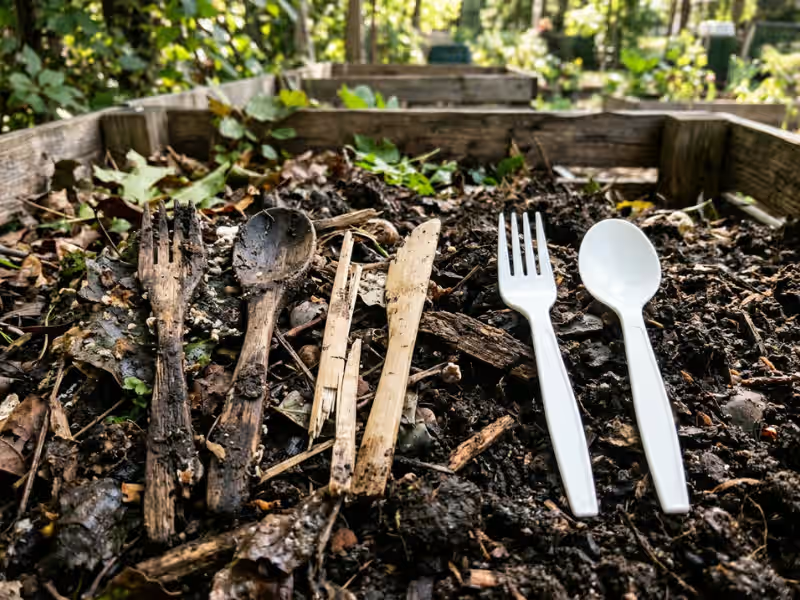
In Industrial Composting Systems
This is the best-case setting for almost every material. Facilities hold piles at about 131–160°F and manage oxygen and moisture. In a well-run facility, rough timelines look like this:
- Palm leaf: often about 1–2 months, since it’s thin plant fiber with no additives
- Birch wood: often about 2–4 months, with thin pieces finishing faster than thick knives
- Bamboo: roughly 2–6 months, since dense fiber and lacquer slow it down
- PLA: often about 2–3 months in a hot pile; certified items must fragment within about 12 weeks
- CPLA: commonly 3–6 months, because its crystallized structure and thicker walls take longer
These numbers only matter if the facility accepts the item. Many sites run 45–90 day cycles. A thick CPLA knife that needs four months can come out half-finished and get screened out.
Sorting creates an even bigger problem. A white PLA spoon looks like polystyrene on a fast picking line, so many operators reject all bioplastic cutlery. Wood gets through more often because sorters recognize it.
Before you count on industrial composting, ask your hauler one direct question: “Do you accept compostable cutlery, and which materials?”
In Home Compost Piles
Home composting is where the materials split apart. Plant fiber keeps working, but bioplastics stall.
Most backyard piles stay below 100°F. Microbes that digest wood and leaves still work at those temperatures, only more slowly. In a well-managed home pile, expect roughly:
- Palm leaf: about 2–3 months
- Birch wood: about 3–6 months
- Bamboo: about 4–8 months, longer for thick or lacquered pieces
PLA and CPLA behave very differently. They need heat near 130°F to start breaking down, and a backyard bin rarely gets there. A PLA spoon can sit in garden compost for a year and still look almost new.
Your habits make a big difference with wood and bamboo. To speed things up:
- Snap pieces in half to expose more surface.
- Bury them in the center, where the pile stays warmest.
- Keep the pile damp, like a wrung-out sponge.
- Turn it every week or two to keep oxygen flowing.
A cold, dry pile can double these timelines. Neglected piles sometimes take over a year.
In Landfill or Open Environments
Most used cutlery ends up here, and this setting brings the worst results. Many buyers assume “biodegradable” items quietly vanish in a landfill. They don’t.
Landfills compact waste and cut off oxygen. Without oxygen, fast-working microbes can’t do their job. Researchers digging into old landfills have pulled out readable newspapers from decades earlier. A birch fork faces the same conditions.
PLA and CPLA fare even worse. At normal landfill temperatures, they behave much like conventional plastic. When plant material does break down without oxygen, it releases methane. That makes landfill a poor outcome for any material.
Open environments aren’t a disposal method at all. A wooden fork in a park stays litter for months. PLA in cool seawater barely breaks down, because the ocean lacks the heat it needs. Uncertified starch blends can shed plastic fragments.
I tell clients to treat “biodegradable” as a description of the material, not permission to toss it anywhere. If cutlery can’t reach a compost system that accepts it, put it in the trash. Littering does more harm.
Breakdown at a Glance
|
Material |
Home Compost Result |
Industrial Compost Result |
Landfill Result |
Main Caution |
|---|---|---|---|---|
|
Birch wood |
Often about 3–6 months |
Often about 2–4 months |
Can persist for years |
Thick knives finish slowest |
|
Bamboo |
About 4–8 months if uncoated |
Roughly 2–6 months |
Can persist for years |
Lacquer slows breakdown |
|
Palm leaf |
About 2–3 months |
Often about 1–2 months |
Can persist for years |
Limited supply, higher cost |
|
PLA |
Little change after a year |
Often about 2–3 months |
Behaves like plastic |
Often rejected at sorting |
|
CPLA |
Little change after a year |
Commonly 3–6 months |
Behaves like plastic |
May exceed short facility cycles |
|
Uncertified starch blend |
Unreliable |
Often rejected |
May leave plastic fragments |
Check for PP content |
The pattern is clear. Wood, bamboo, and palm leaf give you options at home and in a facility. PLA and CPLA work only when a facility accepts them. In a landfill, every material slows down far more than its label suggests.
What Biodegradable Cutlery Really Costs, and What Drives the Price
When buyers send me a quote, they usually focus on one number: the price per piece. That number matters. But it rarely tells you what the cutlery will actually cost your business.
Start with the rough price ladder. Exact figures change with region, season, and supplier, but the order stays fairly steady:
- Uncertified starch blends often sit at the bottom. Many cost close to plastic, usually because they contain polypropylene.
- PLA comes next, typically about 1.5 to 2 times the price of plastic.
- Birch wood often lands around 2 to 3 times plastic.
- CPLA often matches or exceeds wood, because heat treatment and mineral filler add cost.
- Bamboo sits near the top, often noticeably above birch.
So what pushes one fork above another? Five factors explain most of the gap.
Certification adds real cost. Suppliers pay for lab testing and annual fees to keep a BPI or OK compost mark. Uncertified products skip those costs, which partly explains their low prices.
Thickness changes both price and performance. A 6-inch CPLA fork at 4.5 grams costs more than a 3-gram version. It also holds up far better in a dense rice bowl.
Heat resistance costs extra in bioplastics. Turning PLA into CPLA takes more processing time and energy.
Coatings and finishes matter for bamboo. Lacquer adds a step and a material. Carbonized or oil-finished pieces often cost less and compost more easily.
Shipping weight and volume surprise many buyers. Wood and bamboo weigh more and pack less tightly than bioplastics. On an overseas order, freight can wipe out a low factory price.
Order volume moves the price more than most people expect. A retail pack of 100 forks can cost two to four times more per piece than a 1,000-piece wholesale case. Container-level orders drop the price further. Custom printing usually requires a higher minimum order, so plan for that before you ask for a logo.
Still, the cheapest option often costs more in the end. A PLA spoon that bends in hot soup doesn’t save money. Your staff hands out a second spoon, and the customer leaves an annoyed review. A wooden knife that snaps on grilled chicken creates the same problem.
Before you compare quotes, run a simple test:
- Order samples of two materials.
- Serve your hottest and toughest dishes with each one.
- Count how many pieces fail across 50 uses.
A 10% failure rate on a cheaper fork can erase its savings fast.
That said, the premium choice doesn’t always pay off. Bamboo looks great at a plated wedding. At a busy takeout counter, few customers notice the difference from birch. CPLA only makes sense if your hauler accepts it.
My advice is simple. Pay more for performance your menu needs and a disposal route you can actually use. Don’t pay more for a nicer label.
How to Choose the Right Cutlery for Your Use Case
When a buyer asks me which fork to order, I ask about their menu before I talk about materials. A ramen shop, a garden wedding, and a family with a backyard compost bin need very different cutlery.
So I sort the decision by setting. Find the one closest to yours and start there.
For Restaurants and Takeout Operations
Restaurants put cutlery through the hardest test: hot food, a sealed bag, and a 30-minute ride across town. That’s why I have buyers evaluate utensils alongside their biodegradable food containers. Both pieces need to survive the same delivery window.
Start with your hottest dish. If you serve soup, curry, or ramen, skip standard PLA. It can soften before the order reaches the door. CPLA handles hot food up to about 185°F, and birch stays rigid at normal serving temperatures.
Next, test the delivery window. Pack a full order with the cutlery inside the bag. Wait 30 to 40 minutes, then try to cut and scoop. Steam inside a closed container weakens thin pieces fast.
For bulk orders, I suggest:
- Choose 6-inch pieces at 4 grams or more for dense rice bowls and pasta
- Order wrapped kits with a fork, knife, and napkin to cut handling time
- Approve a backup SKU in case your main supplier runs short
Many operators also build a matched service setup. They pair cutlery with sugarcane bagasse tableware so the plates, bowls, and utensils share the same disposal route.
Check local rules too. Some cities now require compostable cutlery or “on request only” service. Finally, get your hauler’s answer in writing. If they won’t accept CPLA, birch may be the smarter buy at a similar price.
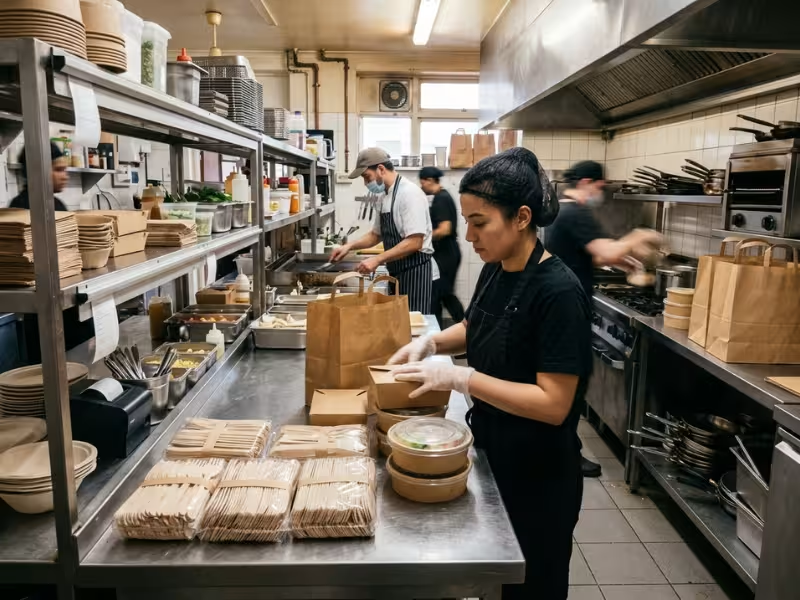
For Catering, Weddings, and Events
At events, cutlery becomes part of the table setting. Guests see it in photos, and they often eat standing up with a plate in one hand.
Presentation matters most at plated dinners and weddings. Bamboo and palm leaf pair well with natural plates and linen. Birch works well at buffets and corporate lunches, where function comes first.
Rigidity matters just as much. Picture a guest cutting brisket on a plate balanced in one hand. A thin knife snaps. Choose thicker knives for carved meat, and test them on your caterer’s toughest dish first.
Single-use cutlery makes sense when you have:
- More than about 50 guests
- No kitchen or dish crew on site
- A venue with strict cleanup times
For a monthly dinner of 12 people, rent or buy reusable flatware instead.
Plan disposal before the event. Ask the venue whether it provides compost bins and which hauler collects them. Set up clearly labeled compost stations. Also order about 15% extra, because guests drop forks and grab fresh ones for dessert.
For Home Composters and Eco-Conscious Households
If you compost in your backyard, stick with wood, bamboo, or palm leaf. Microbes in a home pile can digest these plant fibers, usually within a few months.
Birch gives you the best value for picnics and parties. Uncoated bamboo feels nicer and can survive a few hand washes. Palm leaf suits a garden party where looks count.
Don’t buy PLA or CPLA just because the box says “compostable.” Most carry an industrial-only certification. Unless your city collects food scraps and accepts bioplastic cutlery, it ends up in the trash.
One quick tip: snap used wooden pieces in half before adding them to the pile. They break down faster.
If you eat at home most days, washable metal flatware beats any disposable. Save biodegradable cutlery for parties, trips, and lunch boxes.
For Buyers on Tight Budgets
The cheapest fork on a quote sheet often costs the most once service starts. Instead of comparing unit prices alone, I ask budget buyers to weigh three things:
- Performance: Does it survive your menu? A spoon that bends in soup means a second spoon and an annoyed customer.
- Disposal route: Can your hauler take it? CPLA without facility access costs extra and delivers nothing extra.
- Failure rate: How many pieces break in real use?
A fork that costs a cent less but fails one time in ten rarely saves money. Add replacement pieces, staff time, and a bad review, and the savings disappear.
Watch out for ultra-cheap “cornstarch” cutlery with no certificate. Its low price often comes from polypropylene filler.
Here’s how I’d stretch a tight budget. Use certified PLA for cold menus if your hauler accepts it. Switch to birch for hot dishes. Buy wholesale cases, not retail packs.
Where Buyers Get Misled Most Often
Most failed cutlery orders I review don’t trace back to bad suppliers. They trace back to one word on the box that the buyer trusted too much.
The same four mistakes show up again and again. Each one sounds reasonable until the cutlery meets real food, real bins, and real customers.
“Biodegradable Means It Will Disappear Soon”
Many buyers picture a fork crumbling away a few weeks after use. That rarely matches what happens.
“Biodegradable” sets no clock. A birch fork and a polypropylene-filled starch fork can both carry the word. The birch fork might break down within a few months in an active compost pile. The starch fork may leave plastic fragments behind for years.
Even honest materials slow to a crawl in the wrong place. Most used cutlery goes into a trash bag and then a landfill, where oxygen runs short. A wooden spoon can stay recognizable there for a long time.
Read “biodegradable” as a description of the material. It makes no promise about timing.
“Compostable Means I Can Compost It Anywhere”
This one catches many eco-minded hosts and households. They see “compostable,” toss PLA forks into a backyard bin, and expect results.
Most PLA and CPLA cutlery carries an industrial-only certification. It needs sustained heat around 131–160°F, and a home pile rarely gets close. I’ve had clients dig up PLA spoons after a full season that looked almost untouched.
Before you promise guests a compostable event, check which kind of composting the mark covers. “OK compost HOME” means a backyard pile can handle it. “Industrial,” or ASTM D6400 alone, means the item needs a facility.
“Certified Means My Local Facility Will Take It”
Certification proves a product passed a lab test. It tells you nothing about your hauler’s rules.
Each facility writes its own list of accepted materials. Some take wood but reject all bioplastic cutlery. Others refuse cutlery entirely, because white PLA looks just like polystyrene on a fast sorting line.
I once worked with a caterer who bought 20,000 certified CPLA kits for a stadium contract. The venue’s hauler accepted only food scraps. Every kit went to landfill.
Ask your hauler in writing which cutlery materials they accept. Get that answer before you sign the order, not after the pallets arrive.
“The Cheapest Certified Fork Is the Best Deal”
Unit price is the easiest number to compare, so buyers lean on it. But price tells you nothing about how a fork handles your menu.
A thin PLA spoon may cost less than CPLA or birch. It can also soften in hot pho before the delivery bag reaches the door. A 3-gram knife may look fine in a photo and still snap on grilled chicken.
Before you compare prices, match the cutlery to three things:
- Food temperature: Hot soups and curries need CPLA or wood.
- Food texture: Dense rice bowls and carved meats need thicker, heavier pieces.
- Delivery time: Steam in a sealed bag can weaken thin cutlery within about 30 minutes.
A fork that costs a little more and works every time almost always beats a cheap fork that fails during service.
What to Check Before You Place a Bulk Order
A bulk order commits you for months. Once 50,000 forks land in your storeroom, swapping them out gets expensive. Before any client signs a purchase order, I walk them through four checks. Together they take about a week.
1. Check the Certification
Start with the paperwork, not the product photo. Ask the supplier for the certificate itself, not just a logo on the carton.
- Look for a recognized mark: BPI, ASTM D6400, EN 13432, or TÜV Austria OK compost INDUSTRIAL or HOME.
- Look up the certificate number in the certifier’s online database.
- Match the listing to your exact item: same material, size, and thickness.
Certificates cover specific products. A supplier’s certified 3-gram spoon doesn’t make its 5-gram knife certified. If the details don’t match, ask why.
2. Check Heat Resistance and Utensil Strength
Next, compare the spec sheet with your menu. Ask for two numbers in writing: maximum heat tolerance and gram weight per piece.
I look for at least 4 grams on forks and knives that face rice bowls, pasta, or carved meat. Thin PLA works for salads and desserts. For anything steaming hot, choose CPLA or birch.
Then test the claim yourself. Stir your hottest soup for two minutes. Cut your toughest protein. If the tines bend or the knife flexes, cross that option off.
3. Check Local Composting Acceptance
A certified fork only helps if someone takes it. Email your hauler and ask three questions:
- Do you accept compostable cutlery?
- Which materials do you accept: wood, bamboo, PLA, or CPLA?
- Which facility receives it?
Keep the reply on file. If the answer is “wood only,” you have your material choice before you compare a single price.
4. Run a Small Real-World Test
Finally, order a sample case of your top two options, about 200–500 pieces each. Use them during a busy service, not a quiet afternoon.
- Run a steam test: Pack a hot order, seal the bag, and wait 30–40 minutes. Then cut and scoop.
- Track failures: Count how many pieces bend or break per 100 uses.
- Ask your staff: Find out how the kits feel to grab, wrap, and hand out.
- Note customer comments about taste, splinters, or flimsiness.
If an option fails more than a few times per 100 uses, drop it. Place the bulk order only after a sample passes all four checks.
FAQ
How long does biodegradable cutlery take to decompose?
It depends on where the cutlery ends up. In an industrial facility, palm leaf often breaks down in about 1–2 months, birch in about 2–4 months, and PLA in roughly 2–3 months. Bamboo and CPLA can take 3–6 months.
Home piles run cooler, so everything slows down. Expect roughly 3–6 months for birch and 4–8 months for bamboo. PLA and CPLA barely change. In a landfill, low oxygen can stretch the timeline to years for every material.
Is bamboo cutlery better than wood cutlery?
Neither wins every time. Bamboo feels denser and smoother, looks more like real flatware, and some pieces survive a few hand washes. It also costs noticeably more.
Birch costs less, handles hot food just as well, and often breaks down faster. I suggest bamboo for plated weddings and premium brands, and birch for takeout and buffets. With bamboo, ask about the finish, since lacquer slows composting.
Can PLA cutlery go in home compost?
In most cases, no. Most PLA cutlery carries an industrial-only certification. It needs heat around 131–160°F for weeks, and most backyard piles stay below 100°F.
The exception is a product with a home-compost mark, such as TÜV Austria OK compost HOME. Without that mark, send PLA to a city compost program that accepts it. If none exists, put it in the trash.
What is the difference between PLA and CPLA?
Both come from the same plant-based polymer. CPLA is crystallized PLA. Makers add a mineral filler, usually talc, and heat-treat it. That changes three things:
- Heat: PLA softens with hot food. CPLA handles about 185°F.
- Feel: CPLA is stiffer and usually black or off-white.
- Cost: CPLA costs more and often takes longer to compost.
Both still need an industrial facility.
Are biodegradable utensils safe for hot food?
Some materials handle hot food well, and some don’t. Birch and bamboo stay rigid at normal serving temperatures. CPLA handles hot soups and curries up to about 185°F. Standard PLA can bend in ramen, so keep it for salads and desserts.
Choose certified products, which must pass heavy-metal limits. Ask your supplier for food-contact documents, such as FDA or LFGB reports. Avoid uncertified “cornstarch” cutlery for hot dishes, since it may contain polypropylene.
Can biodegradable cutlery be recycled?
In practice, no. Most curbside programs don’t accept cutlery of any material. Forks and spoons are too small and slip through sorting screens.
PLA adds another problem. If it reaches a recycling stream, it can contaminate a batch of PET. Send certified cutlery to a compost program that accepts it, or compost wood, bamboo, and palm leaf at home. Otherwise, put it in the trash.
Choose the Fork That Fits Your Service
A green leaf on the box tells you almost nothing. Plenty of “eco” cutlery bends in hot soup, stalls in a backyard bin, or goes straight to landfill.
Three things decide whether a fork actually works:
- Material performance: Does it survive your hottest, toughest dish and a full delivery window?
- Local composting access: Will your hauler or venue accept it?
- Valid certification: Can you match a real certificate number to the exact item?
If any one of these fails, the label stops meaning much.
No single material wins everywhere. Birch might beat CPLA in one kitchen and lose in another. The right cutlery matches your menu, your service style, and your disposal route.
Your next step: order sample cases of two materials this week, test them during a busy service, and let real results decide.