


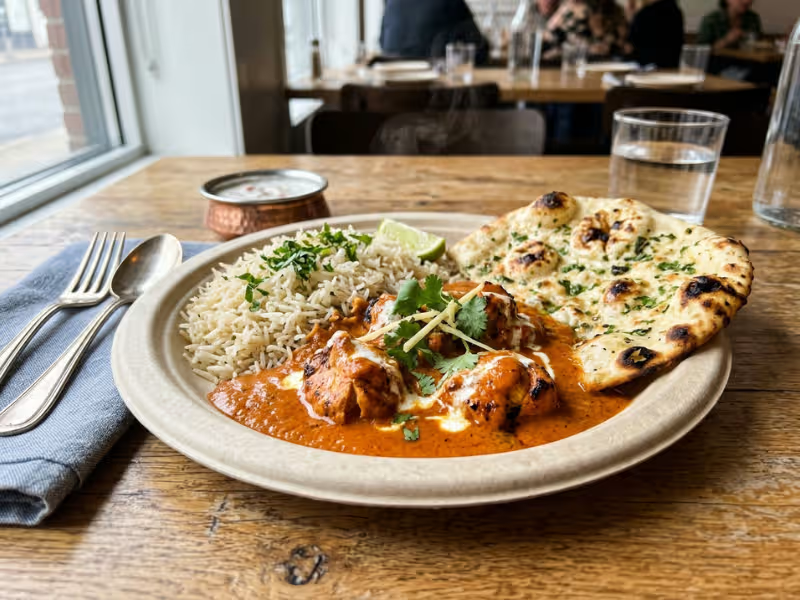
Quick answer: Bagasse plates handle hot, saucy food because sugarcane fiber forms a dense, interlocked structure during molding that resists heat and short-term grease exposure. The same plant-fiber structure allows microbes to break the plates down in industrial composting facilities, typically within 45 to 90 days. Buyers should still verify PFAS-free certification and match plate grade to menu type before ordering in bulk.
Caterers and food truck owners face a frustrating tradeoff almost every week: disposable plates that hold up to hot curry or greasy fries, but leave behind plastic waste that sits in a landfill for centuries. Bagasse plates have become the default answer for many foodservice operators because they appear to solve both problems at once — sturdy enough for a loaded dinner plate, yet marketed as fully compostable.
But “compostable” is a word that gets stretched thin in packaging marketing. Not every bagasse plate behaves the same way under a plate of hot pasta, and not every bagasse plate actually breaks down the way its label suggests. For B2B buyers purchasing in bulk — caterers, café owners, food truck operators, and wholesale distributors — getting this wrong means either overpaying for performance you don’t need or underbuying on a plate that collapses mid-event.
This guide walks through what bagasse plates are made of, why they can handle heat and sauce in practice, what the PFAS question actually means for your business, and how composting claims hold up once a plate leaves your counter. By the end, you’ll have a framework for matching plate grade to menu and for vetting supplier claims before you commit to a bulk order.
Why People Choose Bagasse Plates in the First Place
Foodservice businesses switch to bagasse plates for three overlapping reasons: regulatory pressure, customer expectation, and genuine performance.
A growing number of cities and states have restricted or banned polystyrene foodware, pushing caterers and restaurants toward fiber-based alternatives. At the same time, customers increasingly associate visible sustainability efforts — compostable plates, paper straws, recycled napkins — with brand trust, particularly at catered events and food truck service where the packaging is part of the visual experience.
The performance piece matters just as much. Paper plates alone often sag under a full meal, and plain paperboard struggles with sauce. Bagasse, as a molded fiber material, offers a middle ground: closer to the rigidity of a disposable plastic plate, without the plastic.
What Bagasse Plates Are
Bagasse is the fibrous pulp left over after sugarcane stalks are crushed to extract juice. Instead of discarding this byproduct, manufacturers press and mold it under heat into tableware — plates, bowls, trays, and clamshell containers. This repurposing is part of why bagasse packaging is positioned as a broader foodservice solution rather than a single-product fix; the same pulp stream that becomes a flat plate can also become compartmentalized trays, boxes, and cups for different service formats.
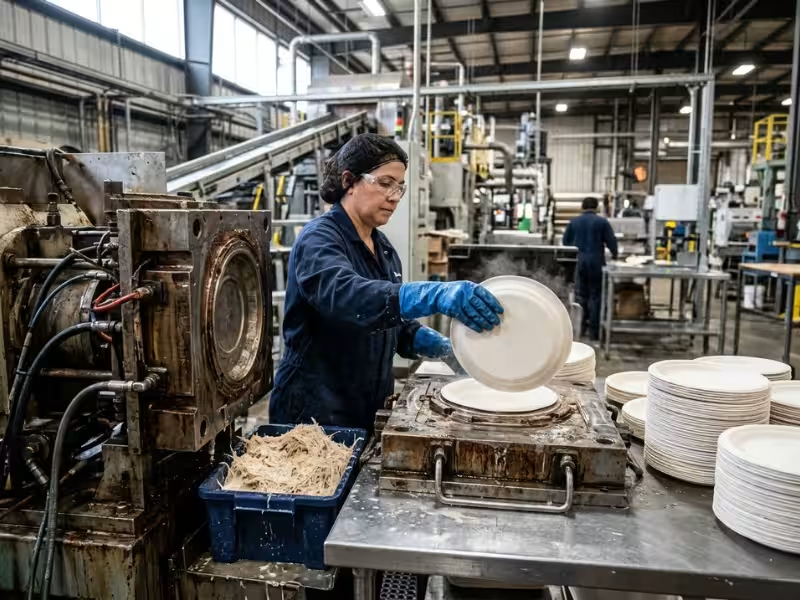
The molding process matters more than most buyers realize. Pulp is mixed with water, formed into a plate shape using heated molds, and then pressed under pressure to drive out moisture. This pressing step is what gives bagasse its rigidity — the fibers compact and interlock, forming a denser structure than loose paper pulp.
Why Bagasse Plates Can Handle Hot and Saucy Meals
Heat Resistance in Real Meal Settings
Bagasse plates generally tolerate temperatures in the range of 200°F to 220°F (approximately 93°C to 104°C) without warping, which comfortably covers most hot food service — rice bowls, grilled meats, pasta dishes, and hot sides straight off a steam table. Many bagasse trays and plates are also described by manufacturers as microwave-safe, which is useful for operators reheating catering trays or pre-plated meals.
This heat tolerance comes from the natural fiber structure itself, rather than a plastic lining. Unlike a thin paper plate, which relies on a wax or plastic coating to resist heat and moisture, molded bagasse fiber is thick enough and dense enough to manage heat on its own in typical foodservice conditions.
Why Sauce and Grease Don’t Immediately Soak Through
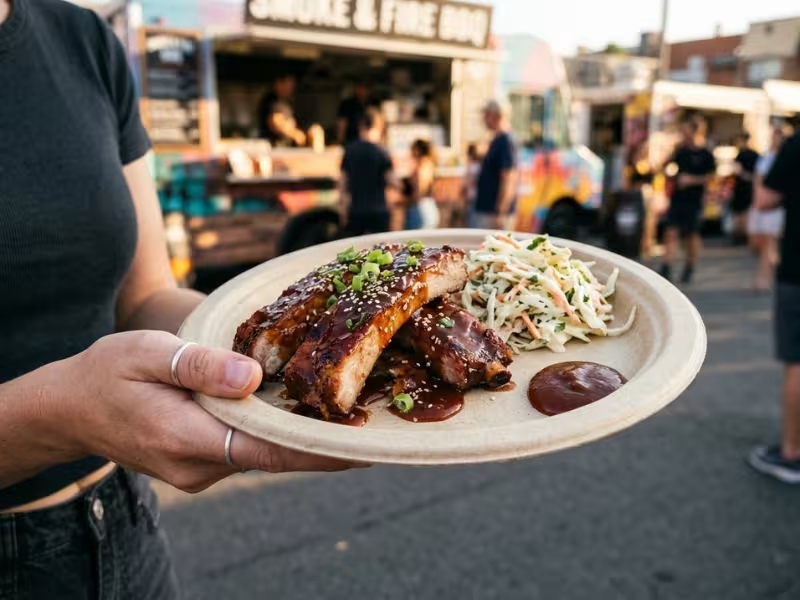
The same dense fiber structure that resists heat also slows down liquid penetration. Sugarcane fiber naturally absorbs some moisture, but the pressed, compacted structure of a well-made bagasse plate limits how quickly grease and sauce travel through the material. For a buffet line or food truck service where a plate might hold gravy, oil, or dressing for 15 to 30 minutes, this buys enough time for the plate to do its job without becoming soft or leaking.
That said, bagasse fiber is not inherently waterproof in the way a plastic-lined plate is. Extended exposure to very wet or oily food — think a soup sitting for an hour, or a heavily oiled stir-fry — will eventually test the limits of an uncoated plate. Buyers serving these menu items should weigh plate grade and thickness carefully rather than assuming any bagasse plate will perform identically.
Where Performance Depends on Plate Grade
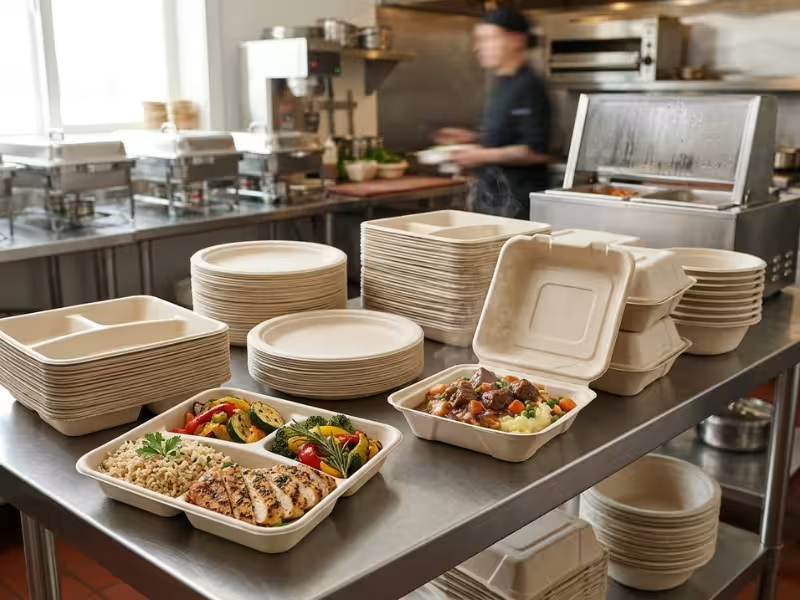
Not all bagasse plates are built the same. Thickness, pulp density, and whether a plate has a compartment or flat design all affect how it performs under a loaded meal. A single-compartment flat plate designed for sandwiches or salads will not hold up the same way as a thicker, compartmentalized tray designed for a full hot meal with multiple food items kept separate. Caterers running compartment-style service — think school lunches, airline catering, or multi-item combo meals — typically need a heavier-grade option; compartment trays built specifically for this kind of separated, hot food service tend to outperform flat general-purpose plates in both rigidity and leak resistance.
The PFAS and Coating Question Buyers Should Not Skip
PFAS (per- and polyfluoroalkyl substances) are a family of synthetic chemicals historically used to make molded fiber packaging grease- and water-resistant. They’re effective at repelling liquid, but they’re also persistent in the environment and have drawn regulatory and public health scrutiny over the past several years, leading many states to restrict or ban PFAS in food packaging.
Here’s the tension for buyers: a coating-free bagasse plate markets itself as fully natural and compostable, but without any treatment, it may show its limits faster under very wet or oily food. A PFAS-treated plate might resist grease better, but it complicates the compostability claim and may not meet current regulatory requirements in your state.
The responsible path is not to assume either direction. Ask suppliers directly for documentation confirming their plates are PFAS-free, and request any relevant lab testing or compliance certificates. A trustworthy supplier should be able to provide this documentation as part of the standard sales process — if a supplier can’t produce it at all, or deflects the question, treat that as a red flag regardless of how the product is marketed.
Do Bagasse Plates Really Compost?
Industrial Composting vs. Home Composting
This is where many buyers get misled, often unintentionally. “Compostable” on a product label almost always refers to industrial or commercial composting conditions — sustained high heat (often above 140°F), controlled moisture, and active microbial activity that most home compost bins simply can’t replicate.
Bagasse plates dropped into a backyard compost pile will usually break down eventually, but far more slowly and unpredictably than they would in a commercial facility. If your business or your customers don’t have access to industrial composting infrastructure, the “compostable” label is accurate in principle but far less useful in practice.
What Actually Breaks Down
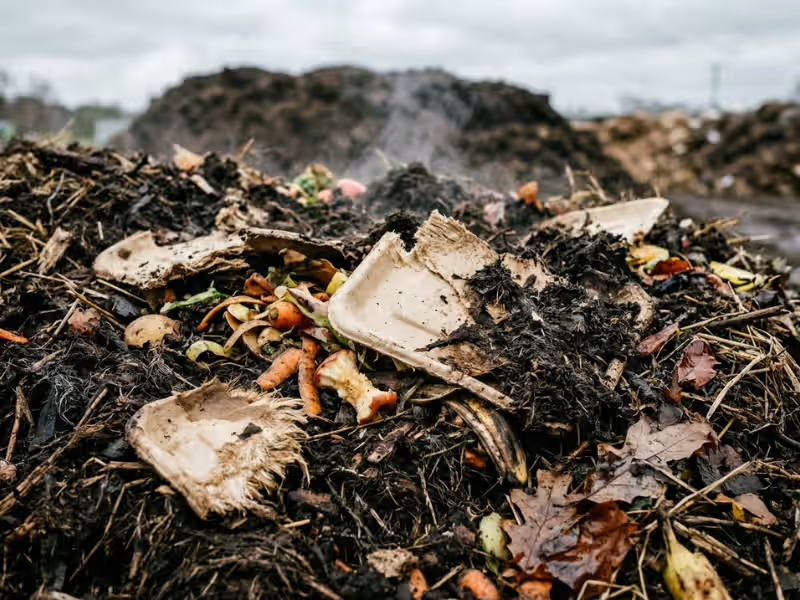
In a properly managed industrial composting facility, bagasse plates typically decompose within 45 to 90 days, consistent with timelines cited by manufacturers for similar molded fiber products and certification bodies like BPI (Biodegradable Products Institute). The fiber itself breaks down into organic matter with no toxic residue, provided the plate is free of PFAS and other non-compostable coatings or inks.
Uncoated, certified bagasse plates generally compost cleanly. Where inks, adhesives, or coatings are added — for branding, extra grease resistance, or durability — those additives can slow decomposition or, in the case of PFAS, prevent the plate from qualifying as compostable under certification standards like BPI or OK Compost.
Why Compostable Claims Sometimes Mislead
A plate can be technically compostable and still end up in a landfill, simply because no composting infrastructure exists where it’s disposed of. If your plates are getting thrown in a standard trash bin in a city without industrial composting access, that waste stream behaves no differently than if you’d used a plastic plate. Buyers should treat composting claims as conditional: accurate under the right disposal conditions, but not a guarantee of actual environmental outcome without that infrastructure in place.
This is also why recycling and composting labels get confused. Molded fiber products like bagasse food trays are compostable, not recyclable in the traditional sense — grease and food residue typically disqualify them from standard paper recycling streams, even though the raw material is plant-based.
Bagasse vs. Other Disposable Plates
Bagasse vs. Paper Plates
Standard paper plates are thinner, cheaper, and far less resistant to grease and moisture unless treated with a plastic or wax coating — which then undermines their compostability. Bagasse plates cost more per unit but hold up better under hot, saucy, or heavier meals without needing that coating, making them a better choice for full meal service rather than light snacks.
Bagasse vs. Plastic or PLA Plates
Plastic plates offer the highest grease and moisture resistance of the group, but they don’t biodegrade in any meaningful timeframe and carry ongoing reputational and regulatory risk in jurisdictions restricting single-use plastics. PLA (a bioplastic made from plant starches) sits in between — it’s plant-derived like bagasse, but it generally requires industrial composting conditions that are even more specific, and PLA can look and feel like plastic to end customers, which sometimes undercuts the sustainability message businesses are trying to send. Choose bagasse if visible eco-positioning and broad compostability matter more to your customers than maximum liquid resistance; choose PLA or plastic if you’re serving very wet, oily, or long-hold items where fiber alone may not perform.
Bagasse vs. Palm Leaf or Bamboo Plates
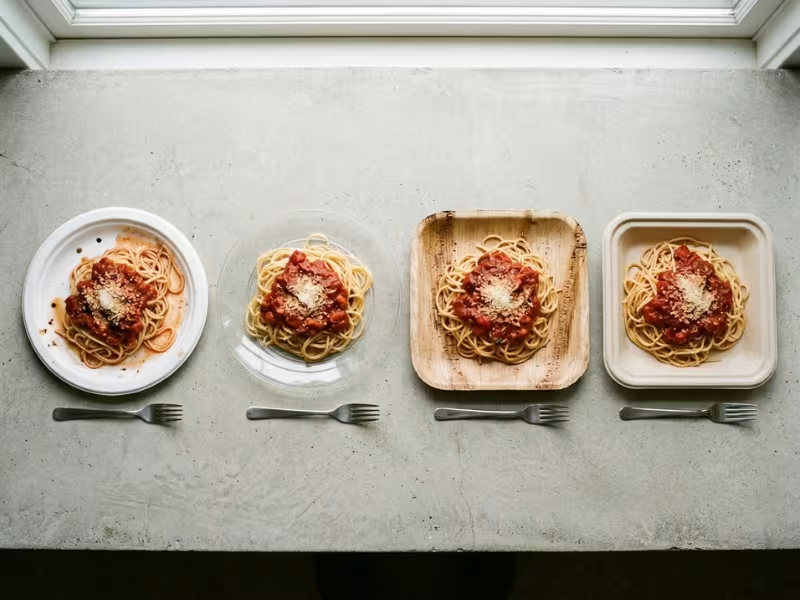
Palm leaf and bamboo plates are pressed from natural leaves or bamboo fiber rather than pulped sugarcane waste. They tend to have a more premium, rustic appearance, which appeals to upscale catering and events. However, they’re typically more expensive and less widely available in bulk than bagasse, which is manufactured at scale from an agricultural byproduct. For high-volume, cost-sensitive operations like food trucks or daily café service, bagasse usually offers a better balance of cost, availability, and performance.
How to Choose the Right Bagasse Plates
Verify the PFAS-Free and Compostability Claims
Before placing a bulk order, request documentation — not just marketing copy — confirming PFAS-free status and any relevant compostability certification (BPI, OK Compost, or an equivalent regional standard). Reputable suppliers maintain this documentation as part of standard due diligence for commercial buyers and should be able to share it as part of the quoting process.
Match the Plate Grade to Your Menu
A café serving pastries and sandwiches has very different needs than a caterer plating hot entrées with sauce. Choose a lighter, flat-plate design for dry or light menu items, and a heavier, possibly compartmentalized tray for hot, wet, or multi-component meals. If your menu includes boxed or clamshell-style takeout items rather than open plates, a bagasse box with a secure lid may be a better fit than a flat plate, since it limits spillage during transport.
Test Heat and Hold Time Together
Heat resistance and hold time interact. A plate that handles a 200°F dish for five minutes at a buffet line may behave differently after holding that same dish for 45 minutes during a long catered event. Before committing to a bulk order, request samples and test them under your actual service conditions — hold times, food type, and transport distance all matter more than a single temperature spec sheet.
|
Scenario |
What to Look For |
Plate Choice |
|---|---|---|
|
Light snacks, pastries, sandwiches |
Lower cost, basic grease resistance |
Standard flat bagasse plate |
|
Hot entrées with sauce, buffet service |
Thicker grade, strong heat tolerance |
Heavy-grade or compartmentalized bagasse plate |
|
Multi-item meals (school lunch, airline catering) |
Separated compartments, leak resistance |
Compartmentalized bagasse tray |
|
Takeout or delivery with sauce/liquid risk |
Secure lid, leak-proof seal |
Lidded bagasse box or clamshell |
|
Long-hold catering events (45+ minutes) |
Extra thickness, tested hold time |
Heavy-grade bagasse plate, sample-tested first |
Confirm Disposal Before You Buy in Bulk
Before scaling up your order, confirm whether your business, your venue, or your customer base has access to industrial composting. If not, consider whether the compostable messaging still serves your sustainability goals, or whether you need to pair the purchase with a composting partnership or pickup service to make the claim meaningful in practice.
Common Questions About Bagasse Plates (FAQ)
How much do bagasse plates cost compared to paper or plastic?
Bagasse plates typically cost more per unit than basic paper or plastic plates, though pricing narrows significantly at bulk order volumes. Buyers often offset the higher unit cost through reduced regulatory risk in areas with plastic restrictions and stronger alignment with customer sustainability expectations.
How long does it take for a bagasse plate to compost?
In an industrial composting facility, bagasse plates generally decompose within 45 to 90 days. In a home compost setup, breakdown is slower and less predictable due to lower sustained heat and less controlled microbial activity.
What are the main risks of switching to bagasse plates?
The two biggest risks are performance mismatches (using a light-grade plate for heavy, wet menu items) and compostability gaps (assuming a plate will compost without access to industrial composting infrastructure). Both are manageable with proper plate-grade selection and supplier verification.
Are there alternatives to bagasse for hot food packaging?
Yes. PLA-based plates, palm leaf plates, and PFAS-free coated paperboard are all alternatives, each with different cost, performance, and disposal tradeoffs. Bagasse tends to offer the best balance of cost and compostability for high-volume foodservice use.
Who should choose bagasse plates over other options?
Bagasse plates suit caterers, food trucks, and cafés serving hot or moderately wet meals who want a compostable option without the higher cost of palm leaf or bamboo. Businesses serving very wet, long-hold, or heavily oiled dishes may need to test samples before committing to bulk orders.
Choose Smart, Then Plan the Plate’s Last Stop
Bagasse plates earn their place in foodservice packaging because the fiber itself does real work — dense enough to resist heat, structured enough to slow down grease and sauce, and renewable enough to compost cleanly when the conditions are right. But none of that performance matters if the grade doesn’t match your menu, or if the compostable label has nowhere to actually compost.
Before your next bulk order, request PFAS-free documentation from your supplier, match plate thickness to your heaviest menu item, and confirm whether your local waste stream supports industrial composting. For a closer look at how bagasse fits into broader foodservice packaging — from flat plates to lidded takeout boxes — explore Hongren’s full range of bagasse containers and request samples before scaling your next order.
Meta data
Meta title
Why Bagasse Plates Handle Hot Food and Still Compost
Meta description
Learn why bagasse plates resist heat and grease, how compostability actually works, and how to choose the right grade for your menu.