


Single-use plastics pose a significant threat to our environment. They clog our oceans, harm wildlife, and contribute to the growing problem of pollution. Many people are searching for sustainable alternatives, but they often feel overwhelmed by the options. This is where PLA, or polylactic acid, comes into the picture. As a plant-based, biodegradable material, PLA offers a promising solution to reduce our reliance on traditional plastics.
Interest in PLA has surged in recent years, and for good reason. It combines practicality with eco-friendliness, making it an attractive choice for businesses and consumers alike. But what exactly is PLA, and how can it fit into your efforts to live more sustainably? I’ve worked with countless individuals and organizations looking to make greener choices, and I understand the questions that come up when exploring alternatives to single-use plastics.
This guide will break down the essentials of PLA in a clear, practical way. Whether you’re a business owner considering sustainable packaging or a consumer looking to make better choices, this introduction will set the stage for understanding why PLA matters and how it can make a real difference. Let’s dive in and explore how this innovative material can help tackle one of today’s most pressing environmental challenges.
What is PLA? A Simple Explanation
PLA, or polylactic acid, is a game-changer in the world of sustainable materials. Think of it as the eco-friendly cousin of traditional plastics, but with a much kinder heart. Unlike conventional plastics, which are derived from petroleum and take centuries to decompose, PLA is made from renewable resources like cornstarch, sugarcane, and even cassava. These plants are rich in natural sugars, which are fermented and processed to create lactic acid—the building block of PLA. This process gives PLA its biodegradable nature, allowing it to break down into natural elements under the right conditions, such as industrial composting facilities.
What sets PLA apart is its ability to mimic the functionality of traditional plastics while being far gentler on the planet. It can be molded into various forms—think food containers, utensils, and even 3D printing filaments—without the environmental baggage of fossil fuels. Traditional plastics, on the other hand, are stubborn and cling to the earth for hundreds of years, polluting ecosystems and harming wildlife. PLA, by contrast, offers a guilt-free alternative that aligns with the growing demand for sustainable solutions.
The story of PLA’s rise to prominence is one of innovation and necessity. While the material was first developed in the 1930s, it wasn’t until the late 20th century that advancements in technology made it commercially viable. As environmental awareness grew and industries sought greener alternatives, PLA emerged as a frontrunner in the biodegradable packaging sector. Today, it’s a staple in eco-friendly products, from compostable coffee cups to sustainable packaging for cosmetics. Its journey from a niche material to a mainstream solution reflects the world’s increasing commitment to reducing plastic waste.
In the next section, we’ll explore how PLA works and why it’s considered a sustainable superstar in the fight against single-use plastics. Let’s dig deeper into its unique properties and practical applications.

Why Choose PLA?
When it comes to choosing materials that align with sustainability goals, PLA stands out as a reliable ally. It’s not just a material—it’s a statement of commitment to a healthier planet and smarter resource use. Let’s break down why PLA deserves a spot in your eco-friendly toolkit, focusing on both its environmental and practical benefits.
Environmental Benefits
PLA doesn’t just talk the talk; it walks the walk when it comes to reducing environmental impact. First and foremost, it significantly cuts down our reliance on fossil fuels. Traditional plastics are born from petroleum, a finite resource that contributes to greenhouse gas emissions during extraction and production. PLA, on the other hand, is derived from renewable plant sources like cornstarch and sugarcane. These plants absorb carbon dioxide as they grow, helping to offset emissions and create a more sustainable production cycle.
Another feather in PLA’s cap is its lower carbon footprint. Producing PLA generates fewer greenhouse gas emissions compared to conventional plastics. For example, studies have shown that manufacturing PLA can reduce emissions by up to 75% compared to petroleum-based plastics. This makes it an excellent choice for businesses looking to shrink their carbon footprint without compromising on quality.
Perhaps the most celebrated feature of PLA is its compostability. Under the right conditions—typically in industrial composting facilities—PLA breaks down into water, carbon dioxide, and organic matter, leaving no toxic residue behind. This ability to return to the earth as nutrients supports the circular economy, where materials are reused and recycled rather than discarded. By choosing PLA, you’re not just reducing waste; you’re actively contributing to a system that values regeneration over disposal.
Practical Benefits
PLA isn’t just an environmental hero; it’s also a practical powerhouse. One of its standout qualities is its durability. Despite being biodegradable, PLA is strong enough to hold its own against traditional plastics in many applications. Whether it’s a sturdy takeout container or a reliable 3D printing filament, PLA delivers performance without compromise.
Another major advantage is that PLA is toxin-free and food-safe. Unlike some plastics that leach harmful chemicals into food and beverages, PLA provides a safe and non-toxic alternative. This makes it an ideal choice for food packaging, utensils, and even medical applications like sutures.
PLA also offers functional versatility, serving as a direct replacement for single-use plastics in countless scenarios. From compostable coffee cups to biodegradable shopping bags, PLA proves that sustainability doesn’t have to come at the expense of convenience. It’s a material that adapts to your needs while staying true to its eco-friendly roots.
By choosing PLA, you’re not just making a material choice—you’re making a statement about the kind of future you want to build. In the next section, we’ll explore how to maximize the benefits of PLA in your business or personal life, ensuring you get the most out of this sustainable superstar. Let’s keep the momentum going!
PLA in Everyday Life: Practical Applications
PLA isn’t just a concept confined to laboratories or niche markets—it’s a material that has woven itself into the fabric of our daily lives. Its versatility and eco-friendly nature make it a practical choice across a wide range of industries. Let’s explore how PLA is making a tangible difference in packaging, consumer goods, and even medical and industrial applications.
Packaging Solutions
When it comes to packaging, PLA has become a trusted partner for businesses looking to reduce their environmental impact. One of its most common uses is in food and beverage packaging. Picture the compostable coffee cup that keeps your morning brew warm or the clear PLA container that holds your favorite salad. These products not only perform as well as their plastic counterparts but also break down into natural elements after use, leaving no trace of waste behind.
PLA has also made significant strides in the cosmetic and personal care industry. From biodegradable jars for creams to eco-friendly blister packs for razors, PLA offers a sustainable alternative to traditional plastic packaging. Its ability to be molded into various shapes and sizes makes it a favorite among brands aiming to combine functionality with sustainability. As someone who has worked with countless businesses in this space, I can confidently say that PLA packaging not only meets performance standards but also resonates with eco-conscious consumers.
Consumer Goods
PLA’s practicality extends far beyond packaging. In the realm of consumer goods, it has become a go-to material for disposable cutlery, tableware, and straws. These items, often used for mere minutes, have historically contributed to mountains of plastic waste. PLA steps in as a biodegradable alternative, ensuring that your picnic or party doesn’t leave a lasting mark on the planet.
Another exciting application of PLA is in 3D printing. As a filament, PLA is easy to work with, non-toxic, and available in a variety of colors. It’s a favorite among hobbyists and professionals alike for creating everything from decorative items to functional household tools. I’ve seen firsthand how PLA has revolutionized the 3D printing industry, offering a sustainable option without compromising on quality or creativity.
Medical and Industrial Uses
PLA’s impact isn’t limited to everyday consumer products—it also plays a vital role in medical and industrial applications. In the medical field, PLA is used to create surgical implants and sutures that naturally dissolve in the body over time, eliminating the need for additional procedures. Its biocompatibility and ability to degrade safely make it an invaluable material for healthcare innovations.
In agriculture, PLA is used to produce biodegradable films that protect crops while reducing plastic waste. These films decompose naturally, enriching the soil instead of polluting it. I’ve worked with agricultural companies that have embraced PLA as a way to balance productivity with environmental stewardship, and the results have been nothing short of inspiring.
From your morning coffee cup to life-saving medical devices, PLA proves that sustainability and practicality can go hand in hand. In the next section, we’ll dive into how to choose the right PLA products for your needs and ensure you’re maximizing their benefits. Let’s continue exploring the possibilities!
PLA vs. Other Materials
Choosing the right material for your needs often feels like navigating a maze of options, each with its own promises and pitfalls. PLA, with its unique blend of sustainability and functionality, often stands out—but how does it truly compare to other materials? Let’s break it down by looking at how PLA stacks up against traditional plastics, paper, and other bio-based plastics.
PLA vs. Traditional Plastics
When it comes to environmental impact, PLA leaves traditional plastics in the dust. Traditional plastics, made from petroleum, are notorious for their long-lasting presence in the environment. A single plastic bottle can take hundreds of years to decompose, all while leaching harmful chemicals into the soil and water. PLA, on the other hand, is biodegradable under industrial composting conditions, breaking down into water, carbon dioxide, and organic matter within a matter of months. This makes PLA a clear winner for those looking to reduce their ecological footprint.
But the differences don’t stop there. PLA’s production process also has a significantly lower carbon footprint. While traditional plastics rely on fossil fuels, PLA is derived from renewable resources like cornstarch and sugarcane. These plants absorb carbon dioxide during their growth, partially offsetting the emissions from production. As someone who has worked with both materials, I can confidently say that PLA offers a more sustainable lifecycle without sacrificing performance in many applications.
PLA vs. Paper
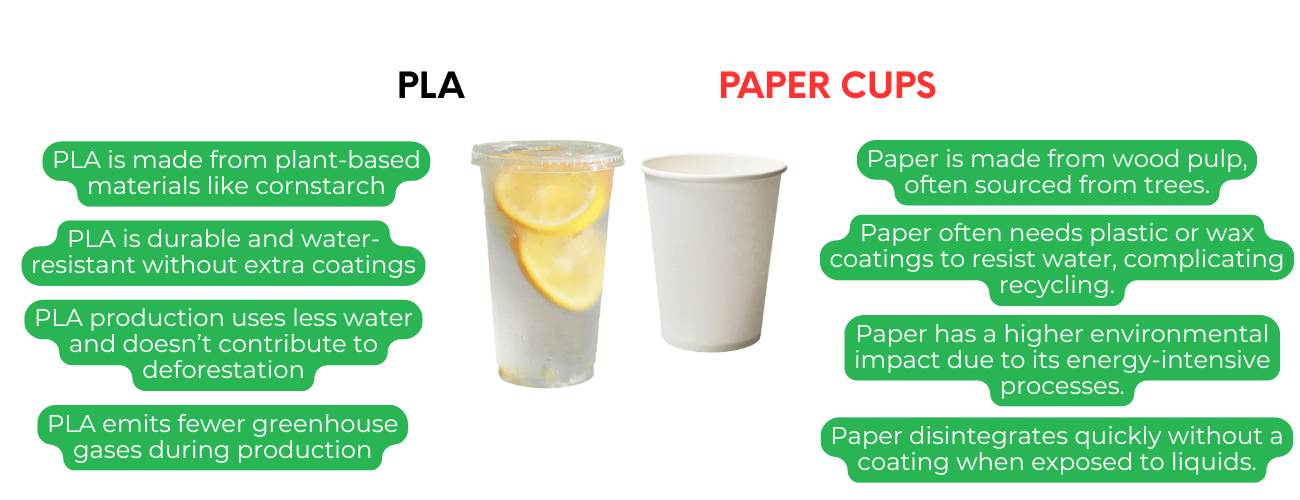
At first glance, paper might seem like the ultimate eco-friendly material. It’s natural, recyclable, and widely used. However, when you dig deeper, PLA often emerges as the more sustainable choice in certain scenarios. Paper production is resource-intensive, requiring large amounts of water and energy. Additionally, paper products often need to be coated with plastic or wax to make them water-resistant, which complicates recycling and reduces their overall sustainability.
PLA, by contrast, offers durability and water resistance without the need for additional coatings. For example, a PLA-lined coffee cup can hold liquids without leaking, while a plain paper cup would quickly disintegrate. PLA also has a smoother production process when it comes to greenhouse gas emissions, as it doesn’t rely on deforestation or the same level of water consumption. In my experience, businesses that switch from paper to PLA for certain applications often find a better balance between functionality and sustainability.
PLA vs. Other Bio-Based Plastics
The world of bio-based plastics is vast, with materials like PHA (polyhydroxyalkanoates), PBS (polybutylene succinate), and recycled plastics all vying for attention. Each has its strengths, but PLA holds its own as a versatile and cost-effective option.
PHA, for instance, is another biodegradable plastic with excellent environmental credentials, but it’s often more expensive and less widely available than PLA. PBS shares many of PLA’s properties but requires higher temperatures to degrade, making it less suitable for composting in some regions. Recycled plastics, while a great way to reduce waste, still rely on petroleum-based materials and don’t offer the same biodegradability as PLA.
What sets PLA apart is its balance of affordability, availability, and performance. It’s widely produced, making it accessible for businesses of all sizes, and its applications range from packaging to medical devices. Over the years, I’ve seen PLA consistently outperform other bio-based plastics in terms of scalability and practicality, making it a go-to choice for many industries.
By understanding how PLA compares to these materials, you can make informed decisions that align with your sustainability goals. In the next section, we’ll explore how to implement PLA effectively in your business or personal life, ensuring you maximize its benefits while minimizing its limitations. Let’s keep building a greener future together!
Challenges and Misconceptions About PLA
While PLA is a remarkable material with numerous benefits, it’s not without its challenges and misconceptions. As someone who has spent decades navigating the complexities of biodegradable packaging, I’ve seen firsthand how misunderstandings and logistical hurdles can impact its adoption. Let’s address these issues head-on, so you can make informed decisions about using PLA effectively.
Composting Requirements
One of the most common challenges with PLA lies in its composting requirements. Many people assume that because PLA is biodegradable, it will break down anywhere—whether in a backyard compost pile or a landfill. Unfortunately, that’s not the case. PLA requires specific conditions to decompose efficiently, such as the high temperatures and controlled environments found in industrial composting facilities. Without these conditions, PLA can take much longer to break down, leading to frustration for those expecting quick results.
Home composting, while a fantastic option for organic waste, often doesn’t reach the temperatures needed to break down PLA. If you’re considering PLA for your business or personal use, it’s crucial to check whether industrial composting facilities are available in your area. I always advise clients to include clear labeling on PLA products, indicating that they are “industrially compostable” to avoid confusion and ensure proper disposal.
Recycling Challenges
Recycling PLA presents another hurdle. Unlike traditional plastics, PLA cannot be processed in standard recycling streams. It requires separate facilities to handle its unique properties, and unfortunately, these facilities are not yet widespread. Mixing PLA with conventional plastics in recycling bins can lead to contamination, rendering entire batches of recyclable materials unusable.
To address this, I recommend working closely with local waste management providers to understand their capabilities. If PLA recycling isn’t available in your area, focus on educating consumers about proper disposal methods, such as composting. Clear communication is key—label your products with instructions that guide users toward the most sustainable end-of-life option. Over the years, I’ve seen businesses that invest in consumer education achieve much higher rates of proper disposal, reducing the risk of contamination and waste.
Dispelling Myths
Misconceptions about PLA can also create barriers to its adoption. One common myth is that PLA contributes to microplastic pollution. While it’s true that improper disposal can lead to fragmentation, PLA is designed to break down into natural elements under the right conditions, unlike traditional plastics that persist as microplastics for centuries. Educating consumers about the importance of composting PLA properly can help dispel this myth and build trust in the material.
Another misconception is that PLA biodegrades in any environment, including landfills. The reality is that landfills are not designed for decomposition; they are anaerobic environments where even organic materials like food scraps can remain intact for years. PLA is no exception. This is why proper disposal—whether through industrial composting or specialized recycling—is so critical.
By addressing these challenges and misconceptions, you can set realistic expectations for PLA and ensure it delivers on its promise of sustainability. In the next section, we’ll explore actionable strategies for integrating PLA into your operations or lifestyle, helping you make the most of this innovative material. Let’s tackle these challenges together and pave the way for a greener future!
How to Choose and Dispose of PLA Products
Choosing and disposing of PLA products may seem straightforward, but there are key steps to ensure you’re maximizing their benefits while minimizing environmental impact. Over the years, I’ve guided countless businesses and consumers through this process, and I’ve learned that attention to detail makes all the difference. Let’s dive into how to identify PLA products, dispose of them properly, and adopt best practices for sustainable use.
Identifying PLA Products
The first step in using PLA effectively is knowing how to identify it. PLA products often look and feel similar to traditional plastics, which can make them hard to distinguish. To ensure you’re choosing genuine PLA, look for certifications like ASTM D6400 or EN 13432, which confirm that the product meets industrial compostability standards. These certifications act as a seal of approval, guaranteeing that the material will break down under the right conditions.
Another telltale sign of PLA is its labeling. Many manufacturers include terms like “compostable” or “biodegradable” on their packaging, but be cautious—these terms can sometimes be misleading. Always check for specific details, such as whether the product is suitable for industrial composting. If you’re a business sourcing PLA products, ask your supplier for documentation to verify their claims. Trust me, a little due diligence upfront can save you from potential greenwashing pitfalls.
Proper Disposal
Disposing of PLA correctly is just as important as choosing the right product. The best way to dispose of PLA is through industrial composting facilities, which provide the high temperatures and controlled conditions needed for the material to break down. If you’re unsure whether such facilities are available in your area, check with your local waste management provider or use online directories like FindAComposter.com.
It’s crucial to avoid placing PLA in regular recycling bins. Unlike traditional plastics, PLA requires specialized recycling processes, and mixing it with conventional plastics can contaminate the entire batch. If industrial composting or PLA-specific recycling isn’t an option in your region, consider reaching out to local businesses or community groups that may offer collection programs for compostable materials.
For consumers, I recommend checking product labels for disposal instructions. Many PLA items include clear guidance, such as “Compost in industrial facilities only.” For businesses, providing disposal information directly on your products or packaging can go a long way in ensuring proper end-of-life management.
Best Practices
To get the most out of PLA, both consumers and businesses need to adopt a few best practices. For consumers, one of the simplest steps is to separate PLA items from regular waste streams. Create a dedicated bin for compostable materials and educate your household or workplace about what can and cannot go in it. If you’re hosting an event, consider providing labeled bins specifically for PLA products to prevent contamination.
For businesses, transparency and education are key. Clearly label your PLA products with disposal instructions and, if possible, partner with local composting facilities to offer collection services. I’ve worked with companies that include QR codes on their packaging, linking to resources about composting and sustainability. This not only helps customers dispose of products correctly but also reinforces your brand’s commitment to the environment.
Another tip for businesses is to consider the entire lifecycle of your PLA products. From sourcing certified materials to ensuring proper disposal, every step matters. Engage with suppliers who share your sustainability values and invest in educating your team about the unique properties of PLA. Over the years, I’ve seen businesses that take these extra steps build stronger relationships with eco-conscious consumers and stand out in competitive markets.
By following these guidelines, you can ensure that PLA products live up to their potential as a sustainable alternative to traditional plastics. In the next section, we’ll explore how to measure the impact of using PLA in your operations, helping you quantify the benefits and share your success story. Let’s keep moving forward on this journey toward a greener future!
Innovations and the Future of PLA
PLA has come a long way since its early days, but its journey is far from over. As someone who has spent decades in the eco-friendly packaging industry, I’ve witnessed firsthand how innovation continues to push the boundaries of what PLA can achieve. From technological advancements to emerging applications, the future of PLA is brimming with potential. Let’s explore the exciting developments shaping this material and its role in building a sustainable, circular economy.
Advancements in PLA Technology
One of the most significant areas of innovation in PLA is improving its heat resistance and barrier properties. Early versions of PLA struggled with heat sensitivity, making them unsuitable for applications like hot beverage cups or microwaveable containers. However, recent advancements have addressed these limitations. Manufacturers are now developing high-heat PLA grades that can withstand temperatures up to 100°C (212°F) or more, expanding its usability in foodservice and packaging industries. For example, I’ve worked with clients who successfully transitioned to PLA-based coffee lids that maintain their integrity even with steaming hot drinks.
Another exciting development is the creation of new PLA blends and composites. By combining PLA with other biodegradable materials, researchers are enhancing its strength, flexibility, and durability. These blends open the door to applications that were previously out of reach, such as flexible films for food packaging or durable components for automotive interiors. I’ve seen companies experiment with PLA composites reinforced with natural fibers like hemp or bamboo, resulting in materials that are not only stronger but also more sustainable.
Emerging Applications
PLA’s versatility is driving its adoption in industries beyond packaging. One of the most promising areas is sustainable building materials. Imagine insulation panels, wall claddings, or even flooring made from PLA composites. These materials offer a renewable alternative to traditional construction materials while maintaining durability and performance. I’ve collaborated with architects and builders who are exploring PLA-based solutions to reduce the carbon footprint of their projects, and the results are inspiring.
In the medical field, PLA is making waves with advanced medical devices. Its biocompatibility and ability to degrade safely in the body make it ideal for applications like surgical implants, drug delivery systems, and tissue engineering scaffolds. For instance, PLA-based sutures dissolve naturally over time, eliminating the need for removal and reducing patient discomfort. Researchers are also exploring PLA’s potential in 3D-printed medical devices, where its precision and customizability can revolutionize patient care.
The Role of PLA in a Circular Economy
PLA’s future isn’t just about technological advancements—it’s also about its role in building a circular economy. This concept emphasizes keeping materials in use for as long as possible, minimizing waste, and regenerating natural systems. PLA fits perfectly into this vision, thanks to its compostability and potential for recycling in closed-loop systems.
Industry efforts and collaborations are driving progress in this area. For example, some companies are developing take-back programs for PLA products, ensuring they are composted or recycled properly. I’ve worked with businesses that partner with industrial composting facilities to create seamless disposal solutions for their customers. These initiatives not only reduce waste but also strengthen consumer trust in PLA as a sustainable material.
Policy developments are also playing a crucial role. Governments around the world are introducing regulations to phase out single-use plastics and promote biodegradable alternatives like PLA. These policies create a supportive environment for innovation and encourage businesses to invest in sustainable materials. As someone who has navigated the evolving regulatory landscape, I can confidently say that staying ahead of these trends is key to leveraging PLA’s full potential.
The future of PLA is bright, with endless possibilities for innovation and impact. By embracing these advancements and working together to build a circular economy, we can ensure that PLA continues to lead the charge in sustainable materials. In the next section, we’ll discuss how to measure the environmental and economic benefits of adopting PLA, helping you quantify its value and share your success story. Let’s keep pushing the boundaries of what’s possible!
Frequently Asked Questions
Q: Is PLA safe for food contact?
A: Yes, PLA is completely safe for food contact. Manufacturers design PLA to be non-toxic and free from harmful chemicals like BPA or phthalates. It’s commonly used in food packaging, utensils, and containers, ensuring that your food stays safe and uncontaminated. Always check for food-grade certifications on PLA products to confirm their safety for specific applications.
Q: How long does it take for PLA to compost?
A: PLA typically takes about 90 to 180 days to compost in an industrial composting facility. These facilities provide the high temperatures (around 140°F or 60°C) and controlled conditions needed for PLA to break down efficiently. Without these conditions, such as in a home compost pile or landfill, the process can take much longer.
Q: Can I compost PLA at home?
A: Composting PLA at home is challenging because most home compost piles don’t reach the high temperatures required to break it down. While small, thin PLA items might eventually degrade, the process could take years. For best results, send PLA products to an industrial composting facility where they can decompose properly.
Q: What’s the difference between compostable and biodegradable?
A: Compostable materials, like PLA, break down into water, carbon dioxide, and organic matter under specific conditions, leaving no toxic residue behind. Biodegradable materials, on the other hand, simply degrade over time but may leave behind harmful residues or take much longer to decompose. Compostable products meet stricter standards and actively contribute to soil health when disposed of correctly.
Q: Does PLA contribute to microplastic pollution?
A: PLA does not contribute to microplastic pollution when disposed of properly. Unlike traditional plastics, which break down into tiny, persistent microplastics, PLA degrades into natural elements like water and carbon dioxide in industrial composting facilities. However, if PLA ends up in the wrong environment, such as a landfill or ocean, it may fragment over time, so proper disposal is crucial.
Conclusion: Small Changes, Big Impact
PLA offers a powerful solution to the environmental challenges posed by traditional plastics. Its plant-based origins, compostability, and versatility make it a standout choice for reducing waste and embracing sustainability. By choosing PLA, you can lower your carbon footprint, support a circular economy, and contribute to a cleaner planet.
Now is the time to take action. Start by making informed choices—look for certified PLA products, educate yourself on proper disposal methods, and encourage others to do the same. Every small step adds up, and together, we can create a significant impact. Explore the world of PLA products today and commit to disposing of them responsibly. Let’s work toward a future where sustainability becomes second nature!