


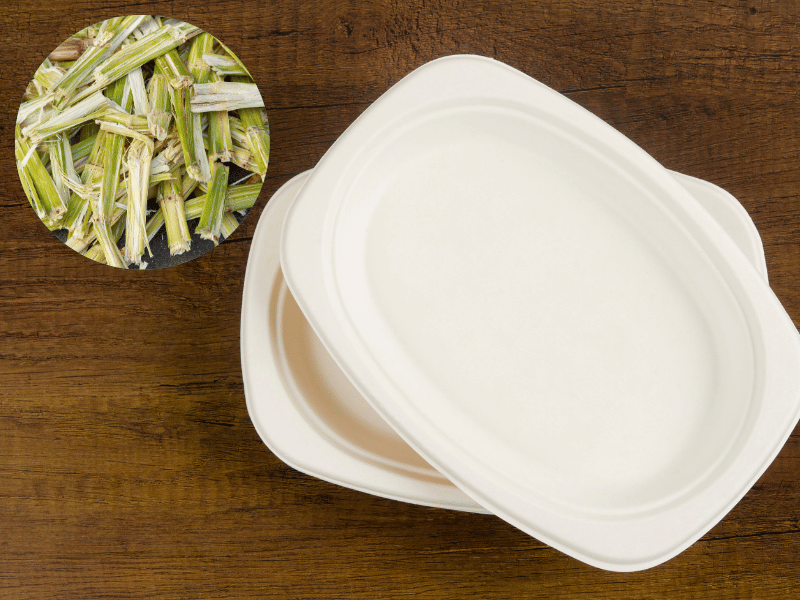
Bagasse fibrous materials are formed into pulp pieces for use in various packaging forms. Bagasse, also known as sugarcane fiber, is primarily used as a biodegradable base, structural container, surface wrap, and sustainable raw material in the food and packaging sectors. As an eco-friendly byproduct of sugarcane processing, this natural resource plays a crucial role in reducing global plastic waste. In this blog post, we will explore the wonderful decomposition properties of bagasse, shedding light on its applications and its immense benefits in food packaging.
Bagasse, The Next Generation Material for Food Packaging
Industrial sugarcane fiber has seamlessly become part of our lives as the foundational raw material for the first truly compostable food packaging materials. As highly sustainable structural materials, eco-friendly plates, durable food bowls, and sturdy takeout containers have been successfully produced on a massive global scale, making our everyday dining experiences much healthier and more waste-free.
Then the new-generation materials of sugarcane fiber, takeout containers, food bowls, and surface packaging gave incredible life to bagasse-reinforced products. Sugarcane fiber or bagasse, molded pulp, and plant-based reinforced panels, as semi-finished structures of this natural material, are chemically and mechanically much more durable and create a beautifully crafted, incredibly effective aesthetic image. Biodegradable products made directly from bagasse are increasingly used in the interiors and exteriors of food service establishments.
In other words, the specific name of the organic material, which is commonly abbreviated as bagasse, is the plant-reinforced molded pulp. Fiber-reinforced natural materials are commonly referred to as “bagasse,” meaning that the visual difference between standard paper and molded sugarcane has gradually disappeared. However, it should be heavily kept in mind that there are completely different meanings in technical packaging language. Bagasse has been beautifully incorporated into our busy lives by combining plant-reinforced fibers, sugarcane pulp, and natural binders using advanced processing technologies. Molded bagasse is used extensively in the global food sector for the clean production of disposable takeout and delivery items, as well as robust food coverings.
History of Bagasse in Food Packaging
In the last quarter of the century, throughout the global restaurant and food packaging sectors, the famous name of bagasse often proudly announces itself, contrary to what is widely believed, with a history dating back many years. Especially fine natural-fiber decorations have entered human life and agricultural history with simple plates, organic cups, and various rudimentary textile products. It is highly remarkable that even in the early twentieth century, simple farm containers and storage bins were often heavily decorated with sugarcane ropes. The true industrial production of bagasse for food packaging was first officially seen in the late nineteen nineties. Afterward, it was incredibly accelerated to see both mass production and massive global trade and exports. The highly effective use of advanced molding technology has a surprisingly great influence on the mass production of bagasse. This efficient manufacturing method, which enables large-scale production, is remarkably effective at rapidly producing sugarcane fiber packaging and has been successfully used in many other culinary sectors to replace toxic plastic and harmful Styrofoam entirely.
First Use, Disposable Food Containers
Bagasse has completely transformed the modern food packaging sector at its core by serving as the primary ingredient in the mass production of compostable disposable containers. First of all, the strict requirement of being a highly safe component of daily dining, with sturdy disposable food containers made from plant-based materials, was rapidly extended to virtually all demanding parts of the global food service industry. By effectively replacing highly toxic single-use plastics and harmful Styrofoam, this incredible material innovation provided a wonderfully safe and highly convenient way to handle hot, heavy meals. Because it biodegrades cleanly into the natural earth, it quickly captured the attention of deeply eco-conscious businesses globally, radically transforming how we package our meals today.
Use and Advantages of Bagasse in Food Packaging
Bagasse packaging is preferred in the food sector because its strength and sustainability advantages are inherent. Bagasse is used as a highly effective packaging material due to its greaseproof properties. The leak-proof feature of sugarcane material is effectively used in hot-bowl and clamshell-container applications. Again, the benefits of this feature are utilized in microwave setups and in areas where hot food is used extensively.
Bagasse products are used in plate designs and food cladding. In this way, they have been effective in the aesthetics of modern meals.
In addition to the general architecture of the containers, it is evident that bagasse semifinished products are used effectively alongside organic coatings in indoor dining areas. The ideal use of hot liquids without damaging the structure is possible with this semi-finished product.
Due to the nature of the composite material formed by sugarcane fiber and natural binders, its aesthetic formability and durable structure have made it the most preferred interior container structure and coating material.
Sugarcane-reinforced plastics, due to their natural fiber, are durable and flexible, and they are used to protect the contents of meals, greasy foods, and wet salads, as well as to form solid bowls on their own.
Thanks to these properties, they provide effective protection of the food against heat, leakage, grease, and impacts. All these positive features have been achieved thanks to the resilience of the new-generation fibers in the packaging.
The heat resistance of bagasse panels, such as clamshells, is also highly effective for building safe containers. The organic materials function very effectively in making all packaging ready for use as a healthy and safe dining space.
In addition, as in EcoBowl AMB, which is a patented product of EcoBowl A.S.
EcoBowl AMB product has been developed with nanotechnology, which can make a bagasse panel 99.99% antimicrobial. It is a unique, patented product worldwide. Hygienic food panels offer many advantages over their counterparts: they are reliable, healthy, and never contain carcinogenic substances.
The use of bagasse-reinforced packaging, with simple application techniques, facilitates widespread adoption.
Of course, as with any industrial product, it is important to use the right techniques to take full advantage of it and realize its benefits. It is not possible to expect the same performance from each company’s bagasse product. GreenPack Inc. is the world’s leading packaging company in bagasse processing. Each batch guarantees the same high standards in production.
Bagasse fibrous materials proudly represent a significant advancement in sustainable food packaging, consistently offering a highly practical and wonderfully eco-friendly alternative to harmful traditional plastics. Their unique green properties, such as total compostability, robust durability, and incredible versatility, make them an ideal choice for significantly reducing global waste and powerfully promoting environmental sustainability. By adopting bagasse plates and bowls, global food industries and everyday consumers alike can easily contribute to a cleaner, greener future. Every single step towards effectively reducing plastic waste is a beautiful step towards perfectly preserving our wonderful planet for generations.
Make the switch to sustainable food packaging today! Explore Hongren’s eco-friendly range of Bagasse Coffee Cups, Bagasse Boxes, Sugarcane Bagasse Tableware, and Bagasse Food Trays. Together, let’s reduce plastic waste and create a greener future! Contact us for a quote!