


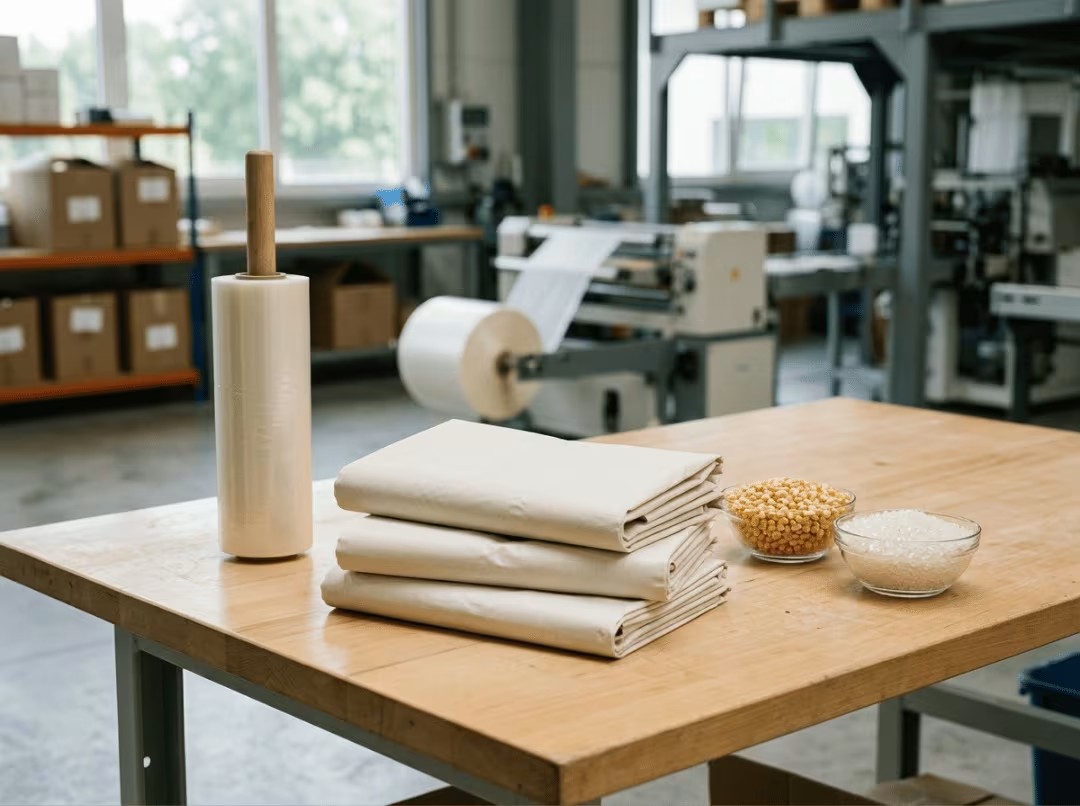
Compostable bags cost more than conventional plastic and, to the naked eye, look nearly identical. For anyone sourcing packaging at scale, both facts demand a real explanation—not a marketing one.
Why pay the premium? And how do you know the product actually performs the way the label suggests?
This article covers how compostable bags are manufactured, from agricultural raw material to finished film. It also explains what “compostable” means as a technical standard—not a brand claim—and what to check before committing to a bulk order. The aim is not to advocate unconditionally for compostable packaging, but to give buyers a clear, practical basis for making their own call.
Why People Choose Compostable Bags
The value of a compostable bag has almost nothing to do with the material itself. It sits at the end of life. A compostable bag that reaches a certified industrial composting facility and breaks down within the required timeframe delivers a genuine environmental benefit: bio-based carbon returns to the soil rather than accumulating in a landfill or the ocean. The same bag in a landfill delivers almost none of that.
This is the point most commonly missed in compostable packaging decisions—and the most consequential one.
Businesses best positioned to benefit typically fall into three groups: foodservice operators who control their own waste stream and feed it into organic waste collection; retailers whose customers actively participate in municipal composting programs; and companies supplying markets where organic waste collection infrastructure already exists at scale. Outside these contexts, the case for compostable bags gets thin fast.
What Compostable Bags Are Usually Made From
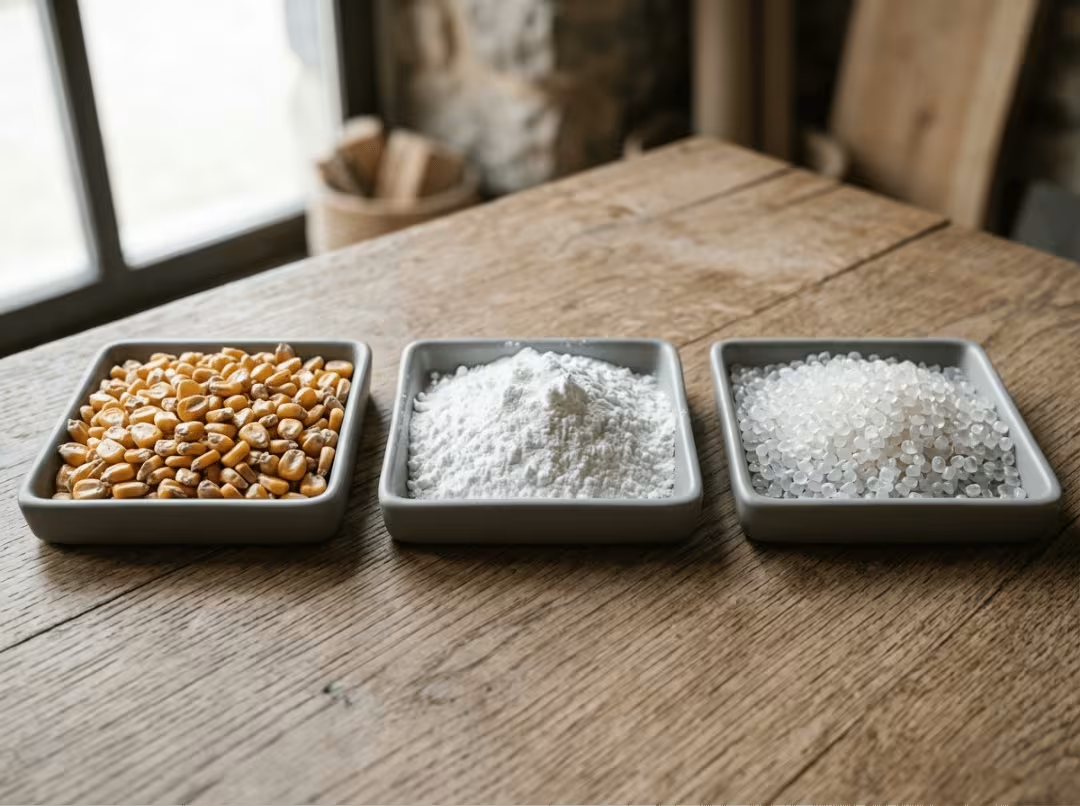
Most compostable bags are made from polylactic acid (PLA), a bioplastic derived from plant starch. Field corn is the dominant feedstock. This is not the sweet corn sold at grocery stores; it is a commodity crop grown at industrial scale for animal feed and processing. The distinction matters for buyers paying attention to the food-versus-materials debate, and it changes the cost equation considerably.
PLA on its own is stiff and brittle—unsuitable as a standalone bag film. To fix this, manufacturers blend PLA with PBAT (polybutylene adipate terephthalate), a petroleum-derived but certified-compostable polymer that adds flexibility and tear resistance. Starch blends—PLA combined with thermoplastic starch—are another common formulation, particularly where cost pressure is the primary driver.
The specific blend ratio affects almost everything: flexibility, sealing behavior, shelf life, and composting speed. Suppliers don’t always disclose these ratios clearly. This is why certification logos carry more practical weight than raw material claims. A bag described as “made from PLA” can perform very differently depending on what it’s blended with and in what proportions. The label alone tells you less than you might expect.
How Compostable Bags Are Made
Starch Extraction
Everything starts at a corn wet mill. Field corn kernels are steeped in water and dilute sulfuric acid to soften the structure and loosen the components. The softened corn is mechanically separated into four fractions: germ (processed into corn oil), fiber (redirected to animal feed), protein (gluten), and starch. Only the starch fraction advances. This stage is physical and chemical separation—fermentation comes later.
Turning Starch Into Lactic Acid
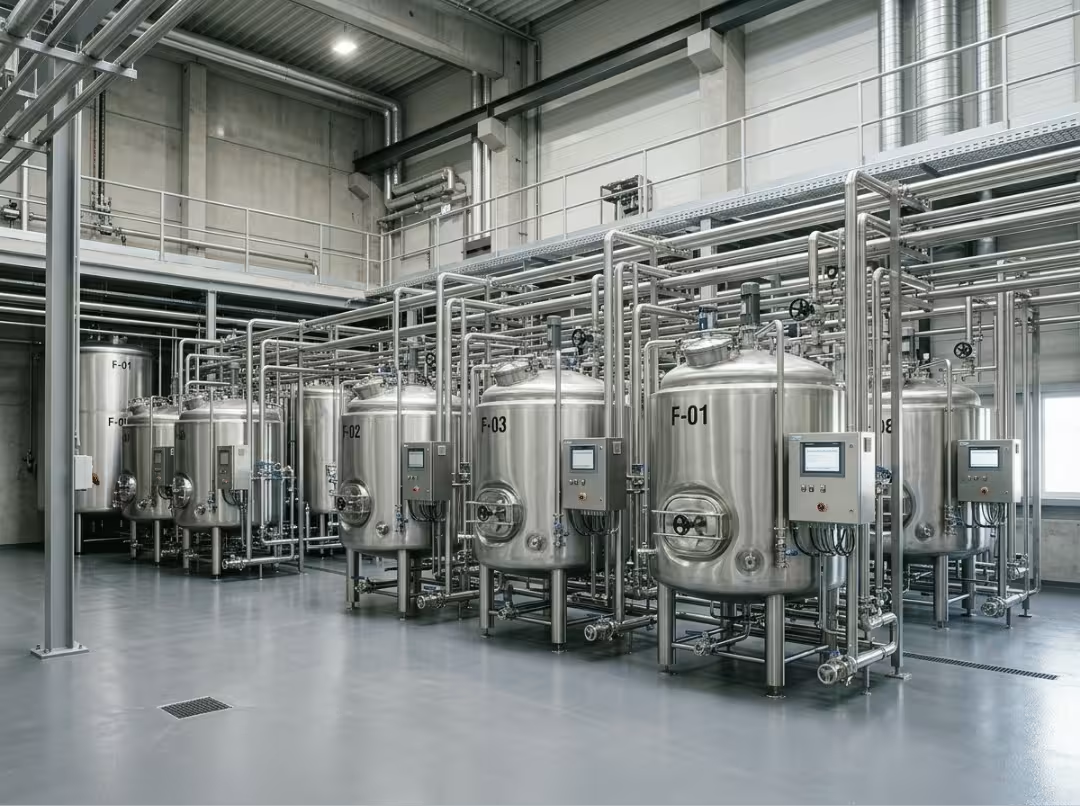
Corn starch is a long-chain polymer of glucose units. Enzymes or dilute acids cleave these chains apart through hydrolysis, producing a glucose syrup. That syrup feeds into fermentation tanks where Lactobacillus bacteria convert the glucose into lactic acid—the same biochemical pathway behind yogurt fermentation, but running continuously at industrial scale. Fermentation yields are high, and the process is well established, which is what makes corn-derived PLA commercially viable for packaging.
Converting Lactic Acid Into PLA
Lactic acid molecules are linked through condensation polymerization to form PLA. The most efficient commercial route passes lactic acid through an intermediate cyclic molecule called lactide, which is then ring-opened and polymerized into high-molecular-weight PLA resin. The length and architecture of these polymer chains determine the finished material’s melting point, flexibility, optical clarity, and degradation rate under composting conditions. Small differences at this stage produce meaningfully different performance downstream.
Making Film and Converting Into Bags
PLA resin arrives at the bag manufacturer as pellets. Before any processing starts, those pellets must be dried to a moisture content below 250 parts per million. PLA readily absorbs atmospheric moisture, and inadequate drying can cause hydrolytic chain scission during melt processing—a failure that manifests not as an obvious defect on the production line but as inconsistent seal strength or early embrittlement once the bags are in the field.
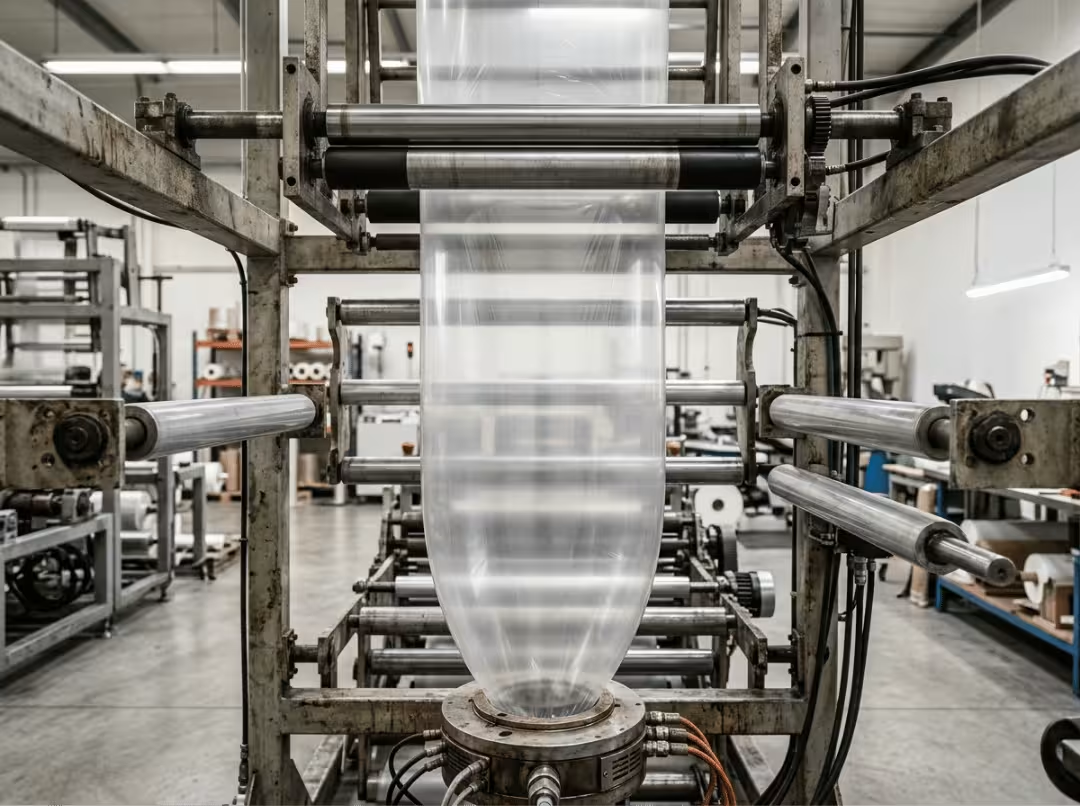
Dried pellets are melted and pushed through a circular die. Air blown into the center of the molten tube inflates it into a film bubble—blown film extrusion, the same fundamental process used for conventional plastic film. The bubble is cooled, collapsed, and wound onto rolls. PLA/PBAT blends require more careful process control than polyethylene: the melt temperature window is narrower, cooling rates matter more for consistent properties, and corona treatment is necessary for adequate ink adhesion.
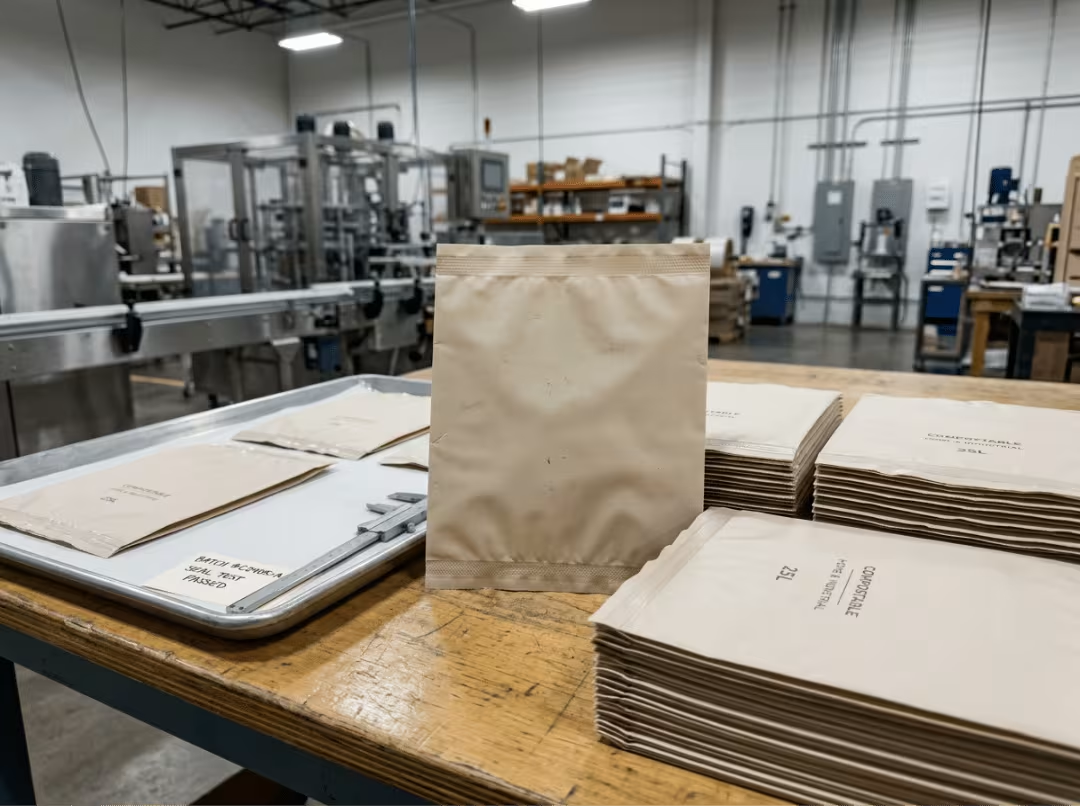
From roll stock, the film is printed, heat-sealed, and cut into finished bags. Heat sealing is where compostable films get difficult. The sealing window—the range of temperature, pressure, and dwell time that produces a consistent, strong bond—is narrower than for conventional PE. Equipment calibrated for polyethylene will need adjustment. Seal strength consistency is the first performance variable worth testing when qualifying any new supplier.
Why Compostable Bags Behave Differently
PLA-based films handle, store, and perform differently from polyethylene. These differences have direct operational consequences for anyone running them through a packaging line or managing inventory:
- Temperature sensitivity: PLA film starts to deform above approximately 50°C. Bags stored outdoors in warm climates, in unventilated shipping containers, or near heat sources can arrive distorted before they are ever used.
- Shelf life: Most compostable bags have a recommended use-by period of 12 to 18 months from the date of manufacture and require cool, dry storage. Inventory left in a warm warehouse for a year may show measurably weaker seal strength than fresh stock—moisture slowly hydrolyzes the polymer chains even before the bags are processed.
- Puncture resistance: Generally lower than equivalent-gauge PE film. Sharp or heavy contents may require a thicker grade, which adds cost and can slightly extend composting time.
- Sealing calibration: Lines set up for PE will need recalibration. Build in time for setup and some material waste when making the switch.
None of these characteristics rule out compostable bags for the right applications. They do mean that matching the specification to the actual end-use environment matters more than it does with conventional plastic—there is less margin for mismatch.
Compostable vs. Biodegradable: The Difference That Matters
“Biodegradable” carries no fixed legal or performance definition in most markets. A material that takes two centuries to break down in a landfill qualifies as biodegradable under most common usage of the word. So does one that degrades in six months under controlled industrial conditions. The term says nothing about the timeframe, the required conditions, or what the residue actually looks like.
“Compostable” is a performance standard. A certified compostable material must break down within a defined timeframe under specified conditions, and the residue must not contain harmful levels of heavy metals, ecotoxic compounds, or visible plastic fragments. There are numbers attached, and an independent party has verified them.
That gap between the two terms is where most greenwashing in sustainable packaging occurs. Products marketed as “biodegradable bags” without third-party certification carry no verifiable environmental guarantee. Some contain conventional plastic with pro-oxidant additives—marketed as oxo-degradable or oxo-biodegradable—that fragment the polymer into microplastics rather than composting it into anything benign. These products are not compostable. They are now restricted or outright banned in many markets, including the European Union under the Single-Use Plastics Directive.
The right question is not “is this bag biodegradable?” It is: “Does this bag carry a recognized compostability certification, and does that certification cover the disposal route available in my market?”
What Makes a Bag Officially Compostable
Standards
Two standards dominate global certification for compostable packaging:
ASTM D6400 is the primary US standard. It requires that a material disintegrate substantially within 12 weeks in a controlled composting environment and that at least 60% of original carbon biodegrades within 180 days.
EN 13432 is the European equivalent. It sets similar disintegration and biodegradation requirements and adds explicit limits on heavy metal content and ecotoxicity, requiring that composted residue does not reduce plant growth relative to a control sample.
Both standards are designed around industrial composting conditions. Passing either one does not mean a bag will break down in a home compost pile.
Certifications
Standards define the requirements. Certification bodies verify compliance through independent testing. The marks worth knowing:
- BPI (Biodegradable Products Institute) — the leading North American certifier, verifying compliance with ASTM D6400. Certified products are listed at bpiworld.org.
- TÜV Austria OK compost INDUSTRIAL / OK compost HOME — widely recognized across Europe and in international markets. These are separate marks for different performance levels; industrial and home composting are tested independently.
- DIN CERTCO — a European certifier operating against EN 13432, with a publicly searchable certificate database.
Both BPI and TÜV Austria maintain searchable online databases. Cross-referencing a supplier’s certification claim against those databases before placing a large order takes a few minutes. It’s a step many buyers skip—occasionally to their cost.
What Buyers Should Verify
- The certification logo on the product matches an active listing in the certifying body’s database—not just the company’s name
- The certification covers the relevant disposal route; industrial and home composting are different marks
- The supplier can confirm the specific film formulation is certified, not just the base resin
- The product carries a stated shelf life and storage recommendation
Industrial Composting vs. Home Composting
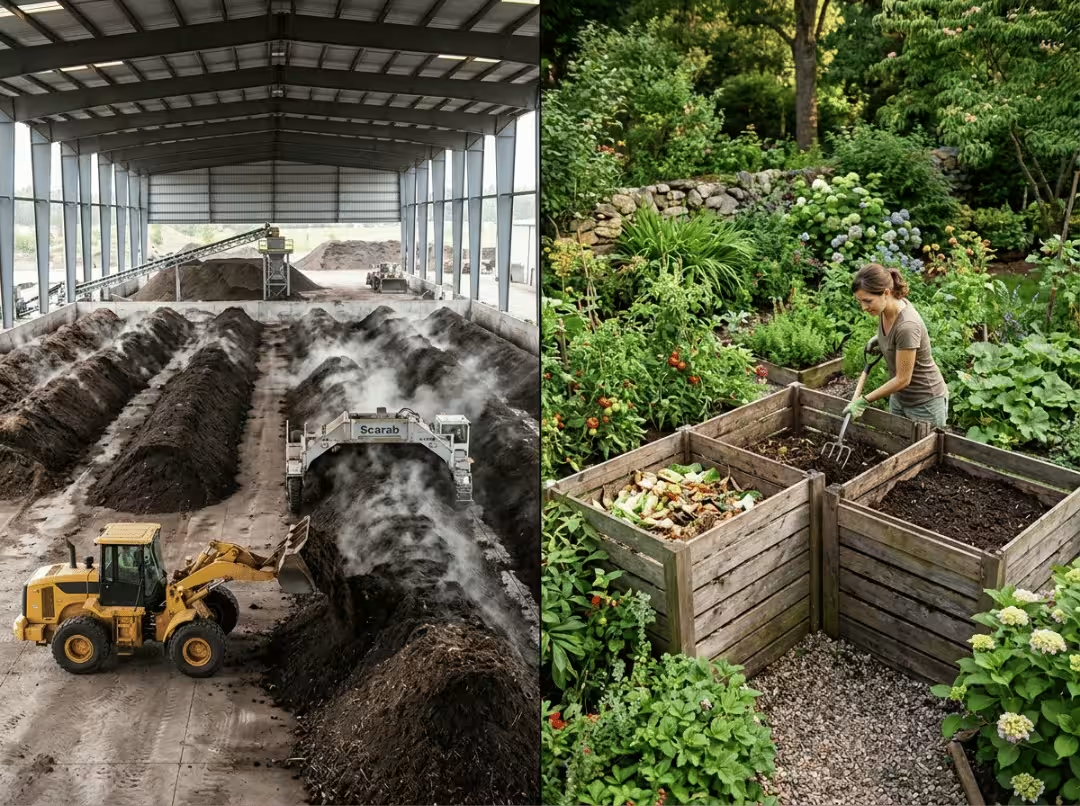
Most PLA-based compostable bags are certified for industrial composting only. Industrial facilities maintain sustained temperatures of 55–60°C, controlled humidity, and regular turning. These conditions drive the hydrolytic and microbial degradation that breaks PLA down within the certified 180-day timeframe.
Home compost bins run at 20–35°C with far less consistent oxygen exposure. At those temperatures, most PLA bags will not break down within 180 days—they may sit largely intact for a year or more. This is not a product defect. It is predictable material chemistry.
The practical implications depend on who is using the bags and how:
- Home users composting kitchen scraps will find that most certified compostable bags simply do not perform as intended in a backyard bin, regardless of what the packaging says.
- Foodservice operators feeding into municipal organics collection need to verify that the collection service actually routes material to an industrial composting facility. Not all do—some of this material ends up in landfill.
- Municipal programs vary widely. Some require certified compostable bags for organics collection; others ask that bags be removed before deposit. This is worth a direct call to the local program before specifying packaging.
Home composting-certified products do exist and carry a distinct mark—TÜV Austria’s OK compost HOME is the most widely recognized. These formulations typically use a higher starch content or a modified PBAT blend to achieve degradation at lower temperatures. The trade-off is mechanical performance: they tend to be less robust than their industrial-grade counterparts.
What Happens When a Compostable Bag Goes to the Wrong Place
In a landfill: Anaerobic conditions prevent aerobic composting. PLA can persist for decades and, as it eventually degrades anaerobically, contributes to methane generation. The environmental value of the bio-based material is effectively lost.
In conventional plastic recycling, PLA is a contaminant. Its melting point and material properties differ from PE, PP, and PET, and most sorting facilities cannot reliably separate compostable films from conventional ones. Even a small amount of PLA mixed into a recycling batch can downgrade the entire lot. Compostable bags have no business in a plastic recycling bin.
In general waste: The bag goes to landfill or incineration by default—resulting in the same environmental outcome as the first scenario.
Disposal route is not a secondary consideration. It is the primary factor determining whether a compostable bag delivers any meaningful environmental benefit. The material is only part of the story; where it ends up is the rest.
When Compostable Bags Make Sense—and When They Don’t
Good fit:
- Markets with accessible industrial composting infrastructure and established organic waste collection programs
- Foodservice and fresh produce operations that control their waste stream and route it reliably to composting
- Retail and e-commerce markets where customers are reasonably likely to participate in municipal composting schemes
- Applications where the bag itself enters the composting stream alongside its contents—organic waste liners being the clearest example
Poor fit:
- No accessible organic waste collection feeding a certified industrial facility
- High-temperature or extended outdoor storage environments
- Applications requiring PE-equivalent puncture resistance or a forgiving sealing window
- Operations with slow inventory turnover where bags may degrade in storage before they are used
Practical Buying Checklist
Before placing a bulk order:
- Verify the certification logo in the certifying body’s database (bpiworld.org for BPI; tuv-austria.com for TÜV Austria)
- Confirm the disposal route is actually available in your market—industrial composting, home composting, or neither
- Request seal strength test data and compare it against your packaging line and product requirements
- Check stated shelf life and storage conditions against your actual warehouse environment
- Clarify the film formulation (PLA only, PLA/PBAT blend, starch blend) and understand how it affects composting speed
- Match minimum order quantities against projected inventory turnover—holding excess compostable stock is a real risk
Common Questions From Buyers
What is the practical difference between compostable and biodegradable bags?
“Biodegradable” has no standardized performance definition in most markets. “Compostable” is a defined standard with independent certification, fixed timeframes, and residue requirements. Without a recognized certification mark from BPI, TÜV Austria, or DIN CERTCO, a “biodegradable” claim on packaging is unverified—and largely meaningless for procurement purposes.
Will a compostable bag break down in a home compost bin?
Most will not, at least not within any useful timeframe. The vast majority of compostable bag certifications cover industrial composting conditions only. Home composting-certified products exist and carry a distinct mark—TÜV Austria’s OK compost HOME being the most recognized. Always check the specific certification rather than assuming home compostability from the label.
Why do compostable bags cost more?
The cost reflects the complex raw-material pathway (corn starch → glucose → lactic acid → PLA resin), tighter manufacturing tolerances during extrusion and sealing, third-party certification costs, and lower production volumes than those of conventional polyethylene. As global PLA capacity expands, the price gap is narrowing. It has not closed.
Can compostable bags be recycled with conventional plastic?
No. PLA contaminates recycled plastic batches and should never enter the conventional plastic recycling stream. Compostable bags belong in an organic waste or composting stream—nothing else.
What if there is no industrial composting facility nearby?
The environmental case for compostable bags weakens substantially. In that situation, reusable packaging, reduced packaging volume, or paper-based alternatives may be a better match for what the local infrastructure can actually handle.
How do I verify a supplier’s certification is genuine?
Search by product name or manufacturer at bpiworld.org (BPI) or tuv-austria.com (TÜV Austria). Confirm the specific product—not just the company—holds a current, active certification. A logo printed on a sample bag is not the same as an active database listing.
Before You Order
Compostable bags follow a well-defined manufacturing pathway: field corn starch is extracted through wet milling, hydrolyzed into glucose, fermented into lactic acid, polymerized into PLA resin via a lactide intermediate, dried, extruded into film, and converted into finished bags—at tighter process tolerances than conventional polyethylene at every stage.
That complexity explains the cost premium and identifies where quality variation enters the supply chain: moisture control during pellet drying, blend ratios that govern sealing behavior, and seal window consistency that only reveals itself under real production conditions.
The environmental case for compostable packaging is genuine, but it is not unconditional. It depends on three things aligning: a certified product, a confirmed disposal route, and local infrastructure capable of completing the loop. Verify the certification against the database, establish where the bag actually ends up, and test seal performance before committing to volume. When those three conditions are in place, compostable bags do what they claim. When they are not, the premium buys less than expected.