


The short version: Compostable bags must meet tested standards and break down within 90–180 days under specific conditions, leaving CO₂, water, and biomass. Biodegradable is an unregulated term with no required timeline, no certification, and no enforceable standard. Technically, almost any material qualifies — including conventional plastic.
You’re in the cleaning supplies aisle, staring at two boxes of garbage bags. One says “compostable.” The other says “biodegradable.” Both sound responsible. Both look like the greener option.
They are not the same thing — and the gap between them is not cosmetic. Using the wrong bag, or using the right bag in the wrong context, means your supposedly eco-friendly choice often ends up in a landfill doing no better than ordinary plastic. In some cases, it’s worse: certain biodegradable bags break apart into microplastics without ever decomposing.
Here’s how to tell them apart, identify misleading claims, and choose the bag that actually fits how your waste gets handled.
The Real Difference
The clearest way to compare these two bag types is across four dimensions.
|
Compostable bags |
Biodegradable bags |
|
|---|---|---|
|
Timeline |
90–180 days under defined conditions |
No regulated time limit |
|
Testing standards |
ASTM D6400, EN 13432 |
No mandatory standard |
|
Breakdown conditions |
Specific temperature, humidity, and microbial activity required |
No conditions specified or guaranteed |
|
End result |
CO₂, water, and biomass |
May only fragment — residue often remains |
Certified compostable bags are held to a defined, verifiable standard. They must break down within a set timeframe, leave no harmful residue, and pass ecotoxicity testing. Biodegradable bags carry none of those obligations. The label can appear on nearly any product without third-party verification.
Once you understand that distinction, every other decision in this article — what to buy, where to use it, which claims to trust — becomes considerably easier.
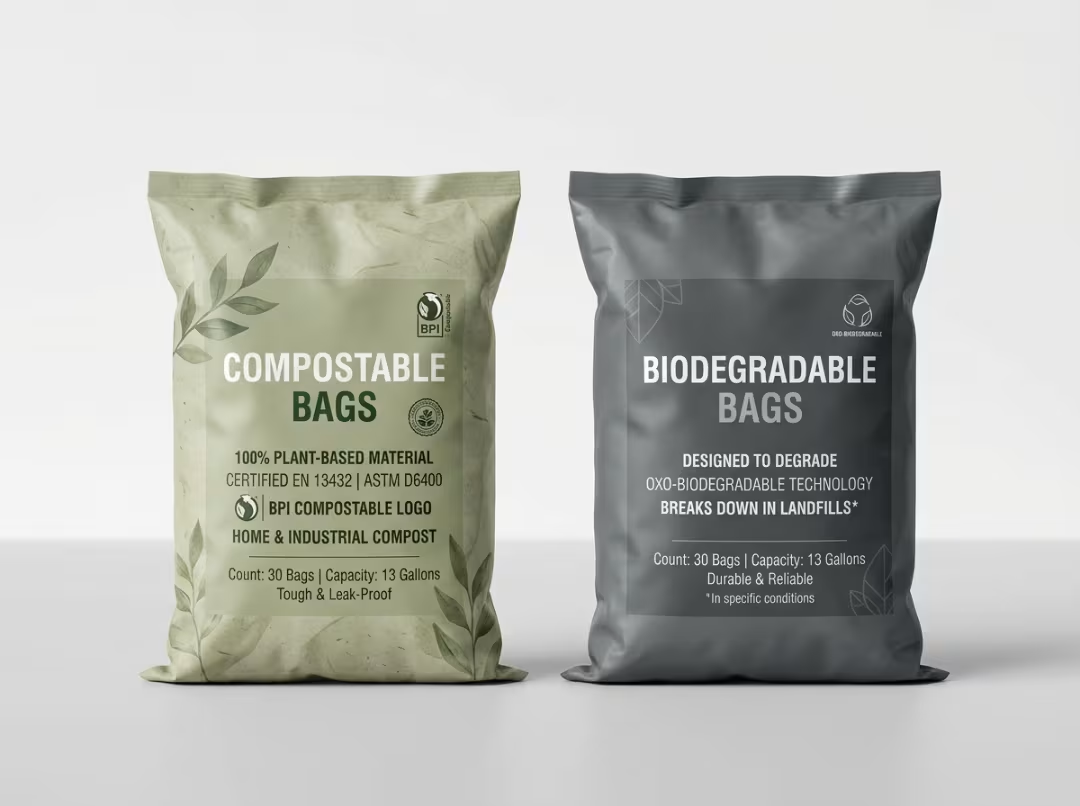
Why “Biodegradable” Is Often a Misleading Label
The word sounds precise. It isn’t.
No regulated time limit is attached to the term. Technically, almost anything biodegrades eventually — including conventional polyethylene, which can take hundreds of years. A bag labeled “biodegradable” may break down faster than standard plastic, or it may not. The label alone gives you no way to know.
What makes this more concerning is that “biodegradable” can legally appear on bags made from standard PE plastic blended with pro-degradant additives — the same base plastic as ordinary garbage bags. These additives are engineered to accelerate fragmentation, not biological breakdown.
This is what oxo-degradable bags actually are. Marketed as biodegradable, they don’t decompose — they fragment into smaller plastic pieces when exposed to UV light or heat. The result is microplastic contamination. The EU banned oxo-degradable plastics in 2021 under the Single-Use Plastics Directive, citing both the microplastic risk and the absence of any credible environmental benefit.
Without a certification standard, there is no reliable way to verify a biodegradable claim from the packaging alone. The label can appear on genuinely plant-based bags, on PE bags with additives, or anywhere in between — and the box often won’t tell you which.
On a garbage bag, “biodegradable” is a marketing term far more often than it is an environmental guarantee.
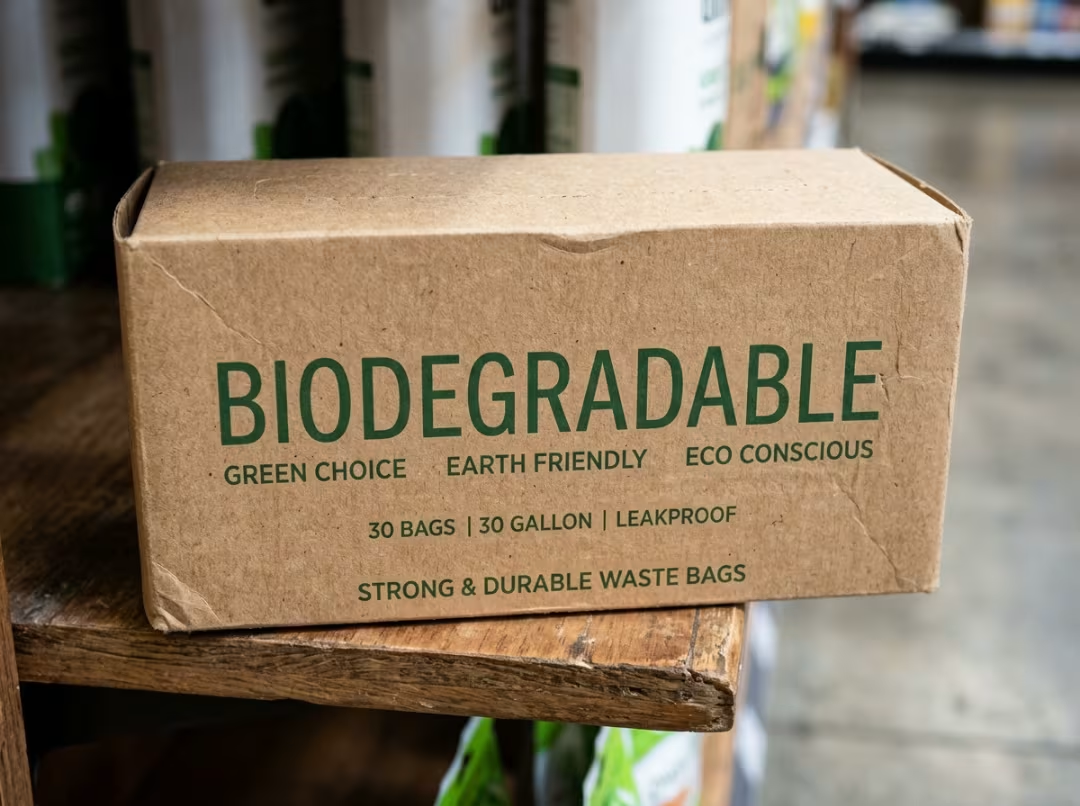
What “Compostable” Really Means
Compostable is a stronger label. But it comes with a condition most consumers overlook: it’s a promise that only holds in the right environment.
Certified compostable bags are tested under industrial composting conditions — controlled temperatures of around 55–60°C, specific humidity levels, and active microbial activity. These are conditions found in commercial composting facilities. They are not conditions found in a backyard pile, a curbside bin, or a landfill.
There are also two meaningfully different certifications, and they are not interchangeable:
- Industrially compostable bags require a commercial facility to break down properly. At the lower temperatures of a home compost pile, they may only partially decompose — leaving fibrous material behind.
- Home compostable bags are certified to break down under ambient backyard conditions, without industrial equipment.
A bag labeled simply “compostable” without specifying which type is worth scrutinizing. Check for the certification logo before assuming it fits your situation.
Landfill conditions are a separate problem entirely. Landfills are anaerobic — they lack the oxygen and moisture that biological breakdown requires. A compostable bag buried in a landfill can persist for decades, producing no better outcome than a conventional one. Certification doesn’t change that.
Compostable is a meaningful label when it’s backed by third-party verification and matched to the right disposal system. Without both, the environmental benefit largely disappears.
What Actually Happens After Disposal
Definitions matter less than outcomes. Here’s what actually happens to each bag type depending on where it ends up.
If the bag goes to a landfill
Neither compostable nor biodegradable bags perform well here. Landfills are sealed, low-oxygen environments — the biological conditions needed to break down certified compostable material simply don’t exist.
Biodegradable bags with pro-degradant additives may fragment, but fragmentation inside a sealed landfill produces microplastic contamination with no decomposition benefit. A certified compostable bag in a landfill delivers the same environmental result as a conventional one. The certification is wasted.
If the bag goes to an industrial composting facility
This is where certified compostable bags actually work — with one important caveat. Many municipal composting programs do not accept compostable plastic bags. Some require paper liners; others want organics deposited completely unbagged. Assuming your local program accepts these bags is one of the most common mistakes buyers make.
When the right conditions are in place — a facility that accepts bagged organics, operating at the correct temperature with active microbial activity — certified compostable bags genuinely break down into CO₂, water, and usable biomass.
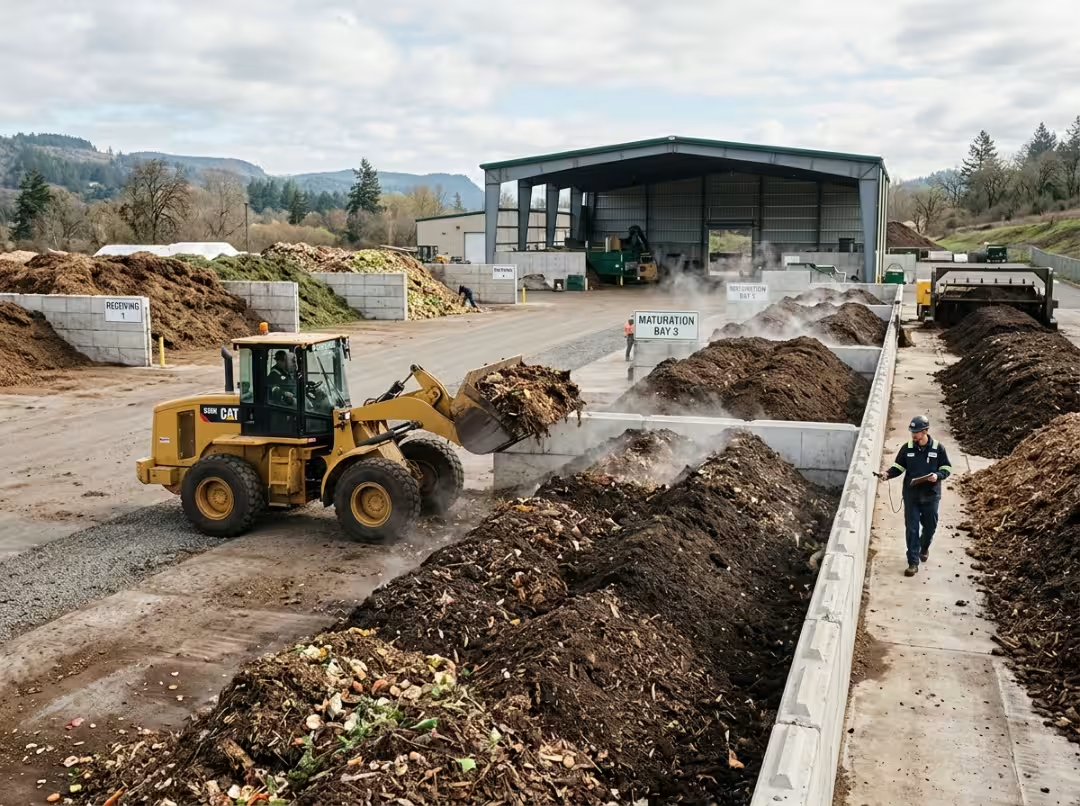
If the bag goes into home compost
Only bags explicitly certified as home compostable belong in a backyard pile. Look for the TÜV Austria OK compost HOME mark, which verifies breakdown at ambient temperatures.
Industrial compostable bags are certified for high-temperature environments. In a home pile, they may not fully decompose, leaving fibrous remnants that contaminate the finished compost. The certifications are technically distinct, and the practical difference is real.
If it ends up in soil or a waterway
Neither bag type is designed for open-environment disposal. Oxo-degradable and additive-based “biodegradable” bags shed microplastics in soil and water — potentially causing more short-term harm than a conventional bag. Compostable bags don’t break down reliably outside their intended conditions either. There is no garbage bag built to disappear outdoors.
How to Verify What You’re Buying
The front of the packaging is the least reliable place to look. Terms like “eco-friendly,” “green,” “earth-friendly,” and “biodegradable” carry no regulatory weight on garbage bags in the U.S. or most other markets. They are unverified marketing language.
The only reliable signal is a recognized third-party certification logo:
- BPI (Biodegradable Products Institute) — The primary North American certification for industrial compostability, requiring compliance with ASTM D6400.
- TÜV Austria OK compost INDUSTRIAL — The European equivalent, verified against EN 13432.
- TÜV Austria OK compost HOME — Certifies backyard compostability at ambient temperatures. This is a distinct certification from the industrial version — the two are not interchangeable.
- ASTM D6400 — The U.S. testing standard underlying most industrial compostability certifications.
- EN 13432 — The EU equivalent.
Certification means a third party has tested the bag for breakdown rate, residue, and ecotoxicity under controlled conditions. It is not the manufacturer’s claim — it is independent verification of it.
Biodegradable bags have no equivalent system. There is no “certified biodegradable” logo that carries comparable weight. This asymmetry is the core problem for consumers trying to shop responsibly.
Working rule: if there is no recognized certification logo on the bag, treat the environmental claim with skepticism — regardless of what the front of the box says.
Why the Base Material Matters
The difference in outcomes between these two bag types starts with what they’re made of.
Certified compostable bags are typically built from plant-derived polymers:
- PLA (polylactic acid) — derived from corn starch or sugarcane
- PBAT (polybutylene adipate terephthalate) — a biodegradable co-polyester
- Other bio-derived polymer blends
These materials are designed for biological assimilation. Under the right microbial conditions, they break down at a molecular level into compounds that reintegrate into natural systems.
Most biodegradable bags, by contrast, are conventional polyethylene — the same petroleum-based plastic as standard garbage bags — blended with pro-degradant additives such as d2w or EPI. The base plastic does not biologically decompose. The additive only accelerates physical fragmentation into smaller plastic particles.
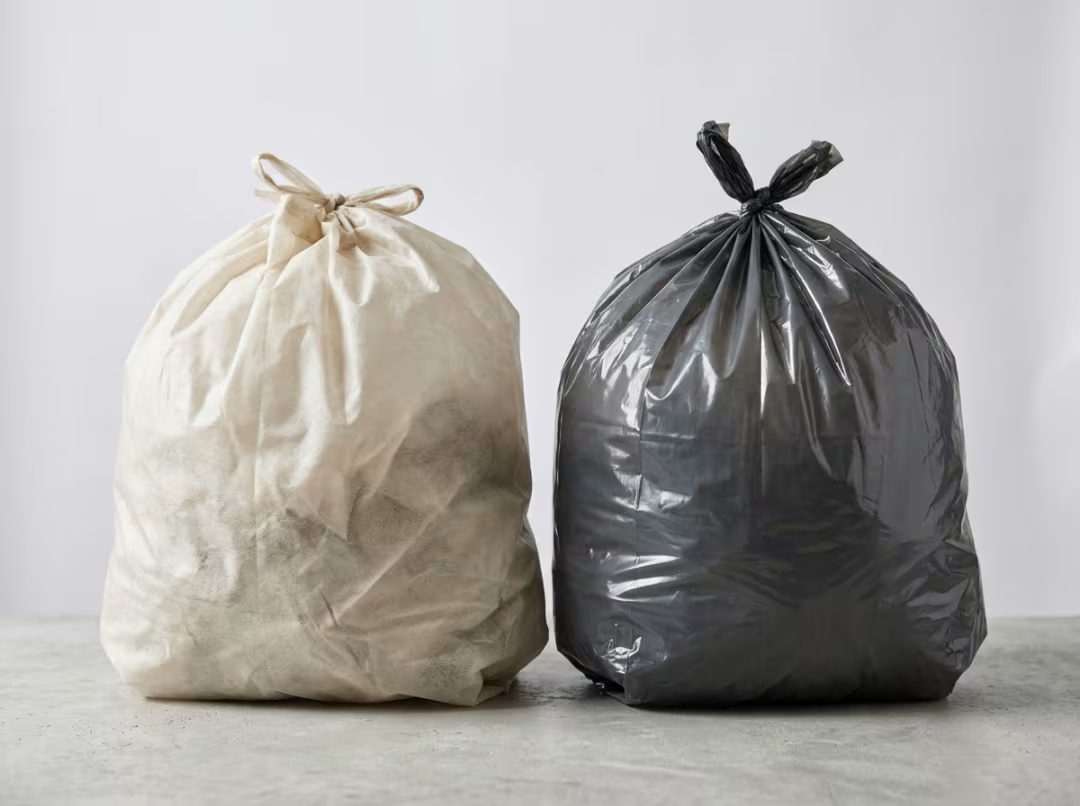
Base material determines what happens downstream. Biological decomposition and fragmentation into microplastics are not equivalent outcomes, regardless of how similar the packaging language sounds.
One more thing worth noting: “contains plant-based materials” does not mean a bag is compostable. Some products blend plant-derived and petroleum-based components. Check for a certification logo — not just the front-of-pack copy.
Cost, Durability, and Storage
Once you’ve confirmed the right bag type for your disposal setup, a few practical factors are worth considering.
Cost. Certified compostable bags cost roughly two to three times as much as conventional garbage bags. The premium reflects raw material costs — PLA and PBAT are more expensive than polyethylene — as well as third-party certification fees. That cost difference makes sense when the bags reach the right composting facility. When they end up in a landfill, it’s money spent for no environmental return.
Durability. Compostable bags handle food scraps and soft organic waste well. They puncture more easily than conventional bags on sharp objects — broken glass, tin lids, bones. If your waste regularly includes sharp items, check product reviews before committing to a brand.
Storage. Plant-based polymers are sensitive to heat and humidity. Bags left in a hot garage or damp cabinet can start degrading before they’re ever used. Store them somewhere cool and dry, and use them within the manufacturer’s recommended timeframe.
How to Choose the Right Bag
The right bag is determined by your disposal system, not by the label. Work through these steps before buying.
Step 1: Establish where your waste actually goes
This is the only question that determines which bag type makes sense:
- Landfill — the default for most households
- Municipal organics or composting program — curbside or drop-off collection for food scraps and organic waste
- Home compost bin — backyard or indoor composting setup
Everything else — cost, certification type, material composition — is secondary to this.
Step 2: Check what your local facility actually accepts
This step is skipped most often, and it’s the most consequential.
Many municipal composting programs do not accept compostable plastic bags. Some accept only paper liners. Others require organics to be deposited completely unbagged. Check with your local waste authority before assuming any compostable bag will work for your program.
Step 3: Match the certification to the destination
Once you’ve confirmed your facility accepts compostable bags, verify that the bag carries the right certification for that specific destination.
- Commercial composting facility: look for BPI, TÜV Austria OK compost INDUSTRIAL, ASTM D6400, or EN 13432.
- Home compost bin: look specifically for TÜV Austria OK compost HOME. Industrial certification is not a substitute.
A bag certified for industrial composting will not reliably break down in a backyard pile. The distinction is technical; the difference in outcomes is not.
Step 4: Factor in cost, strength, and storage
Only after steps 1–3 are resolved does it make sense to weigh price, puncture resistance, and shelf life.
Here’s how the scenarios resolve:
- Food scraps going to a commercial program that accepts bagged organics → certified industrially compostable bag (BPI or TÜV Austria INDUSTRIAL)
- Waste going into a home compost bin → home-compostable certified bag only (TÜV Austria OK compost HOME)
- All waste going to landfill → a compostable label adds no real environmental benefit; a durable conventional bag is the more honest choice
- A “biodegradable” bag with no certification → skepticism is warranted in every scenario
Frequently Asked Questions
What is the main difference between compostable and biodegradable garbage bags?
Compostable bags meet tested, third-party-verified standards — typically ASTM D6400 or EN 13432 — and must break down within a defined timeframe under specific conditions, leaving no harmful residue. Biodegradable is an unregulated term with no required timeline, no mandatory testing, and no certification process. Almost any material qualifies, including conventional plastic.
Do compostable bags break down in landfills?
No. Landfills are anaerobic — they lack the oxygen and moisture that composting requires. Certified compostable bags don’t reliably decompose there and can persist for decades. The environmental result is no better than a conventional bag.
Can I use compostable bags in my home compost?
Only if the bag is explicitly certified home-compostable — for example, TÜV Austria OK compost HOME. Industrial compostable bags are designed for commercial facilities operating at 55–60°C, a temperature range that backyard piles rarely reach. An industrially certified bag placed in a home pile may not fully break down.
Are biodegradable bags just regular plastic with additives?
Often, yes. Many are conventional polyethylene blends with pro-degradant additives such as d2w or EPI. These additives cause physical fragmentation under UV light or heat, but the base plastic doesn’t biologically decompose — the result is microplastics. The EU banned this category of bags in 2021 for exactly this reason.
How can I tell if a bag is genuinely compostable?
Look for a recognized third-party certification logo: BPI, TÜV Austria OK compost INDUSTRIAL or HOME, ASTM D6400, or EN 13432. These confirm independent testing for breakdown rate, residue levels, and ecotoxicity. Front-of-pack terms like “eco-friendly,” “green,” or “biodegradable” carry no regulatory weight and should not be treated as verification.
Is compostable always the better environmental choice?
Not automatically. A compostable bag only delivers on its promise when it reaches a facility suited to its certification type — and when that facility actually accepts compostable plastic. Sent to a landfill, or placed in a home pile without home-compostable certification, most of that advantage disappears. The disposal destination determines the outcome, not the label.
The Bag Has to Match the System
Compostable and biodegradable are not synonyms. One is a tested, conditional promise backed by independent certification. The other is an unregulated marketing term that can legally appear on conventional plastic bags engineered to fragment rather than decompose.
The most effective choice is the one matched to your actual disposal system. Before your next purchase: confirm what your local composting facility accepts, find the certification logo on the bag itself, and let those two facts make the decision. A label that sounds good on the shelf only matters if it holds up at the other end.