


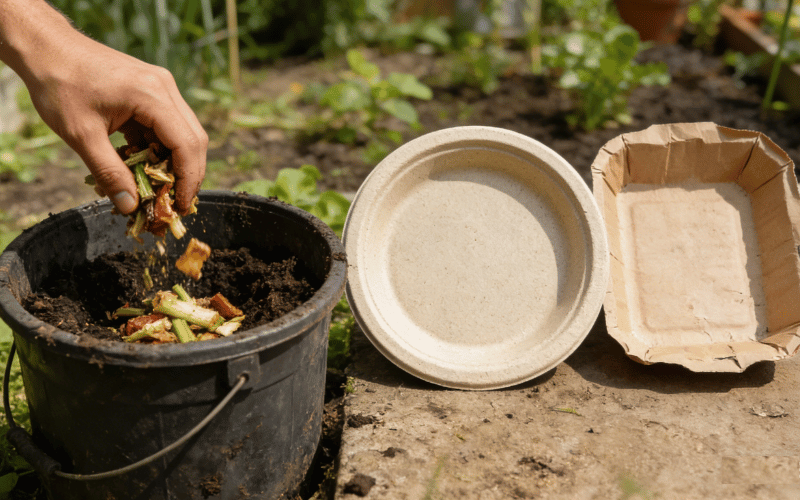
Learn more about the differences between these two types of disposable plates.
There’s no denying that both sugarcane bagasse plates and paper plates are beneficial disposable options and are very popular for parties, events, and food service. Still, they’re so similar that it can be hard to know the difference so that you can choose between them. They’re both lightweight, convenient, and serve the same basic purpose. They’re both made from plant-based fibers. As if that’s not confusing enough, they can both be made in different styles, such as coated or uncoated, each with its own set of benefits.
With all these similarities, you could be inclined to believe that these plates are interchangeable, but you’d have to think again. Some crucial differences make them more or less suitable for specific applications, especially in terms of environmental impact. We explain more about each of these plate types further down and have even prepared a table that pits sugarcane bagasse plates against paper plates to see how they fare.
What Are Sugarcane Bagasse Plates?
Sugarcane bagasse plates are made from the fibrous residue left after juice has been extracted from sugarcane stalks. This pulpy byproduct, known as bagasse, is an agricultural waste product that is repurposed into durable, eco-friendly tableware. These plates are fully biodegradable and compostable, making them an excellent sustainable choice. They are suitable for hot and cold foods and are a standard material in the food service industry, at outdoor events, and for eco-conscious consumers. Just a few products made from bagasse include plates, bowls, and takeout containers.
Although there are many types of bagasse products, they generally fall into two categories: plain and coated. Plain plates are the most common, popular for general use. These are pressed bagasse pulp. They are sturdy, but can be more susceptible to very oily or wet foods over time.
Coated plates have a thin layer of a biodegradable polymer (like PLA) applied to them, which makes them extra durable and resistant to liquids and grease. They’re used for saucier dishes and in situations where food will sit on the plate for extended periods.
There’s also another one worth mentioning — compartment plates. Used for serving meals with multiple components, these have dividers molded into the plates to keep foods separate, providing greater rigidity and convenience.

What Are Paper Plates?
Paper plates are a single-use product made from paper, which is derived from wood pulp. They are strong enough for many foods and can be made even more durable through various coatings. They’re used for picnics, parties, fast-food restaurants, and casual dining. One of the great things about them is their widespread availability and low cost, making them a go-to choice for convenience. Paper plate types fall into different categories depending on their construction and coating:
- Uncoated: Basic, lightweight paper.
- Wax-Coated: A thin layer of wax provides some moisture resistance.
- Laminated/Plastic-Coated: A layer of plastic film (like polyethylene) makes them very durable and soak-proof, but also non-recyclable and non-biodegradable.
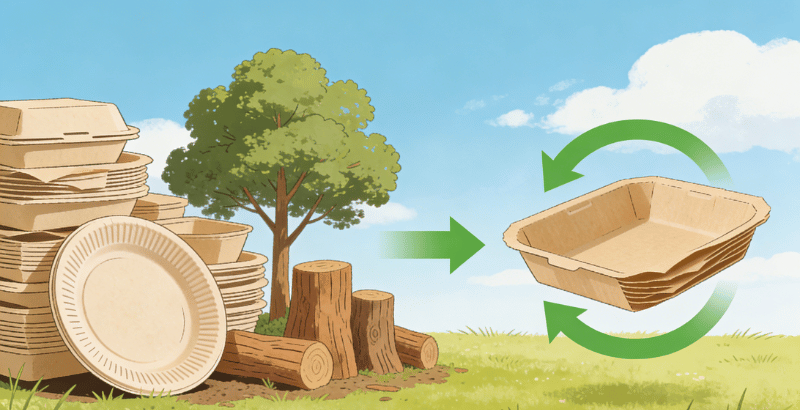
Sugarcane Bagasse Plates vs. Paper Plates
This is the fun part where we get to put these two plate types side by side, compare their properties, and find the winner.
|
Property ↓ |
Sugarcane Bagasse Plates |
Paper Plates |
Winner |
|---|---|---|---|
|
Material Source |
Renewable agricultural waste |
Trees (can be virgin or recycled) |
Sugarcane Bagasse |
|
Durability |
High |
Fair |
Sugarcane Bagasse |
|
Heat Resistance |
High – Microwave safe |
Low to Fair (uncoated can get soggy) |
Sugarcane Bagasse |
|
Water & Oil Resistance |
Good to High |
Low (uncoated) to High (coated) |
Sugarcane Bagasse |
|
Biodegradability |
High (fully compostable) |
Low to None (depends on coating) |
Sugarcane Bagasse |
|
Compostability |
High (home & industrial) |
Low (only uncoated, if clean) |
Sugarcane Bagasse |
|
Environmental Impact |
Low (uses waste product) |
High (deforestation, manufacturing) |
Sugarcane Bagasse |
|
Recyclability |
No (compostable instead) |
Low (only if clean & uncoated) |
Depends on local facilities |
|
Aesthetics |
Natural, off-white, sturdy feel |
Varies, can be printed |
Depends on preference |
|
Cost |
Fair |
Low |
Paper |
What Are the Types of Sugarcane Bagasse Plates?
There are many different types of sugarcane bagasse plates, each with unique properties and applications. Several broad categories are listed below:
- Plain Plates: These plates are the most common and are made from pure pressed bagasse. They are sturdy and suitable for most dry and semi-moist foods. They are widely used for general purposes at parties and cafes.
- Coated Plates: Coated bagasse plates have a thin, moisture-proof layer of a plant-based material like PLA (polylactic acid). These plates are incredibly durable and soak-proof, making them ideal for use with heavy, saucy, or greasy foods.
- Compartment Plates: These bagasse plates are molded with built-in dividers. They are particularly well-suited for serving full meals with multiple side dishes, keeping food separated, and maintaining the plate’s structural integrity.
What Are the Types of Paper Plates?
Different types of paper plates are classified based on their material and any added coatings. Below are the categories of paper plates:
- Uncoated Paper Plates: The most basic and cheapest type of paper plate. It is lightweight and best for dry, light foods like sandwiches or cake.
- Wax-Coated Paper Plates: These plates have a thin paraffin wax coating to provide some resistance to moisture and grease.
- Laminated Paper Plates: These plates are coated with a layer of polyethylene (PE) plastic, which makes them very sturdy and completely leak-proof. However, this plastic coating makes them non-biodegradable and difficult to recycle.
Advantages of Sugarcane Bagasse Plates Over Paper Plates
Listed below are the advantages of sugarcane bagasse plates compared to paper plates:
- Sugarcane bagasse plates are more durable and rigid than standard paper plates.
- They are more resistant to heat, grease, and liquids and can be used in the microwave.
- Bagasse plates are fully biodegradable and compostable, breaking down into nutrient-rich soil.
- They are made from an agricultural waste product, reducing waste and utilizing resources more efficiently.
Disadvantages of Sugarcane Bagasse Plates Compared to Paper Plates
Listed below are the disadvantages of sugarcane bagasse plates compared to paper plates:
- Sugarcane bagasse plates are typically more expensive than basic paper plates.
- Availability may be more limited in some retail stores compared to paper plates.
- While compostable, they break down fastest in industrial composting facilities, which are not available everywhere.
- They generally have a natural, off-white color, offering fewer decorative options than printed paper plates.
Comparisons Between Sugarcane Bagasse Plates and Paper Plates
Table 2 highlights the comparisons between sugarcane bagasse plates and paper plates:
|
Sugarcane Bagasse Plates |
Paper Plates |
|
|---|---|---|
|
Material Source |
Made from sugarcane fiber, an agricultural waste product. |
Made from wood pulp, which involves cutting down trees. |
|
Biodegradability |
Fully biodegradable and compostable, even in a home compost bin. |
Only uncoated plates are biodegradable; plastic-coated plates are not. |
|
Applications |
Used for hot and cold foods, microwave-safe, ideal for events and food service. |
Used for general purposes, but basic plates are not ideal for wet or hot foods. |
Alternatives to Sugarcane Bagasse and Paper Plates
Below are some mutual alternatives to both sugarcane bagasse and paper plates:
- Bamboo Plates: Like both bagasse and paper plates, bamboo plates are made from a plant-based, renewable resource. They are lightweight, sturdy, and compostable.
- Palm Leaf Plates: Palm leaf plates are made from naturally fallen palm leaves. They are chemical-free, biodegradable, and have a unique, rustic look. They can handle hot foods and are very rigid.
- Reusable Plates: Materials such as melamine, stainless steel, and glass offer a zero-waste alternative. They are durable and can be washed and reused thousands of times, making them the most sustainable option for non-disposable needs.
Similarities Between Sugarcane Bagasse Plates and Paper Plates
Sugarcane bagasse plates and paper plates are both derived from plant fibers. They are also both available in a range of sizes and shapes to suit different needs, from small dessert plates to large dinner plates. Both types can also be produced in various styles, such as with or without coatings, to enhance their performance. Both bagasse and paper plates are lightweight and convenient for single-use applications. They can both be used for serving food at parties, picnics, and other gatherings.
Other Comparisons for Paper Plates Besides Sugarcane Bagasse Plates
Listed below are some other materials that, depending on the application, may serve as stand-ins for paper plates:
- Plastic Plates: These plates are made from polystyrene or polypropylene. They are durable and waterproof but are derived from fossil fuels and are not biodegradable, contributing to plastic pollution.
- Foam Plates: Also known as styrofoam plates, these are made from expanded polystyrene. They are lightweight, inexpensive, and provide sound insulation, but they are environmentally harmful, non-biodegradable, and challenging to recycle.
- Wooden Plates: Usually made from birch or pine, these are biodegradable and compostable. They are stylish but can be more expensive and less common than paper.
Other Comparisons for Sugarcane Bagasse Plates Besides Paper Plates
Listed below are a few other alternatives to sugarcane bagasse plates:
- Bamboo Plates: A bamboo plate is created from the sheath of the bamboo plant. It is highly sustainable, compostable, and very durable, but often comes at a higher price point than bagasse.
- Palm Leaf Plates: An eco-friendly option made from naturally shed palm leaves. These are sturdy and have a unique look but can be less uniform in appearance and more brittle than bagasse plates.
- Cornstarch Plates: These plates are an alloy of cornstarch and plastic (PLA). It is compostable in commercial facilities and offers good durability. However, they may have lower heat resistance compared to bagasse.
How Hongren Can Help
We hope this article helped explain the differences between sugarcane bagasse plates and paper plates, and that you’ve decided which is best for your needs. If you’re looking for a sustainable, durable, and eco-friendly disposable option, sugarcane bagasse is the clear winner. Hongren offers a wide range of eco-friendly tableware solutions, including sugarcane bagasse plates, bowls, and containers! You can easily get your free quote here, or for more information on any of our materials or services, please feel free to reach out to one of our reps.