


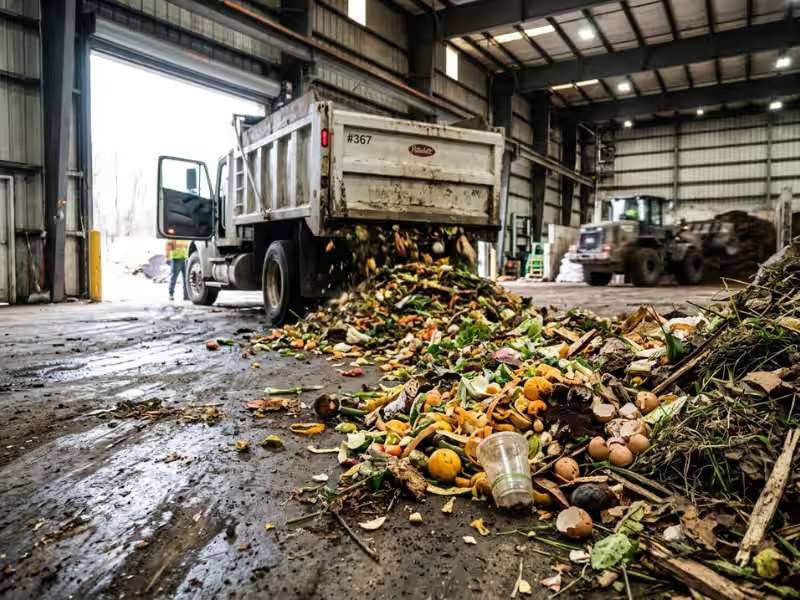
A truck tips a fresh load of food scraps onto a composting facility’s receiving floor. Somewhere in that pile sits a clear cup stamped “compostable.”
In the right facility, that cup can become part of finished compost within a few months. In another facility, a sorter spots it within minutes and pulls it out as contamination. From there, it usually heads to landfill.
Both outcomes happen every day. A compostable label tells you what a package can do under the right conditions. It doesn’t tell you what will happen to it.
I work with packaging buyers who run into this gap all the time. In this guide, I’ll cover three things:
- What actually happens inside an industrial composting facility
- Why some packaging breaks down while other items stall
- How you can tell whether your local facility will accept your package at all
What Industrial Composting Actually Means
Industrial composting is the large-scale, controlled breakdown of organic material. Operators take in food scraps, yard trimmings, and approved packaging. Then they steer that mix toward finished compost on a set schedule.
The key word is controlled. Every well-run facility manages the same five conditions:
- Heat: Active piles typically hold 131–160°F for days or weeks at a time.
- Oxygen: Crews turn piles or push air through them so oxygen-loving microbes keep working.
- Moisture: Operators aim for roughly 40–60% moisture. That feels like a wrung-out sponge.
- Microbes: Billions of bacteria and fungi do the real work of breaking material down.
- Time: Most material needs two to four months to become stable compost.
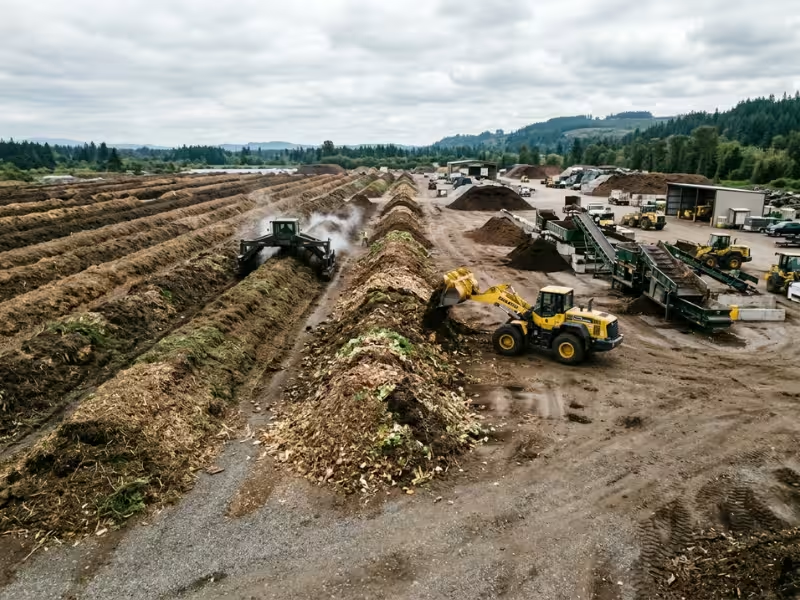
Facilities usually run one of three setups: open-air windrows, aerated static piles, or enclosed in-vessel systems.
Here’s where many people go wrong. Industrial composting isn’t backyard decay on a bigger scale. A home pile depends on the weather, and it rarely stays hot long enough to break down tougher materials.
It also doesn’t take everything labeled “biodegradable.” Each facility sets its own entry rules. If a cup needs six months to break down and the facility runs a 60-day cycle, the operator treats that cup as a contaminant.
Why Industrial Composting Works When Home Composting Often Doesn’t
Two cups with the same label can end up in very different places. One turns into compost in a few months. The other still looks like a cup after a year in someone’s backyard. The conditions around the cup make the difference, not the cup itself.
Heat, Air, and Water Change Everything
Many home piles never get hot enough, or stay hot long enough, to match an industrial system. Most stay under 100°F. An industrial windrow holds 131–160°F for weeks. Many packaging materials barely react at backyard temperatures.
Air and water follow the same pattern. At home, you turn the pile when you remember, and the rain decides how wet it gets. At a facility, crews log temperatures daily, turn or aerate on a schedule, and add water when readings drop.
Size matters too. A backyard bin holds a few cubic feet and loses heat fast on a cold night. A large windrow holds hundreds of tons, so it traps its own heat.
|
Factor |
Industrial Facility |
Home Bin |
|---|---|---|
|
Sustained temperature |
131–160°F |
Usually under 100°F |
|
Aeration |
Scheduled turning or forced air |
Occasional hand turning |
|
Moisture |
Measured and adjusted |
Depends on weather |
|
Oversight |
Daily logs and testing |
Whenever you check |
Why a PLA Cup Stalls in Your Backyard
PLA shows this gap better than any other material. It begins to soften at about 130–140°F. That softening lets heat and moisture break its long polymer chains into smaller pieces. Once the chains get short enough, microbes can digest them.
Below that range, PLA stays rigid and microbes mostly ignore it. A PLA cup in a home bin isn’t “slow.” It’s parked. You can dig it up six months later and still read the logo.
What a “Certified Compostable” Label Really Promises
Marks from BPI or TÜV Austria’s OK compost INDUSTRIAL mean the product passed lab tests under ASTM D6400 or EN 13432. Those tests confirm that the material:
- Breaks into small fragments within about 12 weeks
- Converts at least 90% to CO₂, water, and biomass within 180 days
- Stays under heavy-metal limits and doesn’t harm plant growth
Labs run those tests under industrial conditions. The label makes no home-composting promise unless the product carries a separate mark, such as OK compost HOME. It also can’t guarantee that your local facility will accept the item or finish it within a shorter cycle.
What Happens to Compostable Packaging Inside an Industrial Composting Facility
Most people picture a steaming pile when they think about composting. In practice, the hot pile is often the easiest stage for a package. The hard parts are getting into the pile and coming out as finished compost.
A compostable cup or takeout box passes through four stages. It can drop out at any of them.
1. Collection, Inspection, and Sorting
The process starts on the tipping floor, long before any heat builds. Packaging arrives from three main sources:
- Curbside organics carts from households
- Commercial foodservice, such as stadiums, cafeterias, and restaurants
- Drop-off points at markets, transfer stations, or community sites
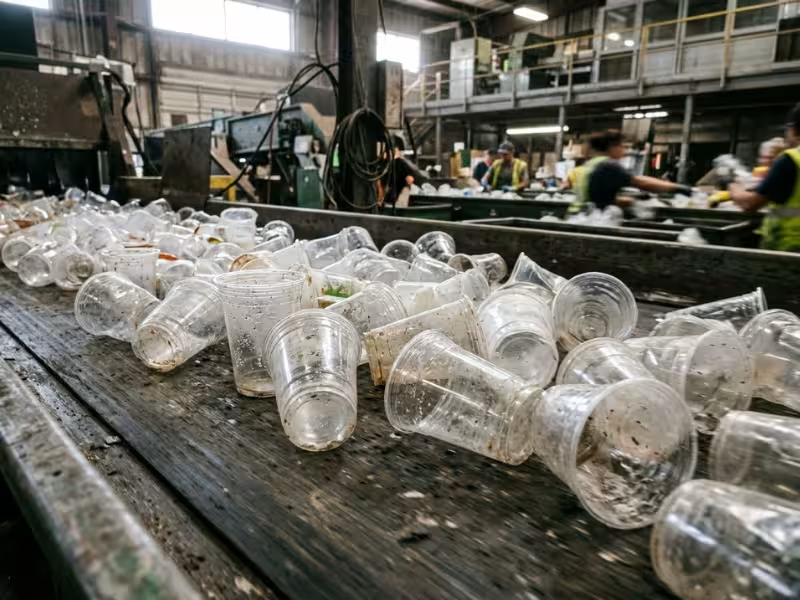
After a truck unloads, operators inspect the load by eye or send it across a picking line. Workers and machines remove plastic film, glass, metal, and anything that looks like conventional plastic.
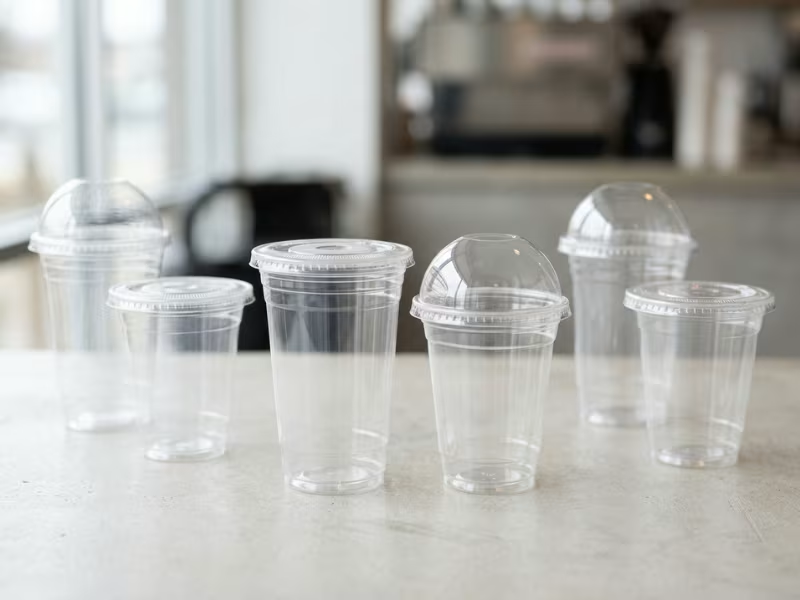
A sorter has about two seconds per item. Clear PLA looks almost exactly like PET. A cup with a compostable lining looks like one with a plastic lining. When sorters can’t tell, they pull the item.
I’ve watched certified products head to landfill because they looked too much like regular plastic. Many packaging failures happen right here, before decomposition even begins.
2. Mixing and Size Reduction
Packaging that passes sorting doesn’t go into a pile alone. Operators build a recipe first.
Grinders shred the load into smaller pieces, which gives microbes more surface to attack. Crews then blend it with food scraps, yard trimmings, and bulking agents like wood chips. They tune three things:
- Carbon-to-nitrogen ratio: Most aim for about 25–30 to 1. Paper and fiber add carbon. Food scraps add nitrogen.
- Porosity: Wood chips open air pockets so oxygen reaches the center.
- Moisture: Crews add water or dry material until the mix feels like a damp sponge.
Packaging alone composts poorly. A load of fiber clamshells has plenty of carbon but almost no nitrogen, so microbes starve. Packaging breaks down best as a small share of a balanced mix.
3. Active Composting: Heat, Oxygen, and Microbes at Work
Once the mix is ready, microbes take over. This stage does most of the breakdown.
The heat doesn’t come from burners. It comes from the microbes themselves. As bacteria and fungi eat sugars, proteins, and fibers, they release energy as heat. A well-built pile can climb past 130°F within days.
Moderate-temperature microbes start the job. As the pile heats up, thermophilic bacteria and fungi take over. They work fastest at 131–160°F and handle tough materials like PLA and dense fiber.
Three conditions decide how well this stage goes:
- Oxygen: When oxygen runs low, odor-causing anaerobic bacteria move in and breakdown slows. Crews turn windrows or blow air through static piles.
- Moisture: A dry pile puts microbes to sleep. A soggy pile blocks airflow.
- Temperature: Heat speeds things up, but above about 160°F it starts killing the workforce.
These factors pull on each other. One turn adds oxygen, releases heat, and dries the mix all at once. Operators read temperature probes daily and adjust.
Sustained heat also kills pathogens and weed seeds. US EPA guidance calls for windrows to hold at least 131°F for 15 days with five turnings. Aerated static piles and in-vessel systems need at least three days at that temperature.
If one section of a pile runs cool, the packaging in it may come out half-finished.
4. Curing, Screening, and Final Compost Quality
When temperatures fall, the job isn’t over. Curing runs from three weeks to several months. Microbes keep working at lower temperatures until the compost turns chemically stable. Rushed compost can damage plant roots, so good operators wait.
Next, operators run the material through screens, often trommels with openings of 3/8 to 1/2 inch. Finished compost falls through. Wood chips, rocks, and unfinished pieces stay on top.
This is packaging’s last test. An unfinished cup rim or clamshell corner gets caught here. Some operators send these pieces back through the process. Others send them to landfill.
Facilities then test the compost for maturity, pathogens, heavy metals, pH, soluble salts, and physical contaminants like plastic or glass. Finished compost goes to landscapers, farms, erosion control projects, and bagged retail products.
That list of buyers explains the strict sorting at the start. Buyers reject compost with visible plastic, and operators judge every package by one question: could it cost them a customer?
Which Food Packaging Materials Break Down Well—and Which Often Don’t
Every package on a tipping floor faces two questions. Can it break down in time? And will the operator let it in?
For packaging buyers, this matters a lot. Your material choice shapes branding and performance. It also decides whether the item survives real-world sorting and finishes composting.
Usually More Compostable in Practice
These materials share three traits. They’re mostly plant fiber, they look like what they are, and microbes already know how to eat them.
Uncoated paper and cardboard are the easiest wins. Paper is mostly cellulose, the same fiber in leaves and wood. Napkins, paper bags, and plain pizza boxes also add carbon to balance wet food scraps.
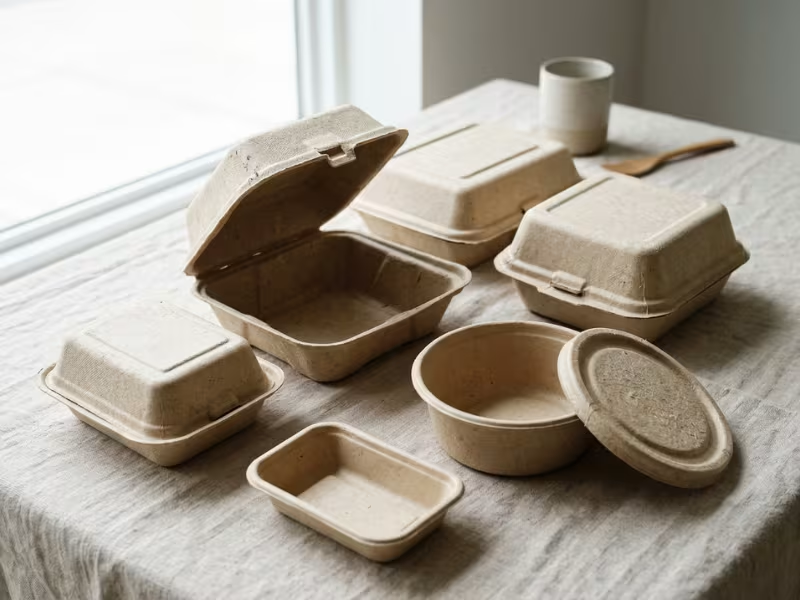
Bagasse comes from sugarcane fiber left over after juicing. Its short, loose fibers give microbes lots of surface area. A clamshell often breaks apart in 30 to 60 days under active conditions. That’s why bagasse containers tend to perform better than layered plastic-paper formats. Microbes can reach the fiber directly.
Molded fiber trays and bowls behave much the same way. One caveat: older molded fiber often contained PFAS, the grease-resistant “forever chemicals.” BPI stopped certifying products with intentionally added fluorinated chemicals in 2020, and many states now ban PFAS in food packaging. Still, ask your supplier directly.
Palm leaf plates use fallen areca palm sheaths pressed with heat and water, with no glue or coating. They take a little longer than bagasse but carry nothing that worries operators.
Materials That Often Create Friction
Most of these materials can break down. The trouble comes from everything around that “can.”
PLA, PHA, and starch blends lead the list. PLA needs sustained heat, so it struggles in short or uneven cycles. PHA breaks down in a wider range of conditions but costs more. Starch blends often include polymers like PBAT, and results vary by formula. Even certified compostable clear cups look simple to shoppers. In a real facility, they still depend on sorting accuracy, steady heat, and local rules.
Plastic-lined paper cups cause quiet damage. A standard hot cup carries a thin polyethylene layer. The paper breaks down, but the liner leaves plastic flakes in the finished compost. Some cups now use PLA or water-based linings, but they look identical from three feet away.
Paper-plastic laminates spread the same problem. Think of bakery boxes with plastic windows or foil-lined wrappers. Nobody peels those layers apart on a picking line.
Multi-part items raise their own issues. A drink order might include a cup, a lid, and a straw. Each part needs its own certification, and the facility has to accept each format. A PLA straw deserves its own check, separate from the cup it came with.
Labels, adhesives, and inks look minor, but they add up. A thousand produce stickers per truckload show up as visible plastic after screening.
Uncertified “biodegradable” plastics create the most friction. The word carries no timeline or test. California and Washington now restrict “biodegradable” claims on plastic products for this reason. Operators treat these items as contamination.
Why a Certified Label Still May Not Be Enough
Certification proves a package passed a lab test. A facility isn’t a lab.
Rules vary by site. One operator takes certified cups and cutlery. The next county’s facility takes only food and yard waste. Equipment, cycle length, and buyers shape those rules.
Contamination risk drives decisions. Once a facility accepts compostable cups, residents start tossing in regular plastic cups too.
Sorters judge what they see. Some certified items use green stripes or tinted rims. Many don’t.
Operators play it safe. A missed contaminant can cost a buyer. A rejected compostable cup costs almost nothing.
|
Material |
Typical Facility Acceptance |
Common Problem |
What to Check |
|---|---|---|---|
|
Uncoated paper and cardboard |
Widely accepted |
Heavy grease, PFAS on some items |
No plastic coating |
|
Bagasse and molded fiber |
Widely accepted |
PFAS in older or uncertified stock |
Certification, PFAS-free claim |
|
Palm leaf |
Usually accepted |
Slower breakdown |
Plain, uncoated product |
|
PLA, PHA, starch blends |
Varies widely |
Looks like regular plastic |
Local accepted materials list |
|
Lined cups and laminates |
Often rejected |
Plastic layers stay behind |
Lining type |
|
Uncertified “biodegradable” |
Rejected |
No standard, no testing |
Skip it |
A package’s fate depends on four things together: material, structure, real certification, and local acceptance. The word “compostable” settles none of them alone.
The Biggest Misunderstandings About Compostable Packaging
Most wrong ideas about compostable packaging aren’t careless. They come from labels that promise more than the system can deliver.
“Compostable Means It Breaks Down Anywhere”
“Compostable” describes a material under specific conditions. An industrially compostable fork needs heat, oxygen, moisture, and active microbes all at once. Remove one, and breakdown slows to a crawl.
Here’s where that fork might end up:
- Roadside ditch: It sits as litter for years.
- Ocean: Cold water and few microbes leave it mostly intact.
- Landfill: Little oxygen means it lingers or breaks down slowly and releases methane.
- Home bin: It usually stalls without a home-compost mark.
When clients ask if their packaging “will just disappear,” I ask where it will actually go.
“Biodegradable and Compostable Mean the Same Thing”
Biodegradable only means microbes can break something down eventually. It sets no timeline, no environment, and no test.
Compostable comes with rules. Under ASTM D6400 or EN 13432, a product must fragment within a set period, convert almost fully to CO₂, water, and biomass, and leave no toxic residue.
All certified compostable products are biodegradable. Most biodegradable products aren’t compostable.
“If It’s Certified, Every Facility Will Accept It”
Certification gets a product to the door, not inside. Each facility writes its own list based on:
- Equipment: Sites without strong screens often ban compostable plastics entirely.
- Cycle length: A 45-day facility may reject items that need 90 days.
- Buyers: Organic farms often demand compost with zero visible plastic.
I’ve seen two facilities 30 miles apart take opposite positions on the same certified cup. Each made the right call for its own equipment and customers.
“If It Doesn’t Get Composted, the Label Still Helped”
This one matters most. A compostable package only delivers its benefit when it completes the full chain:
- You have access to organics collection.
- Your hauler delivers to a facility that accepts the item.
- The item passes sorting.
- It finishes within that facility’s cycle.
Break any link, and the package usually lands in a landfill. Sometimes it does worse. PLA tossed into a recycling bin can contaminate a batch of PET.
The label also changes behavior. Shoppers see “compostable” and stop asking where the item goes.
That’s why closed systems get the best results. Stadiums, corporate cafeterias, and campus dining halls can control their packaging, train staff, and contract directly with an accepting facility. There, the label makes a measurable difference.
How to Tell Whether Your Packaging Will Actually Get Composted
When a client hands me a cup and asks, “Will this compost?”, I run four quick checks. You can do the same in a few minutes.
1. Check the Certification
Look for a recognized third-party mark, not a vague claim.
In North America, look for the BPI Certified Compostable logo. You can usually look up its certification number in BPI’s online catalog. In Europe and many export markets, look for TÜV Austria OK compost INDUSTRIAL or the Seedling logo. CMA (Compost Manufacturing Alliance) approval carries extra weight because CMA tests products in working facilities.
Watch for warning signs:
- “Eco-friendly” or “plant-based” with no certification mark
- “Biodegradable” as the only claim
- A logo you can’t find on the certifier’s website
If you can’t verify the mark, put the item in the trash.
2. Check Whether It’s Simple or Multi-Layer
Simple builds pass sorting far more often. Tear a corner and look:
- Clean fiber tear: Likely plain paper, bagasse, or molded fiber. Good sign.
- A shiny film peels away: It has a liner. Unless the certification covers the whole item, assume plastic.
- Foil or a clear window: It’s a laminate. Most facilities won’t take it.
Then count the parts. Cup, lid, sleeve, and straw each need their own answer.
3. Check Your Local Acceptance List
This step settles more cases than the other three combined. Search your city or hauler’s site for “organics accepted materials.” Most lists follow one of three patterns:
- Food and yard waste only: No packaging, even certified items.
- Fiber only: Paper and molded fiber are fine. Compostable plastics are not.
- Certified compostables accepted: Approved cups, cutlery, and bags can go in.
If the list is unclear, call your hauler. Ask which facility receives your organics and whether it takes certified compostable plastics.
Businesses should get that answer in writing before switching suppliers. I’ve watched restaurants buy a year’s supply of PLA cups their hauler wouldn’t take.
4. Keep Contamination and Add-Ons Out
Before an item goes in the bin:
- Remove stickers, rubber bands, and twist ties.
- Separate mixed parts. Trash the plastic lid and compost the fiber bowl.
- Follow your program’s rules on food residue. Many welcome it.
- Never bag organics in regular plastic. Use certified compostable bags, paper, or no bag.
When you’re unsure, leave it out. One wrong item can downgrade a whole load.
FAQ
How long does industrial composting take?
Most facilities finish a batch in two to four months. The hot phase runs three to eight weeks, and curing adds three weeks to several months. In-vessel systems move faster. Open windrows in cold climates run slower.
For packaging, the facility’s cycle matters most. A bagasse bowl that needs 45 days fits almost anywhere. A thick PLA lid that needs 90 days won’t fit a 60-day cycle.
Can compostable packaging break down in a home compost bin?
Some of it can. Plain paper, uncoated cardboard, and many fiber products break down at home, though slowly. Shredding helps.
Most PLA items need heat that home piles rarely reach. If you compost at home, look for TÜV Austria OK compost HOME. Products with that mark pass tests at ambient temperatures over about 12 months.
Why do some compost facilities reject certified compostable packaging?
Operators reject it for practical reasons:
- Sorting: Certified PLA looks like regular plastic on a fast line.
- Short cycles: Some items can’t finish in time.
- Spillover: Accepting compostable cups invites regular plastic cups.
- Buyers: Farms and landscapers refuse compost with visible fragments.
What is the difference between biodegradable and compostable packaging?
“Biodegradable” means microbes can break something down eventually, with no time limit or test. “Compostable” carries standards. Under ASTM D6400 or EN 13432, a product must fragment within about 12 weeks, reach at least 90% conversion to CO₂, water, and biomass within 180 days, and leave no toxic residue.
If a package says only “biodegradable” and shows no recognized compostability mark, don’t assume your compost program will take it.
Do compostable plastics leave microplastics in compost?
They can when the process falls short. Standards allow no more than 10% of the original material on a 2 mm sieve after 12 weeks. Short cycles, cool spots, or thick items can leave fragments behind, and researchers continue to study how fast those pieces finish breaking down in soil.
On site, conventional plastic causes far more microplastic trouble. Lined cups, produce stickers, and regular bags top the list. Clean sorting matters more than the label.
Does industrial composting produce methane?
Well-run composting produces very little. It’s an aerobic process, so microbes use oxygen and release mostly CO₂. Methane forms only in wet, compacted, oxygen-starved spots, and good operators prevent those by turning and aerating.
Landfills tell a different story. Buried food and paper release methane for years. The US EPA ranks landfills as the third-largest source of human-related methane in the country. Diverting organics to a working compost facility cuts that significantly.
The Label Is Only the Starting Point
Industrial composting doesn’t make packaging vanish on its own. People run the process. They sort each load, build the mix, track the heat, and screen out anything unfinished.
A package only turns into compost when four things line up:
- Certification from a recognized third party you can verify
- Material structure that’s simple and easy for sorters to identify
- Facility acceptance at the site that actually receives your organics
- Correct sorting on your end, with stickers, plastic lids, and liners left out
If one fails, the package usually ends up in a landfill.
So take this step today. Before you drop a compostable cup or container into your organics bin, pull up your city’s or hauler’s accepted materials list. Find that exact item. If it isn’t there, keep it out.
If you source food packaging for a business, do this check before you choose cups, lids, straws, or fiber containers at scale.