


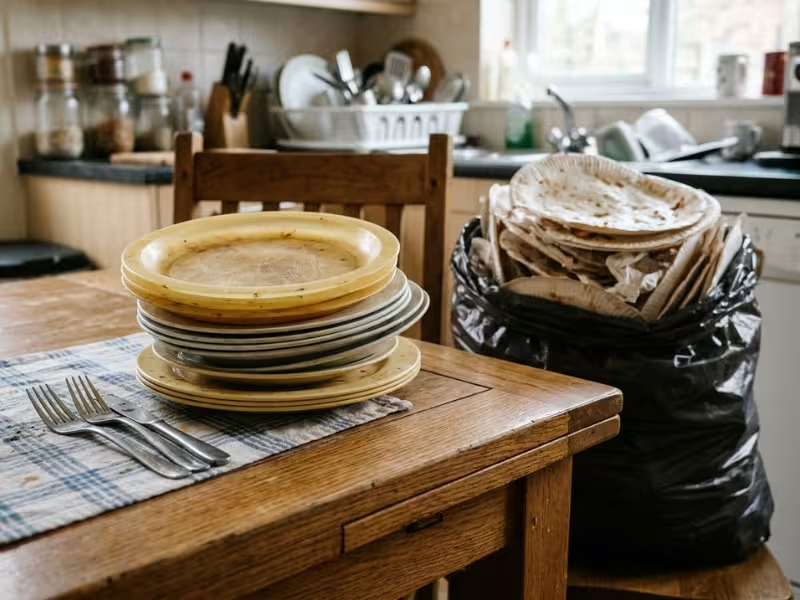
Your plastic plates have turned yellow. Your melamine set shows deep scratches. Or a party just left you with a trash bag full of paper plates.
Many people reach this point and decide to switch. I’ve helped many clients replace worn-out tableware. The options are better than ever, but so are the misleading labels.
In this guide, I’ll show you how to tell bamboo, wheat straw, bagasse, and palm leaf apart. You’ll learn which material fits your table, which claims to doubt, and how to pick a set that holds up in daily life.
Why More People Are Replacing Conventional Tableware
Most of my clients don’t switch because eco-friendly tableware looks trendy. They switch because their old plates stopped working for them.
Plastic plates wear out fast. Knives leave grooves, tomato sauce leaves stains, and the surface turns cloudy. Studies also show that plastic food containers can release microplastic particles, and heat speeds that process up.
Melamine has a heat problem. It feels tough, and kids can drop it without breaking it. But melamine resin can release small amounts of melamine and formaldehyde when it gets hot, especially with acidic foods. The FDA advises against microwaving food in melamine dishes. Melamine is also a thermoset plastic, so it can’t be recycled. A worn-out set goes straight to landfill.
Coated paper plates hide a lining. Most “paper” plates rely on a thin layer of polyethylene or wax to hold grease. That layer blocks recycling and composting. Some older grease-resistant coatings also contain PFAS, the “forever chemicals” that many states now restrict in food packaging.
Put these together, and the old trade-off falls apart. Cheap plates no longer feel cheap when you replace them every year and can’t dispose of them responsibly.
Disposal has changed too. More cities run food scrap collection. More venues ask caterers for compostable service ware. The EU banned many single-use plastic plates and cutlery in 2021, and similar rules keep spreading across Canada and several US states.
The materials have also improved. Bagasse plates now handle hot, oily food without going soggy. Wheat straw sets cost far less than they did a few years ago. Palm leaf plates look good enough for weddings.
For many buyers, eco-friendly tableware is simply the practical answer to plates that crack, stain, leach, or have nowhere to go.
The 4 Eco-Friendly Tableware Materials That Matter Most
Shoppers can choose from dozens of “green” plates. In practice, four plant-based materials cover most buying decisions: bamboo, wheat straw, bagasse, and palm leaf.
Many buyers assume any plant-fiber plate is fully natural. In practice, binders, coatings, and additives often decide how eco-friendly the final product really is. Keep that in mind as you read each material below.
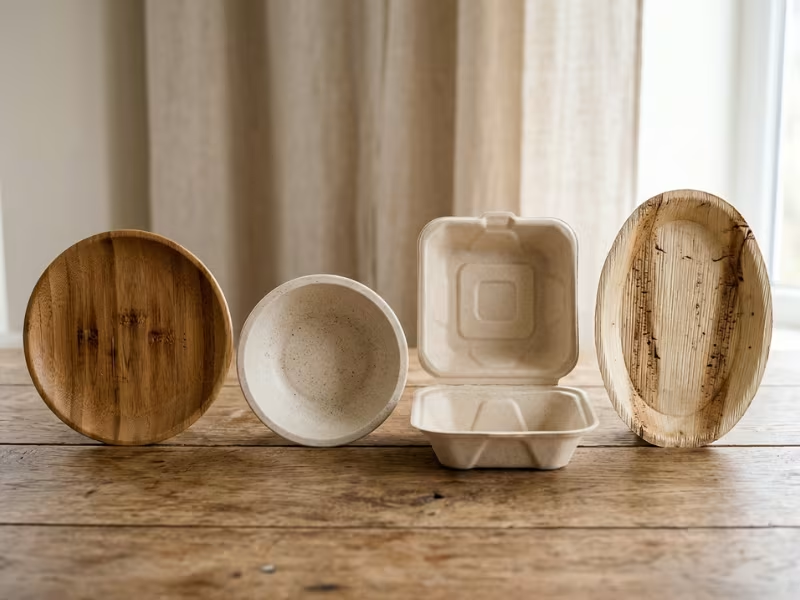
Bamboo and Bamboo Fiber Tableware
Bamboo appeals to buyers right away. It’s light, it looks warm and natural, and it feels more refined than plastic. But bamboo tableware comes in two very different forms.
Solid bamboo pieces start as real bamboo that the maker cuts, shapes, and finishes with food-safe oil or lacquer. Bowls, serving boards, and utensils often use this method. They last for years if you hand wash them and avoid long soaks.
Bamboo fiber pieces start as ground bamboo powder pressed into molded plates and cups. The weak point is the binder. Many cheap sets use melamine-formaldehyde resin to hold the powder together. That makes them plastic composites, not natural products.
Hot food, acidic sauces, and microwave heat can release melamine and formaldehyde from these blends. EU regulators began pulling bamboo-melamine food-contact products from the market in 2021 for this reason.
Before you buy, check three things:
- The full material breakdown, not just the word “bamboo”
- Whether the binder is melamine or a stated food-safe alternative
- Food-contact test results, such as FDA or LFGB reports
Bamboo suits homes that want a light, reusable set and don’t mind hand washing. It doesn’t suit households that run everything through a hot dishwasher or reheat food on the plate.

Wheat Straw Tableware
Wheat straw tableware turns farm waste into something useful. Manufacturers grind leftover grain stalks into fiber and mold it into plates, bowls, and cups.
Families like it for good reasons. It’s light, affordable, and survives a drop onto the kitchen floor. Bright colors make it popular for kids’ sets.
Most reusable wheat straw sets also contain polypropylene (PP) as a binder. PP is a common food-safe plastic, so that isn’t automatically a problem. But these items aren’t fully plant-based, and they don’t belong in a compost bin.
Wear shows up over time. In my experience, a set used daily shows knife marks within months. Turmeric, tomato sauce, and coffee stain the softer surface. Many sets handle the top dishwasher rack, but repeated high heat can make them brittle.
Wheat straw works best for families, kids, and budget-conscious buyers who want a light everyday set. With heavy use, many lower-cost sets start to show wear much sooner than glass or ceramic.
Bagasse Tableware
Bagasse comes from sugarcane fiber left over after juicing. Manufacturers pulp it and press it into shape under heat. Many buyers first meet it through sugarcane bagasse tableware, which has become a practical choice for hot food, takeout, and event service.
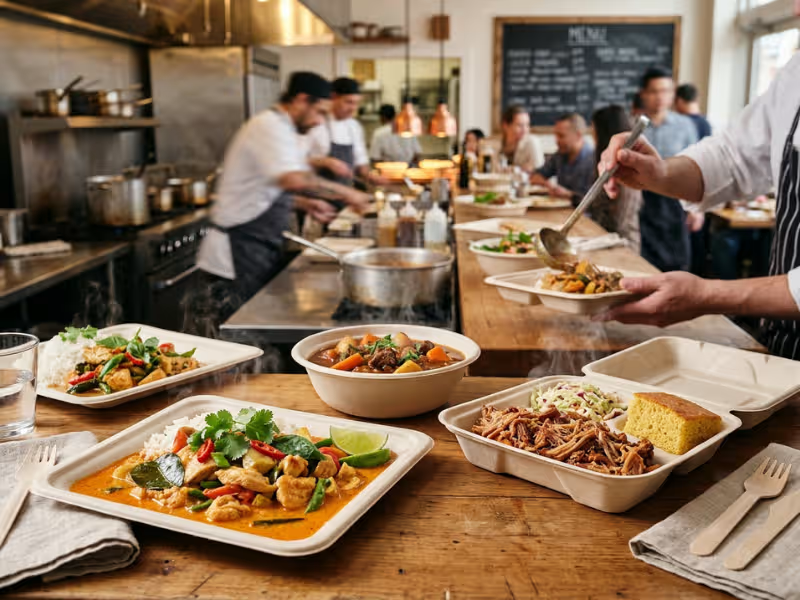
That strength matters most in foodservice. A good bagasse plate holds hot curry, oily noodles, and saucy barbecue without bending or soaking through. It handles food up to about 212°F, and most pieces can go in the microwave for short reheats.
You’ll usually see bagasse in these formats, including bagasse containers built for takeout and food service:
- Plates and bowls for events and cafeterias
- Clamshell boxes for restaurants and delivery
- Compartment trays for catering and school meals
Plain, uncoated bagasse often finishes within a typical industrial composting cycle.
The limit comes from its purpose. Bagasse is a single-use or short-use material. It softens after long contact with liquid and won’t survive a dishwasher. Also ask suppliers to confirm their bagasse is PFAS-free, since some older grease-resistant products relied on these chemicals.
Palm Leaf Tableware
Palm leaf plates start as fallen areca palm sheaths. Workers clean them with water and heat-press them into shape, with no glue, wax, or coating.
Every plate shows its own grain and color. That gives a table a premium feel that paper or bagasse can’t match. The plates also feel rigid, handle hot food, and resist moderate grease. Plain palm leaf can break down in a well-managed home compost pile, often within two to three months.
The trade-offs are cost and consistency. Palm leaf usually costs noticeably more per piece than bagasse, and shapes vary between batches.
Palm leaf fits best at weddings, garden parties, upscale catering, and branded events where presentation matters.
Quick Comparison
|
Material |
Reusable or Single-Use |
Home Compostable |
Dishwasher Friendly |
Best Use Case |
|---|---|---|---|---|
|
Bamboo (solid) |
Reusable |
No (finished pieces) |
Hand wash preferred |
Daily home meals |
|
Bamboo fiber |
Reusable |
Depends on binder |
Limited |
Light daily use |
|
Wheat straw |
Reusable |
No (most contain PP) |
Top rack, usually |
Families and kids |
|
Bagasse |
Single-use |
Industrial, mostly |
No |
Foodservice and takeout |
|
Palm leaf |
Single-use |
Yes, if uncoated |
No |
Weddings and events |
If none of these feels right, consider tempered glass or quality ceramic. They cost more and weigh more, but a well-made set can last a decade and go through the dishwasher nightly. For households that dislike the feel of plant fiber, this “buy it once” approach often makes the most sense.
How to Match the Material to Your Real Use Case
When a client asks me which eco-friendly plate is “best,” I ask three questions first. What will you put on it? How will you wash it? Where will it go when you’re done?
Those answers settle most decisions. Here’s how I match materials to the four situations I see most.
For Everyday Home Meals
Daily tableware takes the most wear. For home use, I rank durability, easy cleaning, and heat tolerance above looks. Start with how you wash dishes, because that habit rules out more options than anything else.
- You run the dishwasher daily: Choose tempered glass, quality ceramic, or a wheat straw set rated dishwasher safe. Keep wheat straw on the top rack.
- You hand wash: Solid bamboo works well. Rinse it soon after meals, dry it right away, and oil it every few weeks.
- You reheat food on the plate: Use glass or ceramic. Skip bamboo fiber with a melamine binder.
Before you buy a 12- or 16-piece set, test one place setting for two weeks. Scratches, stains, and warping show up quickly.
For Parties, Weddings, and Catering
Events change the math. Guest counts climb, and dishwashing access disappears.
Palm leaf and bagasse perform best here because they stay rigid under heavy, wet food. Guests at outdoor events balance plates on their laps or carry them across a lawn. A thin paper plate often folds under a serving of baked beans.
In my experience, single-use compostable makes the most sense when you have:
- More than about 50 guests
- No kitchen or dish crew on site
- A rented venue with strict cleanup times
If you host 12 people every month, buy a durable reusable set once instead.
Plan disposal before the event. Plain palm leaf can go into a home compost pile. Bagasse usually needs an industrial facility, so confirm your venue or hauler accepts it. Also order 10–15% more plates than your guest count. People grab a second plate for dessert.
For Restaurants and Food Service
Restaurant buyers need hard numbers. I focus on four factors.
- Cost per unit: Bagasse usually offers the lowest-cost compostable option for hot food. Formats such as bagasse food containers and clamshell boxes work especially well when you need stackability, grease resistance, and simple bulk ordering. Palm leaf fits premium dine-in or catering menus better.
- Stackability: Bagasse nests tightly and looks uniform. Palm leaf varies by batch and takes more shelf space.
- Hot oil: Pack your greasiest dish, wait 30 minutes, and check the bottom for seepage.
- Customer perception: A soggy box that leaks onto a car seat can cost you a review.
Many owners miss this point. A compostable label doesn’t mean your city can process the item. Before a bulk order, ask your hauler in writing whether they collect compostable foodservice packaging and which facility receives it.
For Kids, Rough Daily Use, and Low-Maintenance Households
Kids drop plates, and busy households skip careful hand washing.
Wheat straw handles this best among plant-based options. Tempered glass survives more drops than people expect. Solid bamboo resists drops but cracks if it soaks overnight.
Some materials look eco-friendly but fail under heavy use:
- Bamboo fiber with melamine binder: Heat creates a safety concern for warm kids’ meals.
- Bagasse and palm leaf: Milk, juice, and long meals soften them.
- Delicate handmade ceramics: They chip easily.
|
Use Case |
Best Material |
Why It Works |
Main Trade-Off |
|---|---|---|---|
|
Everyday home meals |
Glass, ceramic, or wheat straw |
Handles daily washing |
Glass is heavy; wheat straw stains |
|
Hand-wash households |
Solid bamboo |
Light and attractive |
Needs drying and oiling |
|
Parties and weddings |
Palm leaf or bagasse |
Stays rigid with saucy food |
Single-use |
|
Restaurants and takeout |
Bagasse |
Low cost, stacks well |
Needs industrial composting |
|
Kids and rough use |
Wheat straw |
Light and drop-resistant |
Shows wear sooner than glass |
Match the material to the meal, the cleanup, and the disposal route. Then your plates will fit the way you actually eat.
Where Buyers Get Misled: Labels, Claims, and Greenwashing
Most bad eco tableware purchases don’t happen because good options are hard to find. They happen because the label sounds better than the product. Three claims cause most of the trouble.
“Bamboo” Doesn’t Always Mean Pure Bamboo
A plate can say “bamboo” in large letters and still be mostly plastic. Many molded bamboo plates and kids’ sets mix bamboo powder with melamine-formaldehyde resin. The result looks natural but behaves like melamine.
Here’s how I read a listing:
- “100% bamboo” or “solid bamboo”: Usually real bamboo. A good sign.
- “Bamboo fiber” with no binder listed: Assume melamine until the seller proves otherwise.
- “Bamboo fiber + melamine” or “MF resin”: A plastic composite. Skip it for hot food.
- “40% bamboo, 60% resin”: Honest, but still mostly plastic.
If the seller can’t name the binder, don’t buy it.
“Compostable” May Only Mean Industrial Compostable
Here the product is often legitimate. The disposal plan isn’t.
Most compostable tableware is certified for industrial composting under ASTM D6400 or EN 13432. Those tests run at about 131–160°F with managed air and moisture. A backyard pile rarely gets there. Home compostable products pass a tougher test at lower temperatures. Look for TÜV Austria OK compost HOME or Australia’s AS 5810.
The gap shows up like this:
- An industrial-only bagasse bowl sits in your garden bin for a year.
- Your city has no food scrap pickup, so “compostable” plates go to landfill.
- Your hauler rejects all packaging, so the plates get pulled as contamination.
Check which kind of composting the label means before you count on it.
“Eco” and “Natural” Aren’t Proof
These words carry no standard. No agency tests a product before a seller prints “eco-friendly” on the box. The FTC’s Green Guides warn against broad green claims, yet “earth-friendly,” “plant-based,” and “biodegradable” still appear on plastic blends.
Look for evidence you can verify instead:
- Food-contact safety: An FDA compliance statement or LFGB test report. Ask for the document, not just a logo.
- Certified compostability: BPI, OK compost, or a similar mark with a certificate number.
- A clear material list: Every component named, including binders and coatings.
A trustworthy supplier shares these details without hesitation. If a seller dodges the question, treat that as your answer.
What to Check Before You Buy
Before a client places an order, I walk them through four quick checks. They take about ten minutes and catch most mistakes.

1. Check the Exact Material, Not the Marketing Word
Skip the headline and read the specifications. You want answers to three questions:
- What is the main material? Solid bamboo, wheat straw, bagasse, or palm leaf.
- What holds it together? Melamine, polypropylene, or no binder.
- Is there a coating? Lacquer, wax, or plastic lining changes performance and disposal.
If a listing stops at “plant-based,” message the seller.
2. Check Heat, Dishwasher, and Microwave Limits
Compare the product’s limits with your kitchen habits. Confirm four details in writing:
- Maximum food temperature: Boiling soup or only warm meals?
- Dishwasher rating: Top rack, full dishwasher, or hand wash only?
- Microwave use: Allowed, short reheats only, or not at all?
- Oil and acid contact: Will curry or tomato sauce stain or soften it?
If the listing leaves any of these blank, assume the answer is no.
3. Check What Happens When You’re Done With It
Every piece falls into one of three groups:
- Reusable: Bamboo, wheat straw, glass, and ceramic. Judge them by years of use.
- Home compostable: Plain palm leaf and items with a home-compost mark.
- Industrially compostable: Most bagasse and plant-based plastics.
If your area has no food scrap pickup, industrially compostable plates end up in landfill. A reusable set or plain palm leaf may be the better buy.
4. Buy a Small Test Batch Before Scaling Up
Real use reveals what a spec sheet can’t. Home buyers should test one or two place settings for two weeks.
Restaurants and event planners should order a sample case and test it hard:
- Pack your greasiest dish and let it sit for 30 minutes.
- Stack 50 plates and check for warping.
- Ask staff how the pieces feel to carry and serve.
- Confirm your hauler accepts them.
One restaurant client skipped this step and bought 10,000 clamshells that leaked hot oil after 20 minutes. A $40 sample case would have caught it.
Is Eco-Friendly Tableware Worth the Cost?
My honest answer: sometimes yes, sometimes no. It depends on how often you use the plates and where they go afterward.
Reusable Sets: Compare Cost Per Year
A cheap plastic or melamine set for four often costs $20–30 and looks worn within a year or two. A wheat straw set costs about the same. You won’t save much money, but you avoid melamine’s heat concerns.
A quality glass or ceramic set might cost $60–120 for four. If it lasts ten years, that’s $6–12 a year. Solid bamboo sits in the middle, and your care habits decide its value.
Single-Use: You Pay Extra Every Time
A disposable plate never earns back its cost. As a rough guide:
- Coated paper plates: a few cents each
- Bagasse plates: often two to three times the price of paper
- Palm leaf plates: often several times the price of bagasse
For a 100-guest party with two plates each, bagasse might add $15–40 over paper. Palm leaf could add $60–150 or more. For most hosts, bagasse offers the best balance.
When You Pay More and Get Nothing Back
- No composting access: Bagasse goes to landfill like paper.
- A cheap bamboo fiber set: It cracks in months, so you pay twice.
- Overspending on presentation: Palm leaf at a casual barbecue rarely beats bagasse.
When Paying More Makes Sense
Extra cost pays off when it buys fewer replacements, better performance with hot food, a working disposal route, or fewer heat concerns. For restaurants, a leak-proof container also protects your reviews.
Pay more for durability you’ll use and disposal you can access. Don’t pay more for a label.
The Most Common Buying Mistakes
Most complaints I hear trace back to four mistakes. They come from shopping fast and trusting the photo.
Choosing the Prettiest Plate
I once worked with a café owner who picked solid bamboo bowls for a soup menu because they matched the décor. Within a month, hot broth and daily soaking had split half of them.
Start with the job. Ask what food goes on the plate, how hot it gets, and who washes it. Then pick the best-looking option that passes.
Treating “Biodegradable” and “Compostable” as the Same Thing
“Biodegradable” sets no timeline and requires no test. “Compostable” means the product passed a recognized standard and should carry a verifiable mark. Even then, check whether it covers home or industrial composting.
If a plate says only “biodegradable,” plan to put it in the trash.
Ordering a Full Pallet Before Testing
A big discount at 5,000 units looks great until the plates warp in a humid storeroom. I’ve seen event planners stuck with cases of plates two sizes too small for their caterer’s portions. Order samples, use them once, and scale up only after they pass.
Ignoring Heat, Microwave, and Dishwasher Limits
Each material has its own limits:
- Bamboo fiber with melamine binder shouldn’t hold hot or acidic food.
- Wheat straw turns brittle with repeated high heat.
- Bagasse softens with long liquid contact and can’t go in a dishwasher.
- Solid bamboo cracks if it soaks.
Write down how you reheat food and wash dishes, then compare that list with the product’s limits.
FAQ
What is the most eco-friendly material for tableware?
No single material wins every time. The greenest choice is the one you’ll use longest or dispose of properly. For daily meals, durable glass, ceramic, or well-kept solid bamboo usually comes out ahead. For events, plain palm leaf leads because it can break down at home. Bagasse comes a close second when you have industrial composting access.
Is bamboo tableware safe to eat off of?
Solid bamboo is generally safe. Bamboo fiber is a different story, since many sets bind the powder with melamine-formaldehyde resin. Heat and acidic foods can release melamine and formaldehyde from these blends. Ask the seller what binds the fiber, and request an FDA or LFGB test report.
Are palm leaf plates really compostable at home?
Yes, if they’re plain and uncoated. Expect about two to three months in a well-managed pile. Keep it moist, turn it often, and break the plates into pieces first. Check the listing for an additive-free claim, since some products carry coatings or prints.
Can wheat straw tableware go in the microwave or dishwasher?
Often, but not always. Many sets handle the top rack and short reheats, but the maker’s rating matters more than the material name. Repeated high heat can make wheat straw brittle. If the listing gives no rating, assume the answer is no.
What is the difference between home compostable and industrially compostable tableware?
It comes down to heat and control. Industrial facilities run at about 131–160°F with managed air and moisture, and most bagasse is certified for those conditions. Home compostable products pass a tougher test at backyard temperatures and carry marks like OK compost HOME or AS 5810.
Is eco-friendly tableware more expensive than plastic?
Usually upfront. Wheat straw costs about the same as basic plastic. Glass or ceramic costs more but can be cheaper per year over a decade. Single-use bagasse and palm leaf always cost more per piece than paper. Pay extra only for real durability or a working disposal route.
Pick the Plate for the Job, Not the Label
No single material works at every table. Bamboo suits careful hand-washers. Wheat straw handles kids and busy kitchens. Bagasse carries hot, oily food through a long event. Palm leaf brings the polish a wedding calls for.
Match the material to the meal, the cleanup, and the disposal route. Once you do, most choices make themselves.
When you feel unsure, buy small. At home, replace the set you reach for every night first. For restaurants and caterers, pick one or two SKUs and test them under real service conditions: your greasiest dish, a full delivery window, and a real stack on the shelf.
Your next step: order one place setting or one sample case this week. Then use it the way you actually eat.