


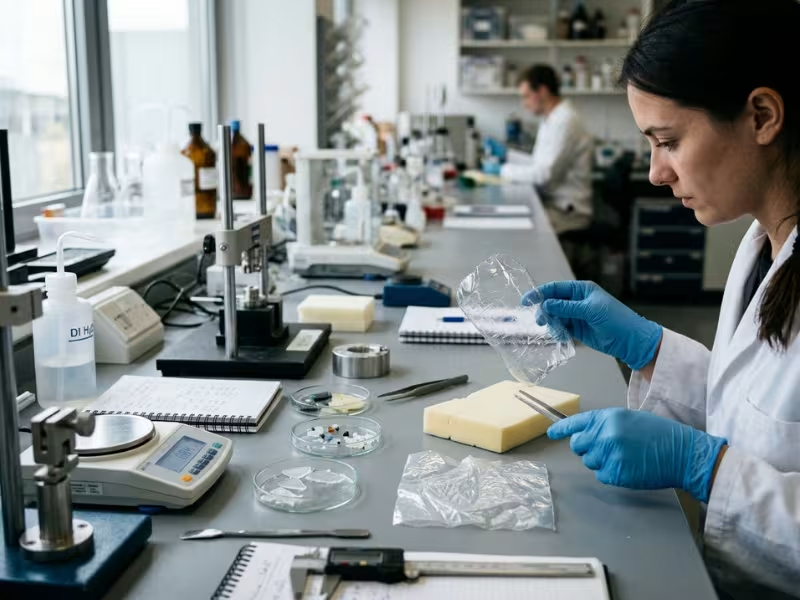
Plastic-eating bacteria are real. But most people misunderstand what they can do.
Researchers, recyclers, and packaging teams often ask the same question: can bacteria truly break down plastic?
The short answer is yes, with limits. These microbes do not clear mixed plastic waste from oceans or landfills in weeks. Their value lies in specific plastics, specific enzymes, and controlled systems.
Below, we explain how the process works, which plastics make realistic targets, and where the limits are.
What Does It Mean for Bacteria to “Eat” Plastic?
When people hear “plastic-eating bacteria,” they often picture tiny creatures chewing through a bottle. That image is fun, but it misleads. Bacteria have no mouths. They “eat” plastic through chemistry, and the work starts outside the cell.
Here is what actually happens, and why it takes so long.
How the Breakdown Works
The process works best as a three-step job.
Step 1: Bacteria release enzymes. The cells settle on the plastic surface and secrete enzymes. These proteins act like molecular scissors.
Step 2: Enzymes cut the polymer chains. Plastic consists of very long chains of repeating units. The enzymes snip the bonds that hold these chains together. Long chains turn into short fragments. Short fragments turn into small molecules.
Step 3: Bacteria absorb and use the pieces. Once the molecules get small enough, the cells pull them inside. They use them for energy and growth. In the best case, the end products are carbon dioxide, water, and new cells.
That last step matters most. If microbes only crack plastic into smaller bits, you get fragments, not true biodegradation. When reviewing any study, the first question should be simple: did the bacteria actually consume the carbon?
Why Plastic Makes Such a Tough Meal
The process sounds simple on paper. In practice, plastic fights back in three ways.
Strong, stable bonds. Many plastics rely on carbon-carbon backbones. Few natural enzymes can break these bonds. Natural systems did not evolve many efficient enzymes for them.
Water-repelling surfaces. Most plastics are hydrophobic. Enzymes work best in water, so they struggle to grip a slick, oily surface.
Tightly packed structure. Many plastics have high crystallinity. Their chains pack into dense, orderly regions. Enzymes can only reach the looser, amorphous zones. The crystalline parts stay locked away.
Put these together, and the real picture comes into focus. Bacteria can eat some plastic, but they nibble at the edges. They do not devour it.
Why Some Plastics Break Down Faster Than Others
“Plastic” is a family of very different materials. When someone asks for a microbe that “handles plastic,” the first question is which plastic they mean. The answer changes everything.
The first check is always the polymer backbone. If the chain contains bonds that react with water, such as ester bonds, enzymes have something to cut. If the backbone is pure carbon, microbes have almost nothing to grab. Crystallinity, additives, and contamination then decide how hard the job gets.
Here is how the main groups compare.
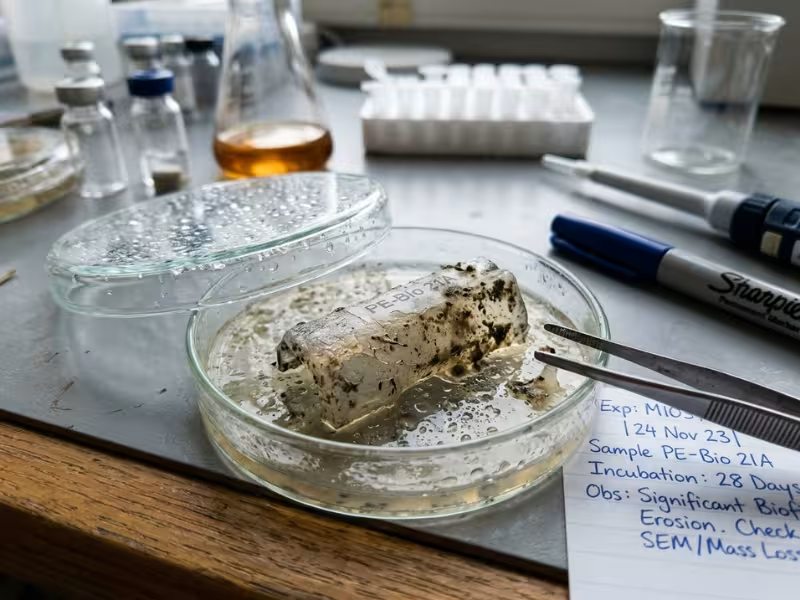
PET and Other Polyesters: The Best Odds
PET contains ester bonds along its backbone. Many natural enzymes already cut ester bonds in plant waxes and fats. So microbes do not need to invent a new tool. They need to adapt an existing one.
That is why PET leads the research field. Even here, the form of PET matters a great deal. Thin, low-crystallinity PET film breaks down much faster than a rigid bottle. Bottle-grade PET packs its chains tightly, so most processes grind it and soften it first.
Polyurethane: Possible, but Messy
Polyurethane is not a single material. Manufacturers build it from different parts for foams, coatings, adhesives, and elastomers.
Polyester-based PU contains ester links that microbes can attack, so it is the easier type. Polyether-based PU resists far more. The urethane bonds themselves are tougher to cut. Many PU foams are also cross-linked, which locks the structure in place. With any PU degradation claim, check which type the team tested. Results rarely carry over from one formulation to another.
Polyethylene and Polypropylene: The Hardest Targets
PE and PP make up a large share of global plastic waste. They are also the materials microbes struggle with most.
Their backbones are long chains of carbon and hydrogen with no weak points. No enzyme can simply snip them. In most studies, the plastic first needs oxidation from UV light, heat, or chemicals. Only after that step can microbes make real progress. Even then, the reported weight loss usually stays small and builds slowly over months. Any headline about bacteria “devouring” PE bags deserves caution.
Mixed and Additive-Heavy Plastics: Even Harder
Real products rarely contain one clean polymer. A snack bag may combine PE, PET, and aluminum in thin layers. Many plastics also carry plasticizers, flame retardants, pigments, or antimicrobial agents.
These extras create three problems:
- Physical barriers. Layers shield the parts microbes could otherwise attack.
- Toxicity. Some additives slow or kill the microbes.
- Inconsistency. One microbe or enzyme cannot handle every material in the mix.
The takeaway is simple. Biodegradability depends on the specific polymer, its structure, and what else is in it. A single “plastic-eating” microbe cannot handle all of them.
Which Plastics Can Bacteria Break Down Today?
Lab results and real-world progress can look very different. A more useful approach is to sort plastics by one practical question: what can microbes or their enzymes actually do with this material right now, and under what conditions? Here is where each major plastic stands.
PET: The Most Discussed Case
PET gets the most attention for a simple reason: it works better than anything else. It is also everywhere, in bottles, food trays, and polyester fabric.
The turning point came in 2016. Japanese researchers found Ideonella sakaiensis living at a PET bottle recycling site. The bacterium uses two enzymes as a team:
- PETase cuts PET into smaller pieces, mainly a compound called MHET.
- MHETase splits MHET into terephthalic acid and ethylene glycol, the two building blocks of PET.
Those building blocks are the key point. You can purify them and make new PET from them. That turns “breakdown” into a recycling route, not just a disposal method.
Now for the limits. The wild bacterium works slowly. It needed about six weeks to break down a thin, low-crystallinity film at room temperature. A thick bottle would take far longer.
Engineered enzymes changed the pace. Modified cutinases can break down about 90% of pretreated PET in roughly 10 hours. But that result depends on three conditions:
- The PET is ground and made amorphous first.
- The reactor runs hot, close to 70°C.
- Operators control pH and remove the products as they form.
In short, PET breakdown works well in a tank and poorly in a landfill.
Polyurethane: Possible, But Less Straightforward
PU shows real promise, but the results depend heavily on the material.
Some bacteria, including certain Pseudomonas strains, attack polyester-based PU. They break the ester links and weaken the material. In many cases, though, they cut the soft segments and leave the tougher urethane parts behind. Many “PU degradation” claims only cover part of the polymer.
The urethane bond is the harder target. In 2023, researchers identified enzymes called urethanases that can cut it. They still work best on small fragments, after a chemical step has already broken the foam down.
Three issues make PU hard to process at scale:
- Formulation varies widely. A mattress foam and a shoe sole can behave like two different plastics.
- Breakdown products need care. Aromatic PU can release aromatic amines, and some of them are toxic. You must capture and manage them.
- Real waste is dirty. Glues, fabrics, and flame retardants travel with the foam.
In practice, PU will most likely rely on a hybrid process. Chemistry opens the material, and enzymes finish selected steps.
Polyethylene and Polypropylene: The Hardest Targets
PE and PP call for the most caution, because the headlines often run far ahead of the data.
Both plastics have backbones made only of carbon and hydrogen. These chains offer no natural cutting point for enzymes. That is why most studies first expose the plastic to UV light, heat, or oxidizing chemicals. Oxidation adds oxygen groups to the chain, and microbes can attack those groups.
Researchers have reported activity from Rhodococcus, Pseudomonas, and Bacillus strains. Wax worm saliva has also drawn attention. But look closely at the numbers:
- Weight loss often stays in the single digits over weeks or months.
- Most tests use thin, pretreated films, not real bags or containers.
- Weight loss can come from additives leaching out, not from the polymer breaking down.
Many early degradation claims on PE or PP reflect surface damage, oxidation, or additive loss rather than full polymer consumption.
PE and PP studies are more convincing when they track carbon, for example by measuring CO₂ release or using labeled carbon. Those methods show whether microbes truly consumed the polymer. PP has an even thinner record than PE.
Microbes can contribute here. But they do not yet offer a working solution for PE or PP waste.
Bioplastics vs. Conventional Plastics: Don’t Confuse Them
People often mix these two ideas up, and the mix-up causes bad buying and disposal decisions.
Biodegradable plastics such as PLA and PHA were designed to break down under specific conditions. Their chemistry gives microbes easy entry points. Conventional plastics were designed to last. When bacteria attack them, they work against that design. That difference is why biodegradable bags and conventional plastic bags follow very different end-of-life paths, even when they look alike on the shelf.
Two points deserve attention:
- “Biodegradable” depends on conditions. PLA breaks down well in industrial compost at around 58°C. That does not mean it degrades quickly in landfills, oceans, or home conditions. In the ocean or a home compost bin, it can persist for years. If you use PLA biodegradable film, plan its disposal around industrial composting. PHA performs better across soil and marine settings.
- “Bio-based” does not mean biodegradable. Sugarcane-based PE is chemically identical to fossil-based PE, so it resists microbes just as strongly.
It also helps to separate “eco” materials by how they actually break down. Compostable plastics rely on microbes in a compost system. PVA water soluble bags first dissolve in water and then depend on suitable conditions for further biodegradation. Each pathway needs its own disposal plan.
So when you read about “plastic-eating” microbes, check which plastic the claim covers. A result on PLA tells you nothing about a PE bag.
The Enzymes Behind Plastic Breakdown
Bacterial names grab headlines, but enzymes do the actual work. A useful approach to any new discovery is to look past the microbe. Ask which enzyme it uses, which bond that enzyme cuts, and how fast it cuts it.
That change in focus explains most of the real progress in this field.
Why the Enzyme Matters More Than the Microbe
A bacterium is a delivery system. It makes the enzyme and lives off the products. The enzyme decides which plastic breaks down and how quickly.
This has a practical side. Industrial recycling rarely uses live bacteria. Engineers produce the enzyme separately, purify it, and add it to a reactor. In that setup, the original species becomes a footnote, and the enzyme becomes the product.
Four Enzyme Groups Worth Knowing
You don’t need a full catalog. These four groups cover most of what you will read about.
PETase and MHETase. This pair works as a two-step team. One enzyme cuts PET into mid-sized pieces. The other finishes the job and releases the original building blocks. The idea matters more than the names: split the work and recover reusable monomers.
Cutinases. Plants coat their leaves with a waxy polyester called cutin. Microbes evolved cutinases to break it down. PET has similar ester bonds, so these enzymes adapt well to it. Leaf-branch compost cutinase (LCC) and its engineered versions now lead industrial PET work.
Laccases and other oxidative enzymes. These enzymes don’t cut chains directly. They add oxygen to tough structures and weaken them. Researchers study them for PE and PP, but the evidence remains thin. They work best as helpers, not standalone solutions.
Depolymerases for biodegradable polyesters. PHA depolymerases and PLA-degrading enzymes target plastics that manufacturers designed to break down. They work well, which helps explain why bioplastics behave so differently from conventional ones.
Why Labs Now Build Enzymes Instead of Hunting for Bacteria
Wild enzymes evolved for leaves and fats, not bottles. Many fall apart at the temperatures PET recycling needs. They work too slowly. They stall on crystalline regions.
So researchers stopped relying on luck. They now redesign enzymes directly. They swap key amino acids, run directed evolution, and use machine learning to predict better versions. FAST-PETase, an AI-guided variant, broke down some PET products in about a week. Engineered LCC variants survive near 70°C and break down pretreated PET in hours.
A practical rule of thumb: a new bacterium makes an interesting paper, but a faster, tougher, cheaper enzyme moves the industry forward. When you read the next headline, check whether it reports an improved enzyme with real rate data or just a new species name.
Why Plastic-Eating Bacteria Are Not Yet a Large-Scale Fix
This is the part most headlines skip. A microbe that breaks down plastic in a flask is real science. A microbe that clears plastic from a river, a landfill, or a recycling stream is a different claim.
From a commercial perspective, any promising paper should pass four reality checks. Most discoveries stall at one of them.
Lab Success Does Not Equal Environmental Cleanup
A lab gives microbes ideal conditions. Researchers pick one clean polymer, cut it into thin film or powder, and set the temperature and nutrients exactly right. Nothing competes with the test strain.
Nature offers none of that. In soil or seawater, your target bacterium fights thousands of other species for food and space. Most microbes prefer easy carbon, such as sugars or dead plant matter. Plastic sits near the bottom of their menu.
Scale creates another gap. A typical study tracks milligrams of plastic. The world produces over 400 million tonnes a year. Even a strain that performs well in a dish needs a huge leap in speed to matter at that volume.
So “breaks down plastic in the lab” is a starting point. It shows a mechanism exists. It does not show a cleanup method works.
Real Waste Streams Are Mixed, Dirty, and Inconsistent
Picture a bale of post-consumer plastic. It holds bottles with food residue, PE caps, paper labels, glue, and multilayer pouches. Some items carry dyes, flame retardants, or plasticizers.
Each of these causes a specific problem:
- Food and organic residue feeds other microbes. They grow faster and crowd out the plastic degraders.
- Mixed polymers need different enzymes. A PET enzyme ignores the PE cap on the same bottle.
- Multilayer films hide the target polymer behind layers that enzymes cannot reach.
- Additives can poison the microbes or block the enzymes.
Batch-to-batch changes make this worse. A process tuned for Monday’s waste may fail on Friday’s load.
That is why every working biological system starts with sorting and cleaning. The biology only comes in after the waste looks almost like a lab sample.
Temperature, Oxygen, pH, and Surface Area All Matter
Small shifts in conditions can make or break a process.
Temperature comes first. PET chains loosen near 65–70°C, and enzymes reach them far more easily at that range. Ocean water sits far below it. Most wild bacteria also stop working long before that point.
Oxygen comes next. Deep landfill layers turn anaerobic fast. Many plastic-degrading pathways need oxygen, so they slow down or stop.
pH shifts as the reaction runs. PET breakdown releases terephthalic acid, which lowers pH and slows the enzyme. Reactors add base to correct this. Nature does not.
Surface area decides how much plastic the enzyme can touch. Enzymes only work on the surface. A thick bottle exposes very little. Grinding helps, but it costs energy.
Speed and Economics Remain Major Barriers
Even when the biology works, the numbers have to work too.
Speed is the first hurdle. Wild bacteria need weeks to months for thin films. Engineered enzymes cut that to hours, but only after grinding, heating, and careful process control. Every one of those steps adds cost.
Cost is the second hurdle. Enzymatic recycling must buy enzymes, run hot reactors, purify the monomers, and treat wastewater. Early cost models put enzymatically recovered terephthalic acid well above the price of virgin material. Oil-based plastic stays cheap, so recycled monomers struggle to compete without policy support or brand premiums.
Then comes capital. Building and scaling a new plant takes years and large investment. Companies in this space have already delayed or reworked projects as costs rose.
For investors and policy teams, the framing is simple. The question is not whether bacteria can break down plastic. It is whether they can do it faster and cheaper than the alternatives, at the volume the waste system demands. For most plastics, that answer is still no.
Where Plastic-Degrading Microbes Are Most Likely to Be Useful
If microbes cannot clean up the planet, where do they belong? From a recycling perspective, biology works best as one station on a recycling line, not as a cleanup crew.
Promising projects share four things: sorted feedstock, pretreatment, controlled conditions, and a buyer for the output. Here is where those pieces come together.
Enzyme-Assisted Recycling in Controlled Facilities
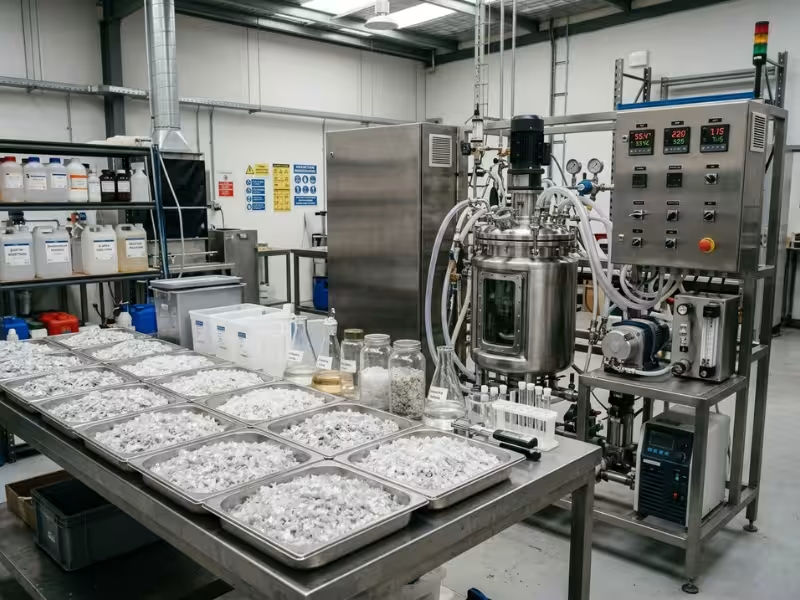
This is the most realistic near-term use, and PET leads the way.
A typical process works like this:
- The plant takes in sorted PET, such as bottles, trays, or polyester scrap.
- Machines shred it, then melt it and cool it fast. This step makes the plastic less crystalline and easier for enzymes to reach.
- Operators feed it into a reactor with engineered enzymes at about 65–72°C. They control pH the whole time.
- The enzymes cut PET back into terephthalic acid and ethylene glycol.
- The plant purifies these building blocks and turns them into new PET.
This setup works because the facility removes nearly every factor that stops microbes in nature.
It also solves a real gap. Mechanical recycling struggles with colored, opaque, or dirty PET, and quality drops with each cycle. Enzymatic recycling recovers the original building blocks, so the new plastic can match virgin quality.
When assessing a plant, four numbers matter most: enzyme dose, reaction time, monomer purity, and cost per tonne.
Pretreatment Plus Biological Processing
Biology rarely works alone. It performs best as a finisher, after other steps open up the plastic.
Each type of pretreatment does a specific job:
- Mechanical steps such as washing and grinding increase surface area.
- Thermal steps lower crystallinity so enzymes can reach more chains.
- Chemical steps cut long chains into shorter pieces that enzymes handle with ease. For PE, oxidation creates the first weak points.
This hybrid approach keeps gaining ground because each method covers the other’s weakness. Chemical recycling alone often needs high heat, solvents, and a lot of energy. Enzymes work under milder conditions and target specific bonds. That precision lets them pull one polymer out of a mixture and leave the rest.
Polyurethane shows the model clearly. A chemical step breaks the foam down first. Urethane-cutting enzymes then handle the bonds that chemistry leaves behind.
A simple rule applies: let chemistry do the heavy lifting, and let enzymes do the precision work.
Niche Applications for Specific Waste Streams
Some waste streams fit microbial tools especially well.
Textiles stand out first. Polyester makes up most of the world’s fiber output, and poly-cotton blends frustrate mechanical recyclers. Enzymes can target the PET and leave the cotton intact, or the reverse. That makes them useful for separating fibers that machines cannot sort.
Industrial scrap comes next. Film plants and fiber mills produce clean offcuts with a known composition and a steady supply. That is close to ideal feedstock.
Monomer upcycling has started to emerge too. Researchers have engineered microbes that turn recovered terephthalic acid into higher-value chemicals, such as vanillin.
The pattern holds across all three. The material is consistent, the volume is predictable, and someone wants the end product.
Why Open-Environment Cleanup Is Still Limited
Spraying microbes into oceans or landfills sounds appealing, but it fails on several fronts.
Plastic in nature spreads thin, so microbes cannot work at useful rates. Native species outcompete added strains and prefer easier food. Cold water and low oxygen slow the enzymes even further.
Partial breakdown creates its own risk. It can produce more microplastics and release additives faster.
Releasing engineered organisms also raises serious regulatory and ecological concerns. Once you release a microbe, you cannot call it back.
For now, collecting plastic and sending it to a controlled facility beats seeding the wild every time.
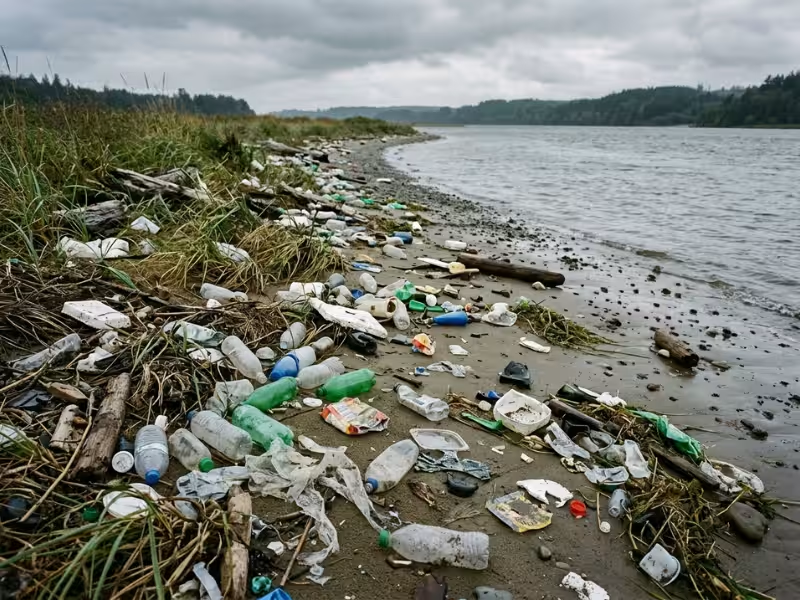
How to Evaluate Claims About Plastic-Eating Bacteria
Every few months, a new headline says bacteria will “solve” plastic pollution. Some of these stories rest on solid work. Many stretch a small lab result into a big promise.
A useful approach is to skip the headline and run the claim through six questions. Most claims fail at least one.
1. Which plastic did they test?
The word “plastic” on its own is a red flag. Look for a named polymer, such as PET, PE, PP, PU, or PLA. Then check the form. A thin, amorphous film is far easier to break down than a thick bottle or a foam block. If the study used PLA or PHA, it tells you little about conventional plastics.
2. Did the microbes consume it, or just crack it?
Weight loss and surface pitting show damage, not digestion. Full mineralization means the carbon ended up as CO₂, water, and new cells. Look for CO₂ measurements, labeled carbon tracking, or recovered monomers. Without that evidence, you may be watching plastic turn into smaller plastic. Additives leaching out can also look like weight loss.
3. Lab flask or real waste?
Clean powder at a controlled temperature proves a mechanism exists. Post-consumer waste with labels, food residue, and dyes is the real test. Ask whether anyone tried the method on actual waste, and at what scale. Grams, kilograms, and tonnes tell three very different stories.
4. How long did it take?
Read the time and the percentage together. “Bacteria degrade polyethylene” might mean 3% weight loss over 90 days. A recycling plant needs results in hours or days, not months. If the article gives no timeframe, assume it was slow.
5. Was pretreatment required?
Many impressive numbers depend on grinding, melting, UV exposure, or chemical oxidation first. That is fine, because real facilities use pretreatment too. But those steps cost energy and money, and they belong in the story. If a headline skips them, it gives the biology too much credit.
6. Did they check the byproducts?
Breakdown products are not automatically safe. Some polyurethanes release aromatic amines. Partial breakdown can create microplastics and free up additives faster. Strong studies name what came out and test it for toxicity.
A quick way to score what you read
A simple tally helps. If a claim passes five or six questions, take it seriously. Three or four means interesting early science. Two or fewer usually means a press release, not a solution.
One last habit helps too. Find the original paper, not just the news story. The abstract and methods section often tell a much calmer, and more useful, version of events.
FAQs
Can bacteria break down all types of plastic?
No. Microbes need a chemical weak point to start on.
Polyesters such as PET, PLA, and PHA contain ester bonds that enzymes can cut. Polyester-based polyurethane also gives them a way in. PE, PP, polystyrene, and PVC have tough carbon-carbon backbones with no easy cutting point. Studies on these materials usually show slow, partial weight loss, and often only after UV or chemical pretreatment.
Additives and multilayer packaging make the job harder still.
When someone mentions “plastic-eating bacteria,” the first question should always be which polymer they mean. No single microbe or enzyme handles every type of plastic.
How long does plastic biodegradation take?
It depends on the polymer, its form, and the conditions.
Typical ranges look like this:
- Wild bacteria on thin PET film: about six weeks at room temperature.
- Engineered enzymes on pretreated PET: around 90% breakdown in roughly 10 hours at about 70°C.
- PE in lab studies: a few percent weight loss over several months.
In nature, conventional plastics last for decades or longer. Even PLA can last for years outside an industrial composter.
A rough rule of thumb: results in hours usually mean an engineered enzyme in a reactor. Months usually mean a wild microbe in a lab. Outdoors, expect it to be very slow.
Can bacteria break down microplastics?
In theory, small particles help. They give enzymes more surface area to work on.
In practice, three problems get in the way. Most environmental microplastics are PE, PP, or tire wear particles, which are the hardest materials to break down. They also spread thinly through water and soil, so microbes rarely find enough of them to feed on. And biofilms do grow on microplastics, but growing on a particle is not the same as digesting it.
The most realistic use is in controlled settings. One example is wastewater treatment that targets polyester fibers from laundry. For now, filters and capture at the source do far more good.
Are plastic-eating bacteria dangerous to humans?
Most species studied so far are common environmental microbes, not known disease-causing ones. Ideonella sakaiensis came from sediment at a recycling site.
Some genera deserve care, though. Pseudomonas, for example, includes opportunistic pathogens. Labs follow standard biosafety rules for this reason.
Industrial recycling also lowers the risk further. It mostly uses purified enzymes inside closed reactors, not live bacteria.
The bigger concerns lie elsewhere:
- toxic breakdown products, such as aromatic amines from some polyurethanes
- additives that partial breakdown releases
- the ecological effects of releasing engineered organisms
The microbes themselves are rarely the main risk. Uncontrolled release and unmeasured byproducts are.
Do they remove plastic completely or only partially?
It depends on the system.
Complete removal means one of two things. Either the microbes turn the carbon into CO₂, water, and new cells, or enzymes break the polymer back into monomers that the plant recovers. Engineered PET enzymes come close to the second outcome in reactors.
Most environmental studies on PE and PP show only partial breakdown. You see small weight loss, surface cracks, and shorter chains. That can leave behind microplastics and fragments, which is not a clean result.
To judge a claim, look for proof. CO₂ measurements, labeled carbon tracking, or recovered monomers show real removal. Weight loss alone does not.
What plastic is most promising for microbial recycling?
PET, by a wide margin.
It has cuttable ester bonds and well-studied enzyme families, including PETase and engineered cutinases such as LCC. The enzymes return PET’s original building blocks, so plants can make new PET that matches virgin quality.
The supply is also huge. Bottles, food trays, and polyester textiles provide steady feedstock. Enzymatic PET recycling has already reached demonstration scale, and companies are working toward commercial plants.
Polyester-based polyurethane and bioplastics such as PLA and PHA come next. For PE and PP, a practical microbial recycling route still looks distant.
Conclusion
So, can bacteria really eat plastic? Yes, but not the way most headlines suggest.
Microbes and their enzymes can break down certain plastics, and PET leads that list. They still struggle with PE and PP. They cannot clear mixed waste from oceans, soil, or landfills. Treat them as a precise tool, not a cleanup crew.
Their best near-term role is inside controlled recycling plants. Operators there sort the feedstock, pretreat it, and run enzymes at the right heat and pH. Under those conditions, PET returns to its original building blocks and becomes new, high-quality plastic.
That is where the real progress lies. Bacteria will not solve plastic pollution on their own. The breakthrough comes when biology works alongside smart engineering and better waste systems. That means good collection, clean sorting, and plants built around what enzymes do best.
When you read about the next discovery, apply one test. Does it work at scale, on real waste, at a cost that makes sense?
For packaging buyers, the bigger lesson is simple: end-of-life performance depends on the material, the disposal system, and the treatment conditions — not just on a green label.