


Your guests pile on ribs and BBQ sauce. Ten minutes later, the plates sag and the forks snap. Or you buy “biodegradable” cutlery, then learn your local facility won’t take it.
Event hosts, caterers, and food service buyers tell me both stories every week.
Good tableware has two jobs. It has to hold up during the meal. Then it has to go somewhere that can actually break it down.
I help buyers source eco-friendly plates and cutlery. This guide shows you how to choose by food type, event type, and disposal route, so you get it right the first time. If you’re comparing plates, bowls, cups, and cutlery together, start by reviewing the full range of biodegradable tableware before you narrow down individual items.
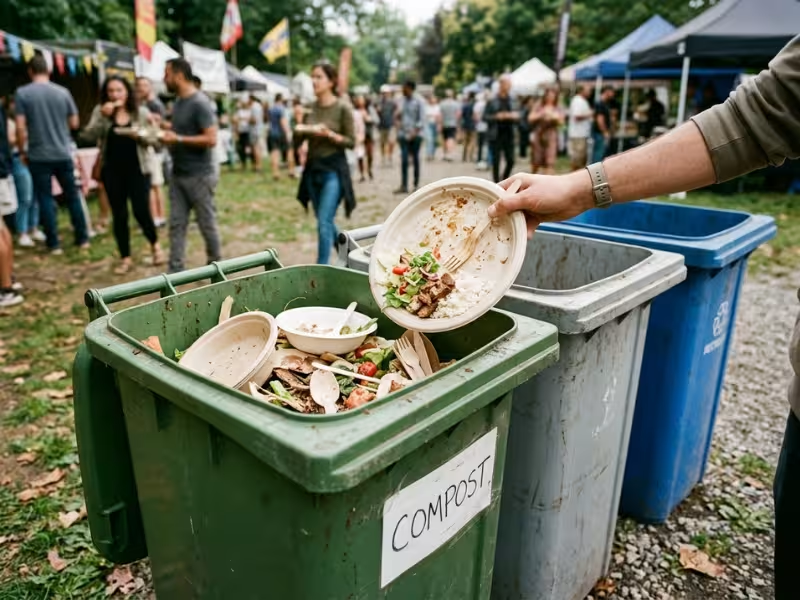
Start With the Bin, Not the Label
Most buyers flip the package over and read the eco claims first. I start somewhere else: where will the used plate and fork end up? That answer tells you which labels matter and which ones you can ignore.
What the Words on the Box Really Mean
Three terms show up on almost every pack. They sound alike, but they promise very different things.
Biodegradable is the weakest claim. It has no standard timeline and no required conditions. Wood, paper, and even some plastics biodegrade eventually, and “eventually” can mean decades.
Plant-based tells you what an item is made from, not where it can go. PLA cutlery comes from corn or sugarcane starch. In a backyard pile, though, it often behaves like plastic and can stay largely intact for a year or more.
Compostable carries real weight, but only with certification behind it. Look for these marks:
- BPI: the main North American mark, based on ASTM D6400 or D6868
- ASTM D6400: the US standard for industrial compostability
- EN 13432: the European equivalent
- TÜV Austria OK compost INDUSTRIAL or HOME: backyard composters need the HOME mark
BPI, ASTM D6400, and EN 13432 all test for industrial conditions. Those facilities typically run around 55–60°C (131–140°F), and home piles rarely stay that hot. So a certified compostable fork can still fail in your garden.
Why the Landfill Cancels the Green Claim
Much compostable tableware never reaches a compost facility.
Landfills pack waste tight and seal out oxygen. Composting microbes need air, so they stall. Without oxygen, organic material breaks down slowly and can release methane. A certified plate in the trash delivers little more benefit than a plain paper one.
Before you order, call your city or waste hauler and ask:
- Do you accept compostable plates and cutlery, or only food scraps?
- Which certifications do you require?
- Do you take PLA and CPLA items, or only fiber products?
That last question matters most for cutlery. Some facilities accept bagasse plates but reject PLA forks, because sorters can’t easily tell them apart from regular plastic.
If no compost route exists, choose uncoated fiber plates and untreated wooden cutlery. Don’t pay extra for a certification you can’t use.
The 3 Questions That Decide What You Should Buy
Before you compare bagasse to palm leaf or PLA to wood, step back. I walk every client through three quick questions. They narrow the field faster than any eco label.
What Food Are You Serving?
Check three things: temperature, moisture, and weight.
Hot chili, oily ribs, and saucy pasta push a plate much harder than cookies or fruit. Cutlery works the same way. A light fork handles salad fine but can bend in a thick steak.
Plan for your messiest dish, not your neatest one. Let that dish choose your plate and fork.
Where Will the Used Items Go?
Each destination needs a different product:
- Home compost: a HOME compost mark, untreated wood, or uncoated fiber
- Industrial compost: certified items, if your hauler accepts them
- Landfill: buy on strength and price, since certification adds little
- Recycling: food-soiled plates and cutlery rarely belong here
How Much Do Looks and Cost Matter?
A backyard BBQ values strength and price. A wedding values how the table looks in photos.
Set a per-guest budget early, and count plates, cutlery, and extras together. For bulk orders, ask about batch consistency. Palm leaf and wood can vary in color and finish between shipments.
Answer all three, and you’ll usually have just two or three materials left to compare.
Which Materials Actually Work Best?
Every material has a sweet spot and a weak spot. Suppliers love to talk about the first one. I’ll cover both, so you can see which plate and fork fit your menu and your bin.
Bagasse: The Safest All-Around Choice for Hot, Messy Meals
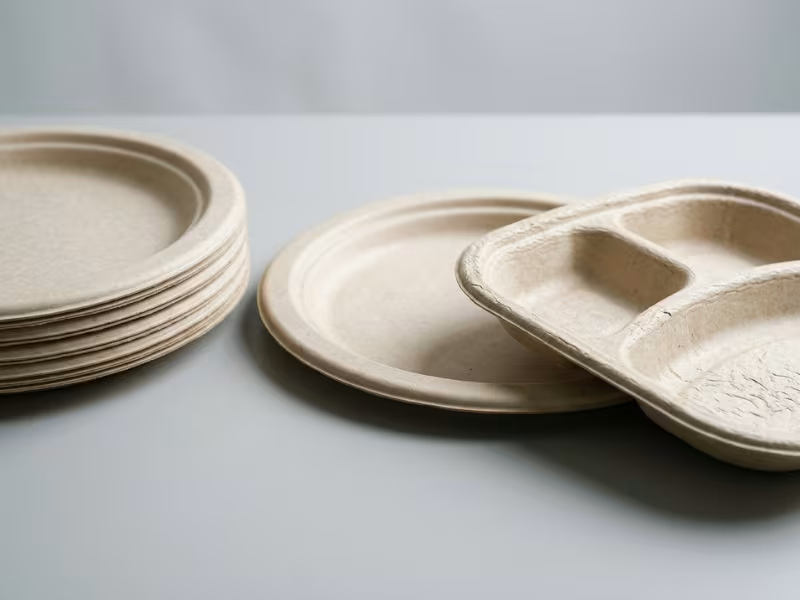
Bagasse is molded sugarcane fiber, made from the pulp left after juice extraction. When a client wants one plate for almost any menu, I start here.
If bagasse fits your menu, compare a few grades of sugarcane bagasse tableware side by side. Rim strength, thickness, and shape can vary a lot between suppliers.
Best for: gravy, chili, fried chicken, and saucy pasta. Many bagasse plates handle very hot food well, and most tolerate a short microwave reheat. Exact limits depend on thickness and design, so check the supplier’s tested range.
Where it fails: Thin budget plates flex under a full portion and soften if food sits for 30 minutes or more. Brothy soups eventually soak through, so serve them in bagasse bowls.
Disposal: Uncoated bagasse usually breaks down quickly in industrial compost. It also does well in an active home pile if you tear it up first. Ask for PFAS-free stock, since some older grease-resistant grades used fluorinated chemicals.
Buy it first if you’re: a caterer, food truck, or BBQ host serving hot food on a budget.
Palm Leaf: Stronger Presentation, Higher Cost
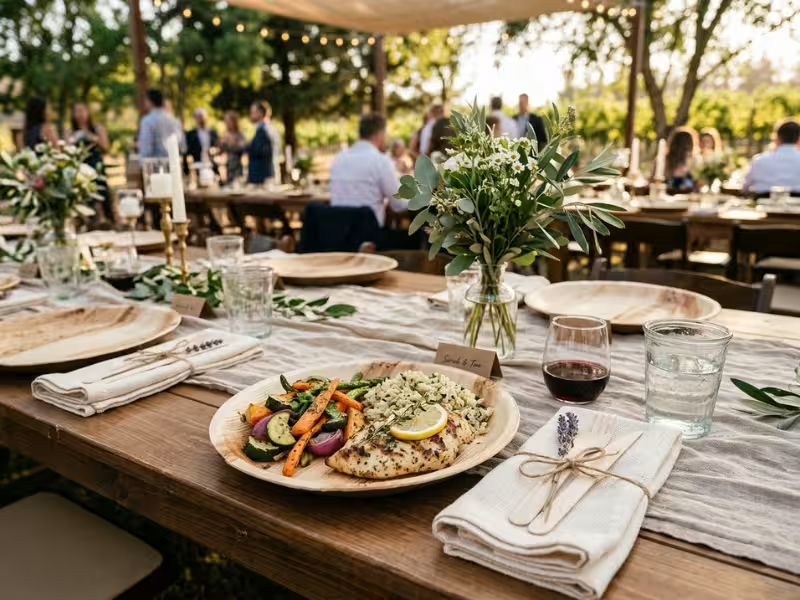
Makers press fallen areca palm leaves with heat and water. No glue, no coating. Each plate carries its own grain, and guests notice.
Best for: plated dinners, grilled meats, salads, and thick curries. A good palm leaf plate stays rigid in one hand.
Where it fails: Thin liquids can seep along the grain. Color and thickness shift from batch to batch. Expect to pay roughly two to three times the price of bagasse.
Disposal: Palm leaf home composts well. Break it into pieces, and it often breaks down within a few months in an active pile, though climate and pile conditions change the timeline.
Buy it first if you’re: a wedding planner or upscale caterer. Ask for photos of the actual batch.
Wood and Bamboo Cutlery: Where Home Composting Gets Easier
Cutlery gives home composters their easiest win.
Untreated birchwood forks, knives, and spoons break down in a backyard pile. They handle hot food without softening, and they cost little. Cheap batches can leave rough edges, so run your thumb along a sample. If you feel splinters, reject it.
Solid bamboo cutlery feels smoother and stronger. It works best as a reusable set for picnics and lunch boxes.
Avoid melamine blends. Items sold as “bamboo fiber” that feel hard and glossy often contain melamine resin. They won’t compost, and hot or acidic food can pull melamine into your meal. EU authorities have cracked down on these products for that reason.
Buy it first if you’re: a home composter, packing school lunches, or hosting without industrial compost access.
PLA and CPLA: Useful, but Only in the Right Disposal System
PLA comes from fermented corn or sugarcane starch. It looks and feels like plastic, so guests find it familiar. That familiarity hides two catches.
Heat: Standard PLA often starts to soften somewhere around 50–60°C (122–140°F), depending on the grade. Stir hot coffee or cut into fresh lasagna, and a PLA spoon or knife can droop. CPLA goes through extra heat treatment and usually handles much hotter food, often up to around 85°C (185°F). Confirm the supplier’s tested range before you commit.
Disposal: Both need industrial composting. In a home pile or the ocean, they can persist much like conventional plastic for years. Most recycling programs won’t take them either.
A common mistake: A café buys PLA spoons for a hot soup menu with no compost hauler in place. It pays a premium for spoons that bend and then land in the trash.
Buy it first if you’re: a café, office, or venue with a confirmed compost route that accepts PLA.
Wheat Straw and Newer Fiber Blends: Worth Considering, but Verify First
Wheat straw plates use stalks left after harvest, pulped and molded much like bagasse. Good batches handle warm, moist food nearly as well and compost in a similar way.
Where it fails: Quality swings between suppliers. Some batches feel brittle. Processing removes most gluten, but I still don’t serve wheat straw to celiac guests.
Newer blends, like rice husk mixes, can add stiffness. Some rely on plastic binders, though, so confirm the certificate covers the exact product.
Buy it first if you have: a trusted supplier and no gluten-sensitive guests.
Match the Tableware to the Meal
Most failures don’t come from bad materials. They come from bad matches. A plate built for cake can collapse under curry, and a fork that handles salad can snap in a pork chop.
Hot, Wet, and Heavy Meals
These meals strain tableware the most. Sauce soaks into fibers, heat softens the surface, and weight pulls the center down.
“Bagasse” on the box tells you little about strength. I check four features before I approve a plate for a heavy menu:
- Rim height: keeps gravy from running over the edge
- Plate depth: holds saucy food in the center
- Base stiffness: resists sagging when food sits
- Edge reinforcement: a rolled or ribbed edge stops folding
Diameter alone misleads buyers. Two 10-inch plates can carry very different loads. Press the rim with your thumb. If it bends easily, it will bend under food too.
A mistake I still see: A caterer picked pretty 7-inch cake plates for a curry-and-rice buffet. By the second round, plates folded and rice hit the floor. Cake plates are flat and thin. They aren’t built for wet, heavy food.
Cold, Dry, or Light Foods
Sandwiches, cookies, and finger foods barely stress a plate. Thin fiber, uncoated paper, and palm leaf all work, so choose on price, looks, or disposal route.
Watch for hidden moisture. Frosting, dressing, and cut fruit release liquid slowly. If food will sit on a dessert table for an hour, move up to a thicker plate.
Cutlery for Soft Foods vs. Dense Foods
A spoon for yogurt and a knife for brisket need very different strength. Check three things:
- Fork tines: Push them into firm chicken. Weak tines spread or snap.
- Knife edge: Look for real serrations, then test on your toughest item.
- Heat tolerance: Stir a hot dish for 30 seconds. If the handle droops, it won’t survive the meal.
A classic mistake: A couple chose standard PLA knives for a steak dinner. The blades bent on the first cut. For dense or hot proteins, choose heavyweight serrated CPLA or sturdy birchwood. Better yet, serve the meat pre-sliced.
Microwave, Reheating, and Takeaway Use
Never assume “biodegradable” means microwave-safe. Look for a microwave symbol and a stated limit. If the label says nothing, treat the item as not microwave-safe.
- Bagasse often handles a short reheat, typically one to two minutes, when the label allows it.
- Palm leaf can dry out, crack, or scorch.
- PLA-lined paper can warp as food heats.
- Cutlery should stay out of the microwave.
Takeaway adds steam. Moisture condenses under a closed lid and soaks into the base. Choose vented lids, and pack cutlery in a separate sleeve. A PLA fork resting on hot rice can soften before the customer opens the bag.
Best Picks by Real-World Use Case
Choices get easier once you picture the actual event. Here are the four situations buyers ask me about most, with my first pick and the cases where I’d skip it.
Backyard BBQs and Casual Family Meals
My pick: bagasse plates with untreated birchwood cutlery.
Why: Guests stack ribs, beans, and potato salad on one plate and balance it on a knee. Bagasse handles grease and sauce, and it costs far less than palm leaf. Birchwood won’t soften next to hot food, and both items can go into home compost.
Use 10-inch plates with a raised rim for mains, plus 6-inch plates for dessert.
Skip it when: the menu centers on chili or chowder. Serve those in bagasse bowls instead.
Weddings, Catering, and Presentation-Heavy Events
My pick: palm leaf plates with heavyweight birchwood or CPLA cutlery.
Why: Wedding plates end up in photos. Palm leaf’s natural grain looks warm against linen, and it carries a full plated dinner without sagging.
Plan for batch variation. I once watched a planner open boxes two days before a reception and find half the plates much darker than the samples. Protect yourself:
- Request photos of the actual production batch.
- Order 10–15% extra to pull uneven plates.
- Book your supplier at least six weeks out.
Skip it when: you serve soup courses or work on a tight budget. A premium white bagasse plate still looks clean and costs much less.
Takeout, Delivery, and Food Service
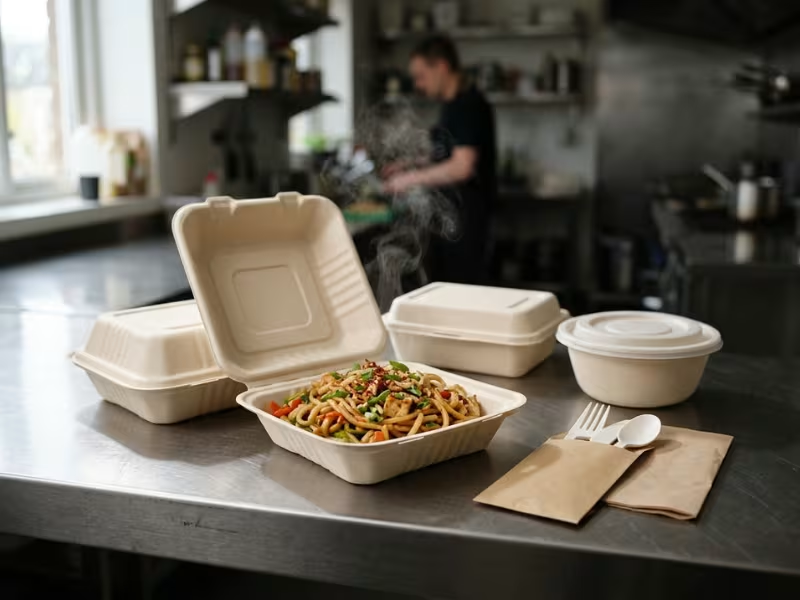
My pick: bagasse clamshells and plates with CPLA cutlery.
Why: A food business buys a system, not single items. Alongside plates, most operators also need matching biodegradable food containers for hot meals and delivery, so the whole setup follows one material and disposal logic.
Bagasse clamshells hold heat, resist grease, and survive a 20-minute delivery ride. CPLA handles hot food better than standard PLA.
The system only works if every piece shares one disposal route. A compostable clamshell next to a plastic fork and a PE-coated cup still ends up in the landfill.
Skip it when: your area has no commercial composting. Keep the bagasse, switch to birchwood cutlery, and stop paying for certifications nobody can use.
Everyday Home Use and School Lunches
My pick: bagasse for occasional use, solid bamboo for daily use.
Why: If you use disposables a few times a month, mid-weight bagasse covers everything from pasta to birthday cake. If you compost at home, choose uncoated bagasse with a HOME mark.
For school lunches, a solid bamboo fork and spoon set beats a daily stream of single-use cutlery. It’s light and survives a backpack.
Skip it when: you use disposables daily and own a dishwasher. Reusable plates often pay for themselves within a few months.
How to Buy Without Getting Misled
Most bad orders come from buyers who trust the box. I run every new plate and fork through the same three-step screen. It takes about a day.
Read Past the Marketing Words
These phrases sound green but promise almost nothing:
- “Eco-friendly” or “earth-friendly” with no certification mark
- “Biodegradable” with no timeline or test conditions
- “Made with plant fiber,” which can mean a little fiber mixed into plastic
- “Oxo-degradable,” which describes plastic that breaks into tiny fragments
- A leaf icon used in place of a real certification logo
Ask for the certificate number and search it on the certifier’s website. Check the product name, expiry date, and status. “Pending” or expired certificates don’t count.
Ask the Supplier the Right Questions
A trustworthy supplier answers quickly and in writing. Before any bulk order, I ask:
- Does the certificate cover this exact size and thickness?
- What binders or coatings does it use?
- Is it PFAS-free, backed by a third-party lab report?
- What maximum food temperature and microwave time did it pass?
- What storage conditions do you recommend? Fiber absorbs humidity, and PLA can warp in a hot warehouse.
- Will my bulk order match the sample?
If a supplier dodges these questions or won’t share documents, move on.
Run a Real Food Test Before Bulk Buying
Serve your heaviest, hottest dish at real serving temperature. Leave it out for 20 to 30 minutes. Then carry the plate one-handed across the room and cut the food with the matching knife.
Check for three failures:
- Base softening: damp patches or soft spots underneath
- Rim bending: a drooping edge as you walk
- Cutlery snapping: spreading tines or a bending knife
Test at least three units per supplier. One good plate can be luck. Three show a pattern. If you serve outdoors or deliver, test in those exact conditions too.
Quick Comparison Table
Use this table to narrow your list to two or three materials. Then return to the sections above for the reasons behind each rating, and test samples before any bulk order.
|
Material |
Best for |
Handles hot/wet food |
Home compost? |
Industrial compost? |
Typical downside |
|---|---|---|---|---|---|
|
Bagasse |
Hot, saucy everyday meals |
Yes, well |
Yes, if uncoated and torn up |
Yes |
Thin grades sag; broth soaks through over time |
|
Palm leaf |
Weddings and upscale events |
Thick sauces yes; thin liquids can seep |
Yes |
Yes |
Often costs 2–3x bagasse; batch color varies |
|
Birchwood cutlery |
Home composting, hot food |
Yes |
Yes, if untreated |
Yes |
Dry mouthfeel; cheap batches splinter |
|
Solid bamboo cutlery |
Reusable lunch and picnic sets |
Yes |
Reuse instead |
Not intended |
Melamine blends hide behind “bamboo fiber” |
|
PLA |
Cold foods and drinks |
No, softens with heat |
No |
Yes, if accepted |
Many facilities reject it |
|
CPLA |
Hot-food cutlery and lids |
Yes, within tested range |
No |
Yes, if accepted |
Costs more; little benefit without compost access |
|
Wheat straw |
Warm, moist everyday meals |
Mostly |
Yes, if certified |
Yes |
Quality varies; not for celiac guests |
FAQs
What’s the difference between biodegradable and compostable tableware?
“Biodegradable” has no set timeline or test conditions. “Compostable” means the item passed testing to break down under defined conditions. Trust a certification mark over either word.
Can compostable plates go in home compost?
Only if they carry a HOME compost mark, or if they’re uncoated fiber or untreated wood. Uncoated bagasse and palm leaf work well torn into pieces. Keep PLA out of backyard piles.
Which materials are best for hot food?
Molded bagasse usually offers the best heat and grease resistance for the price. Palm leaf works well for thick, hot dishes when looks matter. For cutlery, choose birchwood or CPLA over standard PLA.
Is wooden or bamboo cutlery better than PLA cutlery?
For home composting and hot food, usually yes. Untreated birchwood breaks down in a backyard pile and won’t soften. PLA only makes sense if your hauler accepts it.
Can compostable foodware go in the recycling bin?
No. Food residue contaminates recycling, and most recycling programs don’t accept PLA or molded fiber. Send it to compost or, as a last resort, the trash.
Do biodegradable plates and cutlery cost more than plastic?
Usually, yes. Bagasse sits closest to plastic pricing, while palm leaf and heavyweight CPLA cost more. Bulk orders narrow the gap.
What certifications should I check before buying in bulk?
Look for BPI, ASTM D6400, EN 13432, or TÜV Austria OK compost. Verify the certificate number online and confirm it covers your exact item.
Choose for the Meal, the Event, and the Disposal Route
Good tableware passes three tests. It handles your food. It fits your event. Then it goes somewhere that can actually break it down.
Miss one, and the choice fails. A sturdy plate with no compost route becomes landfill waste. A certified fork that bends in steak ruins dinner first.
Here’s the plan I give every client:
- Check your local composting rules and confirm in writing what your hauler accepts.
- Short-list two or three certified options that fit your menu and your bin.
- Test them with your real food at serving temperature, for as long as guests will hold them.
Do all three before you buy in bulk. If you source for catering, takeout, or branded food service, work with a manufacturer that shares certificate numbers, PFAS test reports, and production-batch samples up front. A few dollars in samples and one phone call cost far less than a pallet of plates and cutlery you can’t use.