


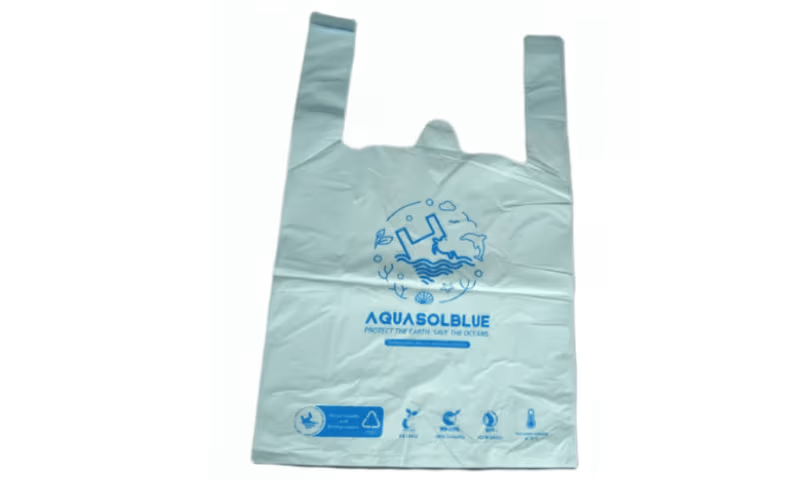
Know the difference between water-soluble bags and traditional plastic bags to better inform your choice of carrying option.
The march toward eliminating single-use plastics gives consumers lots of sustainable options, but makes selecting the best one for them a bit more complex. Where a shopper may once have chosen between a flimsy grocery sack and a bulky paper tote at checkout, there is now the added consideration of biodegradability, environmental impact, and water solubility.
Two such carrying options—water-soluble shopping bags and traditional plastic bags—have much in common in their primary utility but are suited to very different uses and buyers. Understanding the differences can help you make the choice that is best for your needs.
Water-soluble Shopping Bags Explained
While more and more retail brands adopt some level of eco-friendly packaging, water-soluble shopping bags go all the way, deriving their structural integrity solely from a unique material that must be dissolved in water to keep ecosystems clean. Sometimes referred to as PVA or polyvinyl alcohol bags, they contain at least one specialized synthetic polymer that breaks down rapidly when exposed to moisture, eliminating the waste entirely.
The main environmental advantage of a water-soluble bag is its complete absence of microplastic pollution in the local neighborhood where it operates. In almost all cases, they also drastically reduce the amount of persistent landfill waste they are responsible for, but that depends on how the water they dissolve in is managed, ranging from advanced wastewater treatment facilities to natural aquatic environments. Crucially, when such stationary water-treatment facilities are modernized and upgraded with the right bacterial cultures, every dissolved bag downstream degrades faster into harmless natural elements. On the technical side, a water-soluble bag offers excellent tensile strength compared to a flimsy paper alternative and provides an instant, eco-friendly solution that enables brisk (and often effortless) disposal. They are also incredibly safe and non-toxic, and give off a premium, environmentally conscious vibe as a result.
That said, PVA materials are highly sensitive to moisture, and a thicker, heavy-duty PVA bag increases production costs further, making bulk water-soluble bags comparatively tough on tight retail budgets (which they do not currently offset with massive economies of scale), while they tend to be susceptible to premature degradation in the event of an issue with heavy rain. This is mostly a future consideration for those who purchase groceries in wet climates, because a new PVA bag’s structural integrity is compromised by moisture, with some environments reducing that window to mere minutes in a downpour. There is also the environmental impact of the manufacturing process to consider, as many of the ingredients that go into these specialized films involve energy-intensive synthetic chemical activity, but these impacts are lessening as PVA production technology improves.
Traditional Plastic Bags Explained
Traditional plastic bags are sometimes thought of as the ultimate standard for everyday convenience, offering an incredibly lightweight design and a highly durable, petroleum-based structure that can carry heavy groceries, resist tearing from sharp edges, and protect goods with or without double-bagging. The manufacturer decides which combination of polyethylene densities is best for current retail conditions, so you may notice a transition from high-density, crinkly bags to low-density, stretchable plastics depending on the store.
But the combination of cheap manufacturing costs and absolute resistance to the natural elements makes for a highly persistent environmental pollutant. Most traditional plastic bags rely on a synthetic, fossil-fuel-based foundation to enable their incredible durability in most circumstances, with the chemical polymers providing a completely waterproof barrier and augmenting carrying capacity by adding stretch or by allowing them to hold heavy liquids at a more efficient volume. This widespread usability makes them incredibly cheap to produce and universally available, driving their continued dominance in global retail despite mounting ecological concerns.
Compared to water-soluble alternatives, traditional plastic bags have incredibly stubborn molecular structures that store their shape indefinitely, preventing the natural decomposition portion of the lifecycle for hundreds of years, so the environmental impact of their disposal is comparatively massive, as they consistently rely on fossil fuels and clog global waterways. There are variations on that theme, chief among them the recycled plastic bag, which adds post-consumer waste back into the production cycle and swaps in a slightly greener footprint for extended usability between grocery store visits. (For more on the differences, read our recycled versus virgin plastic bag explainer.)
Deciding Between Water-Soluble and Traditional Plastic Bags
Traditional plastic bags, especially the thicker reusable sort, are a great practical option for those interested in budget-friendly shopping but not yet sold on the water-soluble life. A traditional bag lets you carry wet or frozen goods, both at home and on the go, while still providing that waterproof safety net for rainy journeys or times when you just cannot keep your groceries perfectly dry. If you live in a region with heavy rainfall or are in the early stages of a tight retail business, a “traditional” plastic bag that does not dissolve will give you the flexibility you may need while remaining highly reliable and more durable than a standard paper sack.
When you are ready to go fully eco-friendly, the expanding array of water-soluble bags offers sustainability-minded, environmentally oriented options, as well as some that double-duty for composting. Choice can be overwhelming in the modern retail landscape, but there is an innovative packaging solution for everyone in the green future of the global shopping experience.