


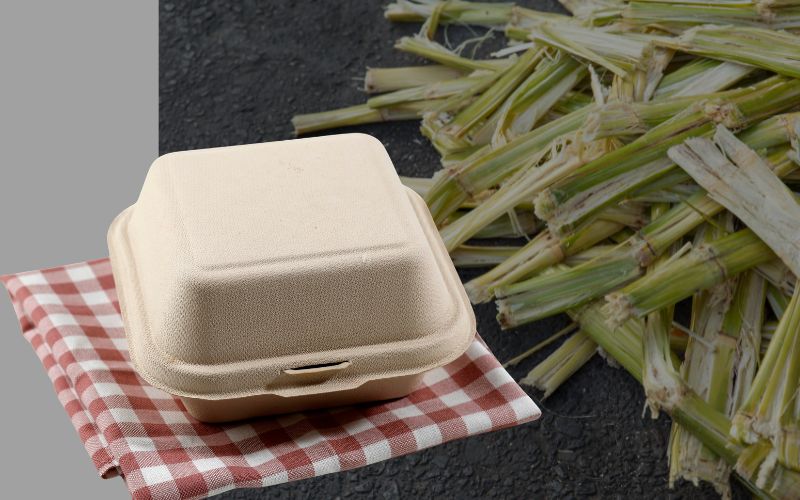
Bagasse is rapidly emerging as one of the most important sustainable materials in modern manufacturing, serving as a powerful, eco-friendly alternative to traditional plastics and wood-based paper. Originating as a natural byproduct of the sugarcane processing industry, bagasse is the fibrous residue that remains after sugarcane stalks are crushed to extract their sweet juice. Instead of being discarded or burned as agricultural waste, this versatile material is now being repurposed to fuel sustainable industries worldwide. From biodegradable food packaging and disposable tableware to renewable biofuel and sustainable construction materials, bagasse offers an incredibly wide array of eco-friendly applications. Understanding its unique properties, production methods, and global impact is essential for anyone looking to embrace the circular economy and reduce their reliance on non-renewable, fossil-fuel-based resources.
| Material name | Bagasse |
|---|---|
| Material is also known as | Sugarcane pulp, sugarcane fiber |
| Material composition | Cellulose, hemicellulose, and lignin from sugarcane stalks |
| Material breathability | Highly breathable (when woven or pressed) |
| Moisture-wicking abilities | High (absorbs moisture and grease effectively) |
| Heat retention abilities | Medium |
| Stretchability (give) | Low |
| Prone to pilling/bubbling | Low |
| The country where the material was first produced | New Guinea and Southeast Asia (historical sugarcane origins) |
| The biggest exporting/producing country today | Brazil |
| Recommended disposal method | Industrial or home composting |
| Commonly used in | Biodegradable plates, bowls, takeout containers, paper, biofuel, and fiberboards |
What Is Bagasse?
Bagasse is a highly versatile, natural material made from the leftover fibrous residue of sugarcane stalks. This plant has been recognized as an abundant source of sugar for centuries, but the dense, fibrous stalks left behind after juice extraction were historically viewed as a nuisance or a low-value byproduct.
Over thousands of years, sugarcane has been bred for a singular primary purpose. On the one hand, countless generations of cultivators of this plant have selectively bred it to be high in sucrose and water content, maximizing sugar yields. On the other hand, the modern push for sustainability has forced cultivators and engineers to look closely at the massive amounts of residual biomass produced by their crops, realizing that these strong fibers hold immense industrial value.
As a result, two distinct economic streams for the sugarcane plant have emerged. It is a myth that bagasse is simply useless agricultural waste; in fact, the majority of sugarcane harvests worldwide now contribute to the global biomass and packaging markets. Sugarcane plants processed in modern, forward-thinking mills are used entirely, ensuring that the fibrous stalk is collected, cleaned, and repurposed rather than left to rot in the fields.
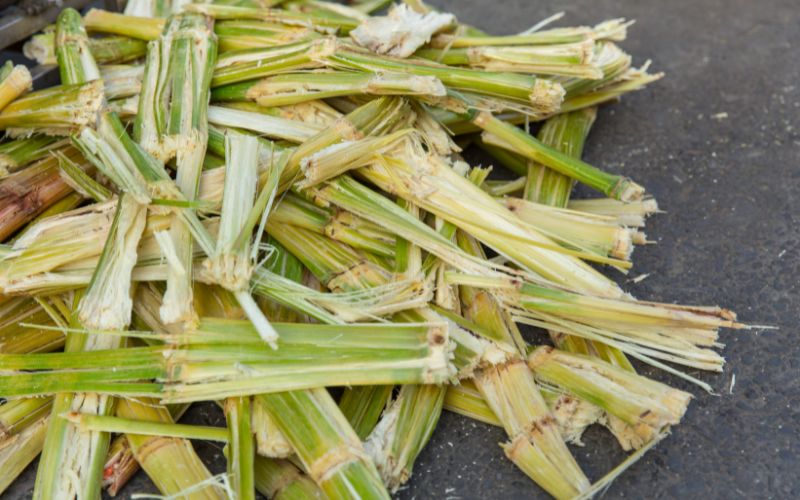
The stalks of the sugarcane plant consist of specific fibrous layers: The outer rind is formed from strong, rope-like bast fibers, and the inner core consists of a softer, pithy material. Both layers of the sugarcane stalk are used for industrial purposes; the complex composition of cellulose, hemicellulose, and lignin makes it a perfect candidate for everything from molded pulp packaging to biofuel.
Once the sweet juice has been completely extracted from the sugarcane plant, the remaining fibrous mass can be processed into a highly durable pulp. Bagasse pulp is so strong that it has become the premier choice for eco-friendly packaging, and it remains renowned as an excellent material for paper products that surpass traditional wood pulp by most environmental metrics.
However, since much of the global economy still relies heavily on cheap, petroleum-based plastics and traditional timber, the world doesn’t always fully realize bagasse’s benefits. Instead, people who don’t understand bagasse’s manufacturing capabilities default to styrofoam or plastic. However, more and more countries are embracing the mainstream use of bagasse, indicating that the modern renaissance of this sustainable material is nearing its zenith.
Once it is processed into packaging or paper, bagasse has a similar texture to thick cardboard, but it feels somewhat sturdier and more premium. Bagasse material is not prone to breaking down when holding liquids and is highly resistant to grease and oil. Since fibers from this plant are naturally interlocked, bagasse packaging is very rigid and highly durable; while a typical paper plate might soak through in minutes, a bagasse plate retains its integrity for much longer. Some estimates suggest that bagasse paper products offer significantly better structural stability than recycled paper alternatives.

In addition, bagasse is a lightweight material, which makes it highly efficient to transport and facilitates the safe storage of hot and cold foods without melting or releasing toxic chemicals. It is easy to mold this type of material into complex shapes, and it is highly heat-resistant, safely withstanding microwave temperatures without degrading.
Bagasse naturally breaks down in composting environments, and its fibers return harmlessly to the earth within a matter of months. Since bagasse is also incredibly easy to produce sustainably as a byproduct of existing agriculture, it is practically ideal for replacing single-use plastics.
How Is Bagasse Made?
As a crop, sugarcane grows exceptionally well in tropical and subtropical climates with high humidity, and the plants are usually ready for harvest after twelve to eighteen months of growth. Most bagasse plants are harvested with heavy agricultural machinery or by hand, and the stalks are then transported immediately to sugar mills, where they are crushed by massive metal rollers to extract the valuable sugar juice.
Next, after the juice is completely drained, the remaining crushed stalks—now officially bagasse—are collected as a damp, fibrous mass, which naturally facilitates the next stage of processing. Breakers or specialized hammermills are used to separate the useful fibrous sections of the plant from any remaining dirt or pith. The separated fibers are then thoroughly washed and boiled to remove impurities, residual sugars, and natural resins. Past this point, manufacturers use intense pulping processes to produce a smooth, malleable slurry.
At this stage, the same processes used to make traditional paper and cardboard are applied to bagasse products. The wet pulp from this substance is pressed into heated molds to create tight, rigid shapes like bowls and plates, and these finished products may be used for a wide variety of consumer and industrial purposes.
How Is Bagasse Used?
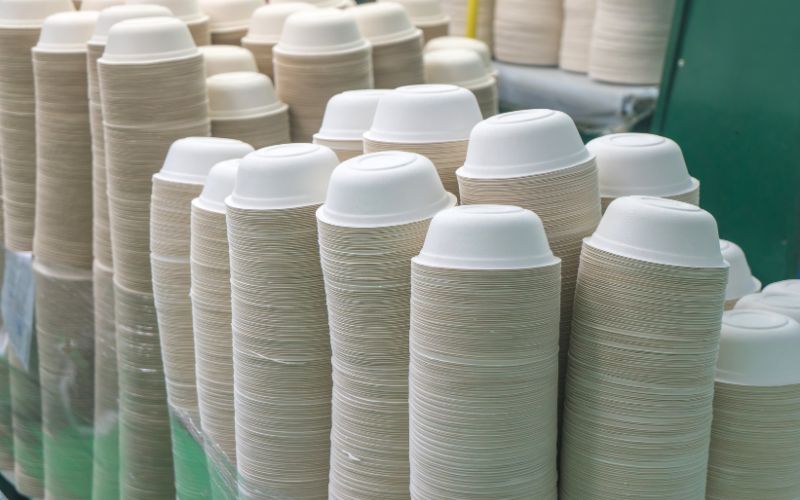
The primary use of bagasse today is in the production of eco-friendly, biodegradable packaging. In modern history, this type of material was originally prized mainly as a cheap fuel to power the boilers of the very sugar mills that produced it. While burning bagasse for energy remains widely used in the sugarcane industry, many companies around the world now value this material for its structural properties rather than its suitability for combustion.
Examples of products commonly made with bagasse include disposable plates, takeout bowls, clamshell food containers, meat trays, and single-use cups. In particular, this type of material is widely used for takeout containers because it is naturally resistant to hot grease and moisture. Most traditional paper containers start to warp, soak through, or fall apart after a comparably short time holding hot food, but bagasse containers retain their shape and structural integrity for the duration of a meal.
In addition, this type of fiber may be used in a variety of paper and construction materials. Again, using this substance for biofuel is more popular among agricultural insiders, but using bagasse for high-quality printer paper, cardboard boxes, and tissue paper is also becoming increasingly common.
Bagasse is particularly popular in the construction industry for its high tensile strength and insulating properties. While some builders may choose to use traditional wood products, one of the brilliant innovations of this material is that it can be pressed into dense fiberboard, making it an excellent, sustainable substitute for plywood and particleboard. Furthermore, bagasse’s incredible durability makes it an excellent material for acoustic and thermal insulation in building walls.
While some purists may choose to use products made with 100 percent pure bagasse, it is also common to mix this fiber with other natural materials. For instance, bamboo and bagasse blends are exceptionally popular, and it is also common to find this fiber blended with recycled wood pulp. Blending bagasse with other natural fibers can make the final product smoother while remaining completely compostable and durable.
Where Is Bagasse Produced?
Brazil produces approximately 40 percent of the world’s sugarcane output, making it the undisputed global leader in bagasse generation. However, because much of the sugarcane industry in Brazil is geared toward ethanol fuel and sugar production, a massive portion of this bagasse is burned on-site for energy rather than converted into packaging. In addition, as global demand for eco-friendly packaging skyrockets, Brazil’s infrastructure is slowly adapting to export more processed bagasse pulp to manufacturers worldwide.
India is the next largest producer of this crop, followed closely by China and Thailand. In all, over 100 countries worldwide cultivate sugarcane, and the production of value-added bagasse products in these nations is currently experiencing a massive upswing.
Recent global legislation banning single-use plastics has forced international markets to look for viable alternatives, and more and more countries are taking matters into their own hands by building dedicated bagasse pulping facilities near their sugar mills. In most cases, the countries pursuing this manufacturing endeavor are those that have already established massive sugarcane agricultural sectors.
While many changes have occurred in the arena of bagasse utilization in modern times, the sugarcane plant has been an integral part of human agricultural endeavors since before the dawn of civilization. It is believed that this crop has been cultivated in Southeast Asia for sugar extraction for thousands of years, making it one of the first major cash crops cultivated by humans.
However, the development of sophisticated bagasse packaging did not occur until the late 20th century. It was, on the contrary, the sweet, highly caloric properties of this plant that caused its cultivation to spread across Europe, Africa, and the Americas. With the dawn of the colonial era, sugarcane was brought to the Caribbean and South America, where it was successfully cultivated on a massive scale.
Notable technological advancements in the past few decades have finally allowed us to stop viewing leftover stalks as mere waste, and it wasn’t until the early 2000s that the cultivation of bagasse as a premium packaging material truly took off. It is certain that major producers of styrofoam and plastic fear this material’s competitive edge and are watching closely as bagasse completely disrupts the disposable packaging industry.
How Much Does Bagasse Cost?
Producing bagasse products does not inherently cost more than producing paper or plastic, but several market factors have influenced the final cost of these materials. For instance, plastic is produced on a much larger global scale than molded bagasse, which means that traditional plastic is often cheaper per volume. In addition, because high-quality bagasse packaging is in high demand among premium eco-friendly brands, some retailers charge slightly inflated prices for this sustainable alternative.
Ironically, sourcing bagasse fibers is simpler and more resource-efficient than harvesting trees for wood pulp, and logic dictates that this would drive the cost of bagasse paper lower than that of traditional paper. As legislation regarding single-use plastics becomes more aggressive and bagasse is fully accepted as a common alternative to styrofoam, the economies of scale will improve, and this temporary price discrepancy will likely disappear.
What Different Types of Bagasse Products Are There?
There are several varieties of bagasse products available on the market today. While the quality, thickness, and texture of this material may vary from manufacturer to manufacturer, the same basic fibrous properties are used to make biodegradable tableware, commercial paper, sturdy cardboard packaging, and heavy-duty construction fiberboards. The resulting products are stronger than standard paper, highly compostable, and durable enough to handle demanding consumer applications.
How Does Bagasse Impact the Environment?
The production of this material is inherently environmentally sustainable, as humans do not need to plant new crops specifically to harvest bagasse; it uses the waste of an existing food crop. However, as bagasse products continue to be manufactured on an ever-larger scale, it is important to ensure that the sugar mills producing the raw fibers follow the same sustainable cultivation and manufacturing processes necessary to keep the agricultural sector ecologically sound.
In most cases, environmental scientists cite bagasse as a key tool in the fight against global deforestation. Researchers note that using this substance requires cutting down zero trees and significantly reduces the amount of agricultural waste left to rot and emit methane in the fields.
Bagasse is widely considered a highly eco-friendly raw material, which means using it reduces our reliance on toxic, petroleum-based plastics. The natural composting process of this material introduces zero toxic microplastics into the soil. On the other hand, transporting heavy bagasse pulp from tropical countries to global manufacturing hubs generates carbon emissions, underscoring the need for localized production facilities.
Bagasse Certifications Available
Since global awareness of plastic pollution reached critical mass, it is now possible to have bagasse products certified as fully compostable by organizations such as the Biodegradable Products Institute (BPI) and in accordance with European standards such as OK Compost. It is also possible to have this material certified for strict food safety by the FDA, and several independent organizations verify the sustainable sourcing of the raw sugarcane fibers after the bagasse has been fully processed.
Bagasse represents a transformative leap forward in the quest for truly sustainable, circular manufacturing. By ingeniously repurposing a natural byproduct of the global sugar industry, we can significantly reduce our devastating reliance on fossil fuels and halt the deforestation caused by traditional paper production. As global consumers and corporations continue to demand viable alternatives to single-use plastics, bagasse stands out as a versatile, durable, and fully compostable solution. Embracing bagasse-based products is not just a passing trend; it is a vital, actionable step toward building a cleaner, healthier, and more sustainable future for our planet.