


Yes, most plain, uncoated brown paper bags can be composted. The trick is knowing which bags qualify and which ones will leave plastic, wax, or slow-rotting mess behind in your pile.
This guide gives you a fast way to judge any bag in your hands. You’ll learn how to spot a compostable bag in seconds, which bags to keep out, how grease and ink change the answer, and how to compost them properly. We write from hands-on experience with compostable paper packaging, so the advice here focuses on what actually works, not marketing spin.
Here’s what you’ll get:
- A quick yes/no answer you can act on right away
- A simple “tear test” to check any bag at home
- Clear rules for grease, ink, coatings, and handles
- The home vs industrial composting difference explained
Quick Answer: Can You Compost Brown Paper Bags?
Most plain brown paper bags compost well because plain kraft paper is just wood-pulp fiber. The problems start when a bag has coatings, plastic parts, or heavy printing. Here’s the fast breakdown:
- Yes: plain, uncoated kraft paper bags
- Usually yes: lightly printed bags with soy or water-based ink
- Maybe: lightly grease-stained food bags (tear them and mix well)
- No: plastic-lined, laminated, or wax-coated bags
- Remove first: tape, plastic windows, synthetic handles, and stickers
Bottom line: if a bag is plain paper with nothing shiny or synthetic attached, it almost certainly composts. Everything else needs a closer look, which the rest of this guide walks you through.
How Can You Tell If a Brown Paper Bag Is Compostable?
You don’t need a lab or a certificate to make a good call on most bags. A few clear signals tell you whether a bag will break down cleanly.
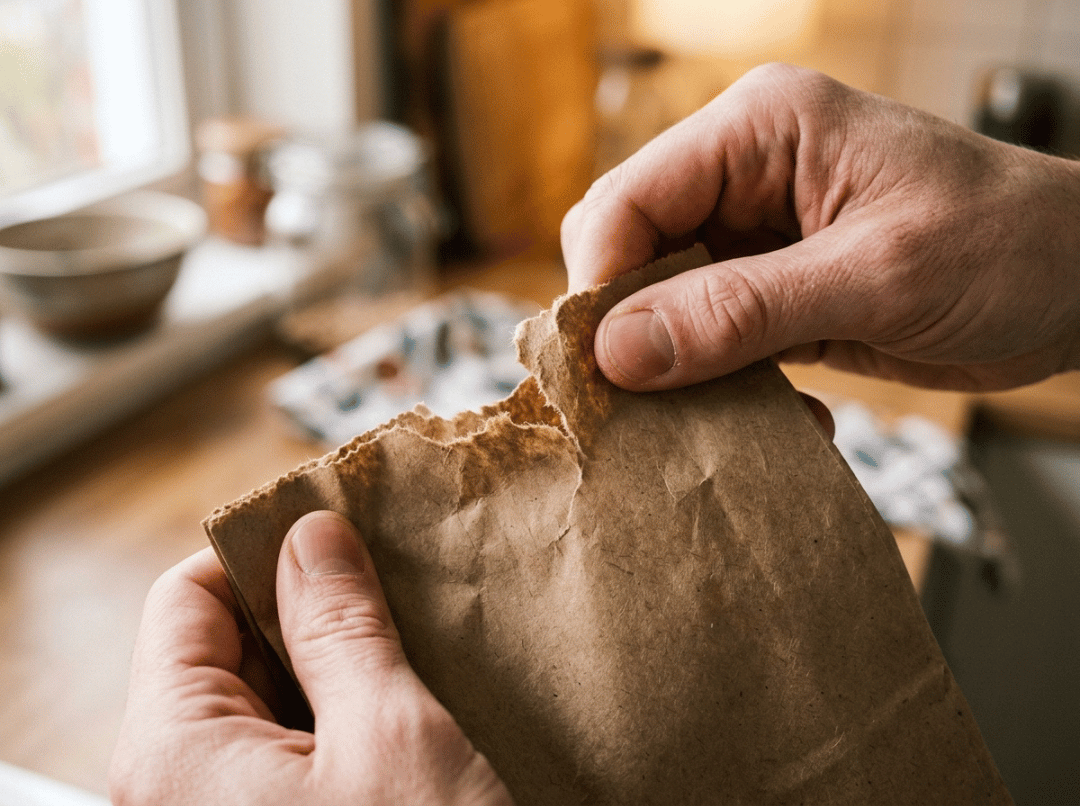
The 10-second “tear test”
Tear a corner of the bag and look at the edge. Plain compostable paper rips cleanly and shows dry, fibrous edges. A coated bag stretches, resists tearing, peels into layers, or reveals a thin glossy film. That one check answers the question for most bags in your kitchen.
Look and feel checks
Run your hand across the surface. A matte, slightly rough feel usually means plain paper. A smooth, shiny, or waxy surface signals a coating. Also check for a plastic window, a woven handle, tape, or a foil-like sheen, since those are all red flags.
Judgment call: if the bag tears clean, feels like plain paper, and has no synthetic parts, treat it as compostable. If it stretches, shines, or peels, keep it out or send it to industrial composting.
What Makes a Brown Paper Bag Compostable?
Once you know the tear test, it helps to understand why some bags pass and others fail. A few clear factors decide it.
Uncoated kraft paper
Plain kraft paper comes from wood pulp, which is pure plant fiber. In a compost pile, microbes digest that fiber and turn it into humus. The paper also adds carbon, which balances the nitrogen from food scraps. Uncoated kraft is the gold standard for composting.
No plastic or wax barrier
Many bags carry a thin lining to resist water or grease. That lining is often plastic (a PE film) or wax. Both block microbes from reaching the paper, so the bag breaks down slowly or leaves plastic bits behind.
Minimal or plant-based ink
Light printing usually causes no trouble, especially soy-based or water-based inks. Heavy, full-color, or metallic printing is riskier, since those inks can contain compounds you don’t want in soil that grows food.
No wet-strength chemicals
Some bags are treated to stay strong when wet. These wet-strength additives make the paper tougher, but they also slow decomposition. A bag sold as extra durable or tear-resistant may resist breaking down in your pile too.
Bottom line: the more a bag is treated to look premium or resist moisture, the less likely it is to compost cleanly. Plain and simple wins.
Which Brown Paper Bags Should You Keep Out of Compost?
Some bags look compostable but aren’t. Keeping these out protects your pile from plastic residue and slow-rotting material. This is the check most people skip.

Plastic-lined bags
Some grocery and takeout bags carry a thin plastic film inside. It won’t fully break down and leaves microplastics behind.
Laminated or glossy bags
A shiny, smooth finish usually signals a plastic coating. Gift bags and premium retail bags often fall into this group.
Wax-coated bags
Traditional petroleum wax slows or stops composting. Some newer waxes are plant-based and compostable, so check the source before you assume.
Heavily printed or dyed bags
Full-color, metallic, or dark-dyed bags may carry inks that aren’t compost-safe. Light printing is fine; heavy coverage is a risk.
Bags with plastic windows, handles, or tape
Bakery bags with clear windows, bags with woven synthetic handles, and any bag with tape or stickers need those parts removed first.
Compost / Remove parts first / Keep out by bag type
|
Bag type |
Compost it |
Remove parts first |
Keep out |
|---|---|---|---|
|
Plain kraft grocery bag |
✔ |
||
|
Paper lunch bag (unprinted) |
✔ |
||
|
Bag with synthetic handles |
✔ |
||
|
Bakery bag with plastic window |
✔ |
||
|
Glossy or laminated retail bag |
✘ |
||
|
Plastic-lined takeout bag |
✘ |
||
|
Petroleum wax-coated bag |
✘ |
Bottom line: when a bag looks fancy, feels shiny, or has plastic parts, either strip the extras or bin it. Don’t gamble with your compost.
Can You Compost Greasy Brown Paper Bags?
Grease makes people nervous, and the honest answer is: it depends on how much. Light stains are usually fine. Heavy oil saturation is not.
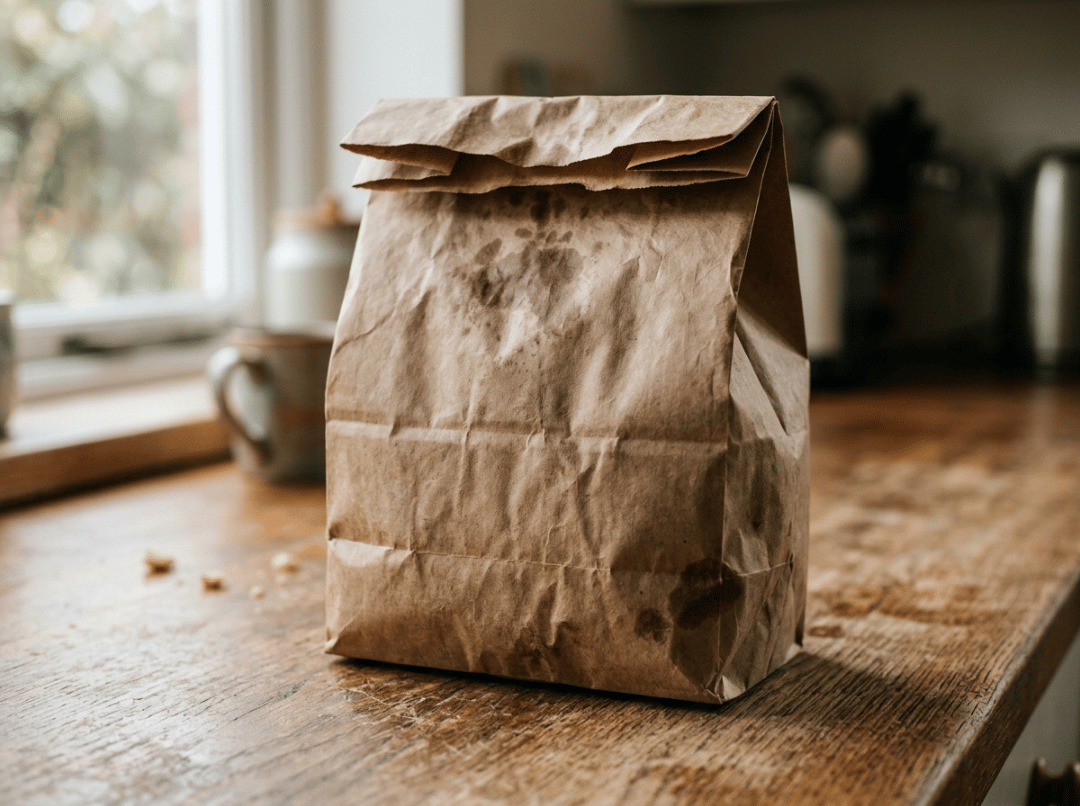
When light grease is fine
A little food residue adds carbon and breaks down naturally in a healthy pile. A slightly greasy sandwich bag or a bag that held dry baked goods won’t harm your compost.
When grease becomes a problem
Heavy oil is a different matter. Bags soaked with grease can turn slimy, block airflow, slow decomposition, and attract pests or rodents. Fats break down slowly in home compost.
What to do with heavy grease
For lightly stained bags, tear them into small pieces, bury them in the center of the pile, and balance them with plenty of green material. For bags saturated with oil, like one that held fried food, bin it or send it to industrial composting if your area accepts it.
Bottom line: light grease composts fine when you tear and mix; oil-soaked bags aren’t worth the pest risk in a home pile.
How Do You Compost Brown Paper Bags Properly?
A few simple steps turn paper bags into good compost fast. Follow this order.
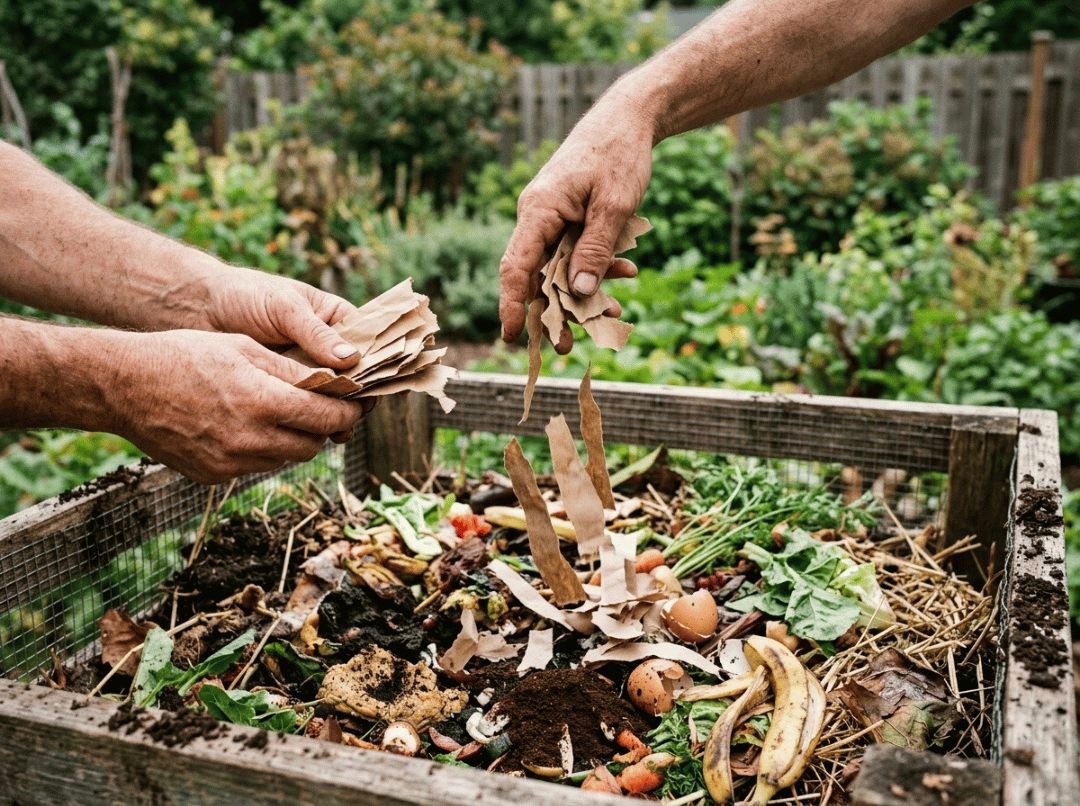
Step 1 — Remove non-paper parts
Pull off tape, stickers, plastic windows, and synthetic handles. Anything that isn’t paper needs to come out before the bag goes in.
Step 2 — Tear or shred into smaller pieces
Rip the bag into small strips or squares. Smaller pieces break down quicker and improve airflow, so the pile doesn’t turn into a soggy mat.
Step 3 — Balance carbon and nitrogen
Paper is a “brown,” meaning it’s carbon-rich. Mix it with “greens” like food scraps, grass, or coffee grounds. A rough balance keeps microbes active and speeds decomposition.
Step 4 — Keep moisture right
Dry paper can clump and slow the pile. Dampen the torn pieces or tuck them among moist materials. Your compost should feel like a wrung-out sponge.
How long do brown paper bags take to decompose?
In a healthy home compost, torn plain paper bags usually break down in about 2 to 3 months. In an industrial facility with higher heat, it can happen in weeks. Whole, un-torn bags take longer, which is why shredding helps so much.
Bottom line: strip, tear, and balance. Those three moves do most of the work.
Do Coated Paper Bags Break Down in Home Compost?
For plain paper bags, home composting works well. For coated or specialty bags, the answer changes. Here’s how to decide where a bag belongs.
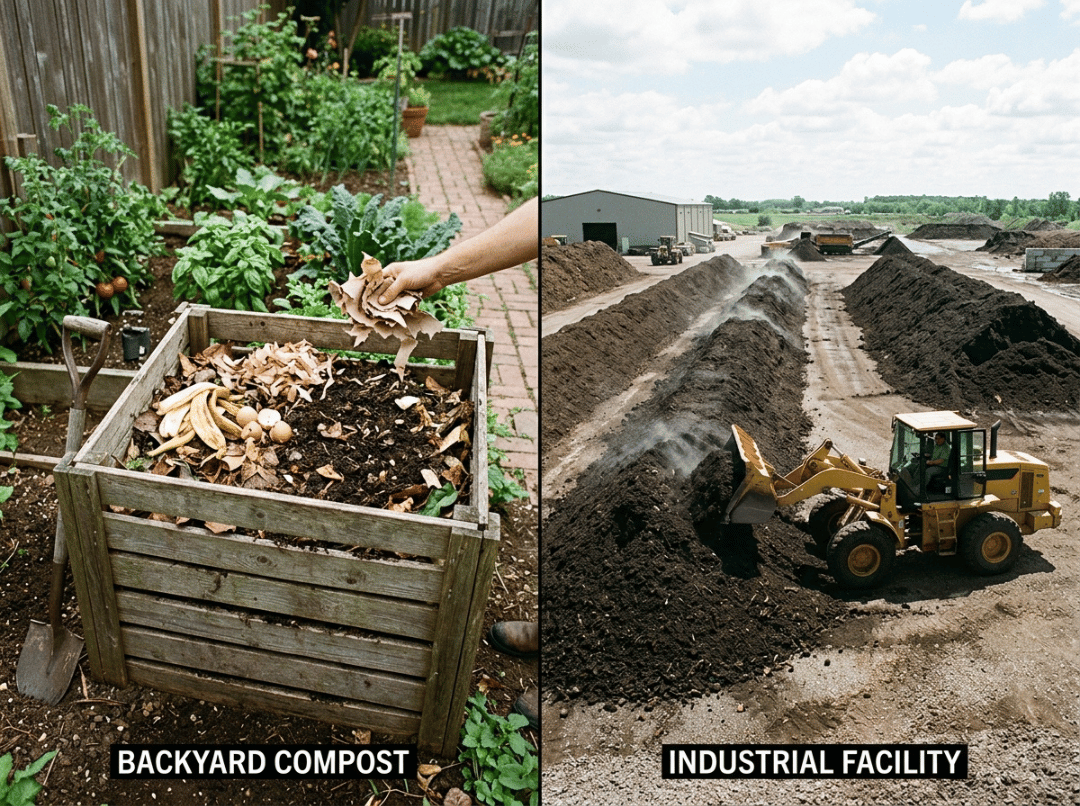
Composting plain paper bags at home
Uncoated kraft thrives in a backyard bin. It breaks down at the lower, uneven temperatures of home compost without any special conditions. This is the easiest, most reliable path for everyday paper bags.
When you need industrial composting
Coated or plant-lined bags often need the sustained high heat and controlled conditions of a commercial facility. That’s the core difference: uncoated bags are forgiving, while coated bags usually demand industrial processing to break down fully.
Certifications to check
If a bag claims to be compostable, its certification tells you where it will actually work:
- EN 13432 — European standard for industrial compostability
- ASTM D6400 — US standard for industrial composting
- BPI — US certification against ASTM standards, with strict labeling
- OK Compost HOME — confirms breakdown in a backyard bin
- OK Compost INDUSTRIAL — confirms breakdown only in commercial facilities
Always check whether a mark says home or industrial. A bag certified for industrial composting may not break down in your backyard.
Home vs industrial composting for paper bags
|
Factor |
Home compost |
Industrial compost |
|---|---|---|
|
Best bag type |
Plain uncoated kraft |
Coated or plant-lined |
|
Breakdown time |
2–3 months (torn) |
Weeks |
|
Conditions |
Backyard bin, low heat |
High heat, controlled |
|
Certification to check |
OK Compost HOME |
EN 13432, ASTM D6400, BPI |
Bottom line: send plain paper bags to your backyard bin, and route coated or certified-industrial bags to a commercial facility.
What Are the Most Common Mistakes When Composting Paper Bags?
Even careful people slip up. Avoid these five, and you’ll dodge most problems.
- Assuming every brown bag is compostable. Glossy, laminated, and lined bags often aren’t. Use the tear test first.
- Ignoring plastic windows and handles. The paper may compost, but the synthetic parts won’t. Remove them.
- Composting waxed or glossy bags. Petroleum wax and plastic coatings resist breakdown and contaminate your pile.
- Adding oil-soaked bags to home compost. Heavy grease slows the pile and attracts pests.
- Skipping the shred step. Whole bags mat together and rot slowly. Tearing them speeds everything up.
Bottom line: most failures trace back to a mismatch between what a bag looks like and what it actually is. A quick check up front prevents the mess.
When Do You Need Compostable Food Waste Paper Bags Instead of Plain Ones?
Plain paper bags are great for garden trimmings and dry waste. Food waste is harder, because grease and moisture push regular kraft past its limits.
Why plain paper bags fail for food waste
Kitchen scraps are wet and often oily. A plain bag absorbs moisture, weakens, and can tear at the bottom under load. That’s why plain bags rarely hold up for daily food-waste collection.
What purpose-built bags solve
Compostable food-waste paper bags use plant-based coatings instead of plastic. These coatings resist water and grease, keep the bag intact under load, and still break down fully in composting. You get durability without giving up compostability.
Before ordering, confirm four things: the certification matches your disposal access (home or industrial), the load capacity fits your needs, the coating is plant-based rather than plastic, and your local system can actually process it.
Bottom line: switch to certified compostable food-waste bags when moisture and grease make plain paper unreliable. If that sounds like your use case and you want help matching the right bag, requesting a few samples to test under real conditions is the simplest place to start.
The Bottom Line on Composting Brown Paper Bags
So, can brown paper bags be composted? Plain, uncoated bags compost easily and even improve your soil. Coated, laminated, and wax bags usually don’t, so keep those out. For anything in between, remove synthetic parts, tear the bag into pieces, and balance it with green material. Light grease is fine; heavy oil is not. When in doubt, run the tear test.
If you handle food waste and need bags that resist grease and moisture without giving up compostability, your next step is easy. Compare certified compostable food-waste paper bag options, request samples to test under your real conditions, or ask for certification guidance for your market. Each step lowers your risk and helps you choose packaging that performs and breaks down as promised.