


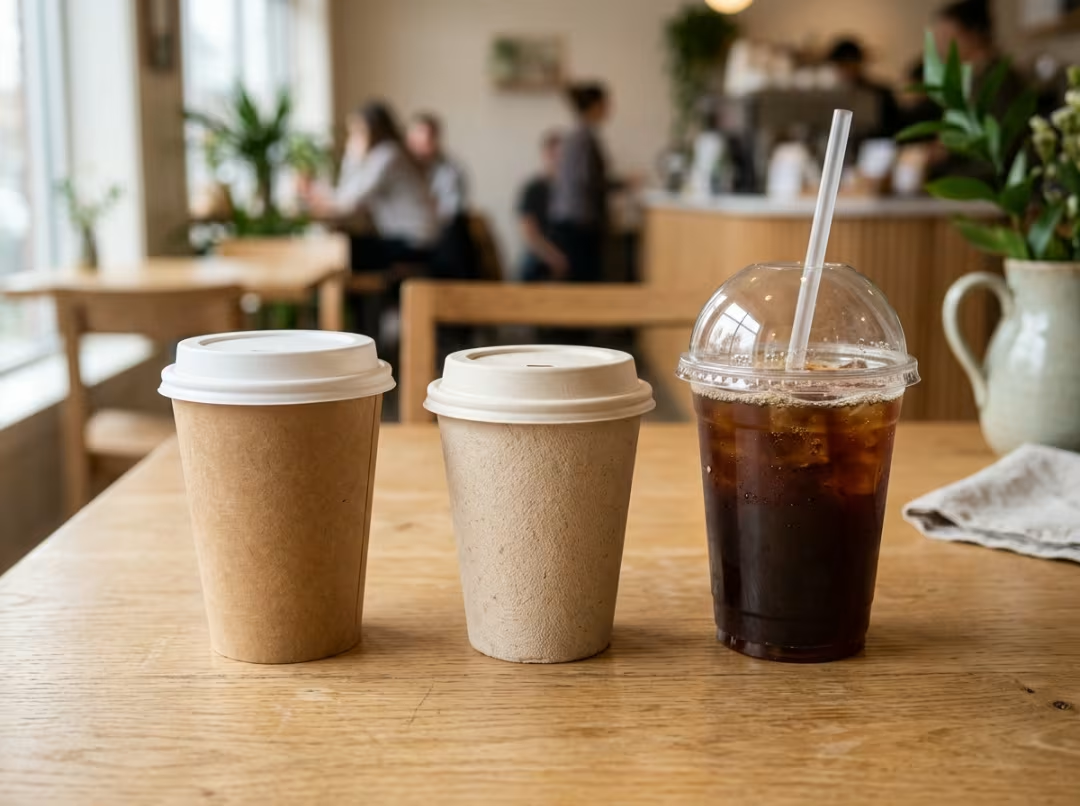
Disposable cups used to be a simple purchasing decision: pick a size, pick a price, move on. That’s no longer the case. Regulations targeting single-use plastics are tightening across states and municipalities, customers are paying closer attention to what happens after they toss a cup, and the visible pile-up of plastic waste has made packaging choices a brand issue, not just an operations one.
Biodegradable cups have become one of the most common alternatives buyers consider in this shift. But the term is used loosely and often confused with “compostable”—a mix-up that can lead to disappointing results or, worse, accusations of greenwashing.
This article breaks down the actual benefits of biodegradable cups, where those benefits hold up in practice, where they fall apart, and how to choose the right cup for a specific business context. The goal isn’t to sell you on biodegradable cups or talk you out of them — it’s to give you the judgment criteria to decide for yourself.
What Are Biodegradable Cups — and How Are They Different From Compostable Cups?
Biodegradable cups are made from materials designed to break down through natural microbial action, rather than persisting in the environment for decades like conventional petroleum-based plastics. That’s the core distinction: biodegradation is a material property, not a promise about speed or outcome.
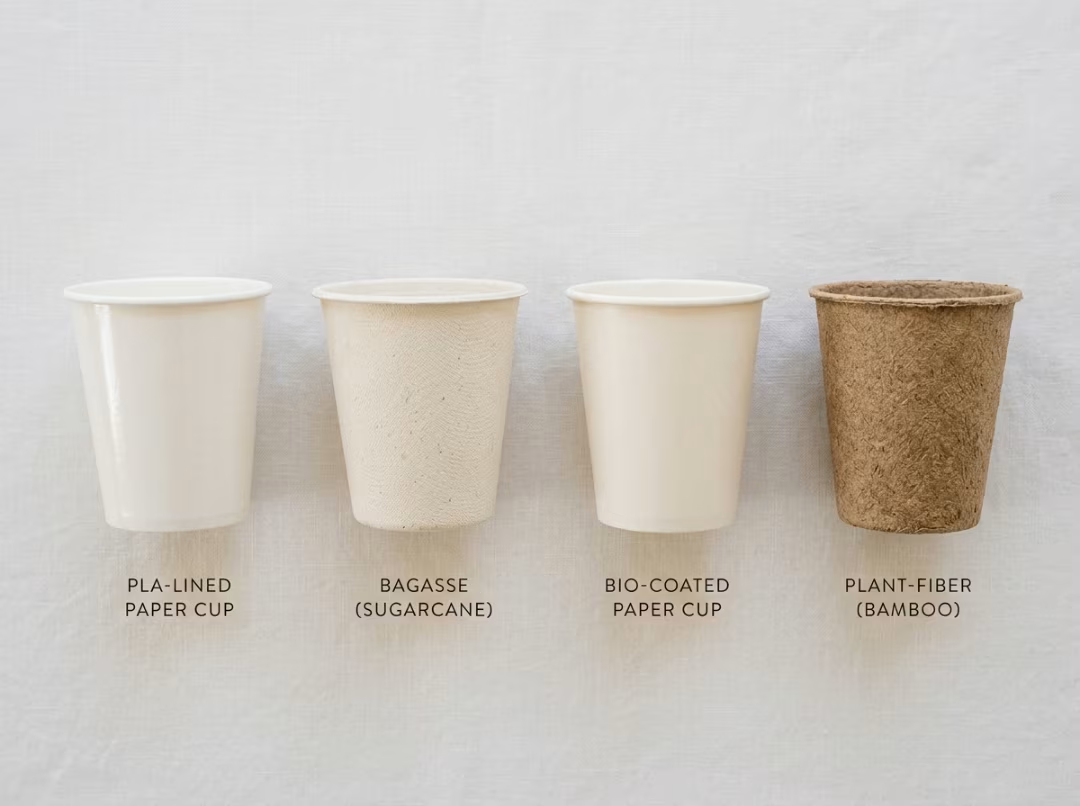
Common materials used in biodegradable cups include:
- PLA (polylactic acid): A plant-based bioplastic, typically derived from corn starch or sugarcane, often used as a liner for paper cups or molded into rigid cold cups.
- Bio-based coated paper: Paper cups lined with PLA or other plant-derived coatings instead of standard polyethylene (PE).
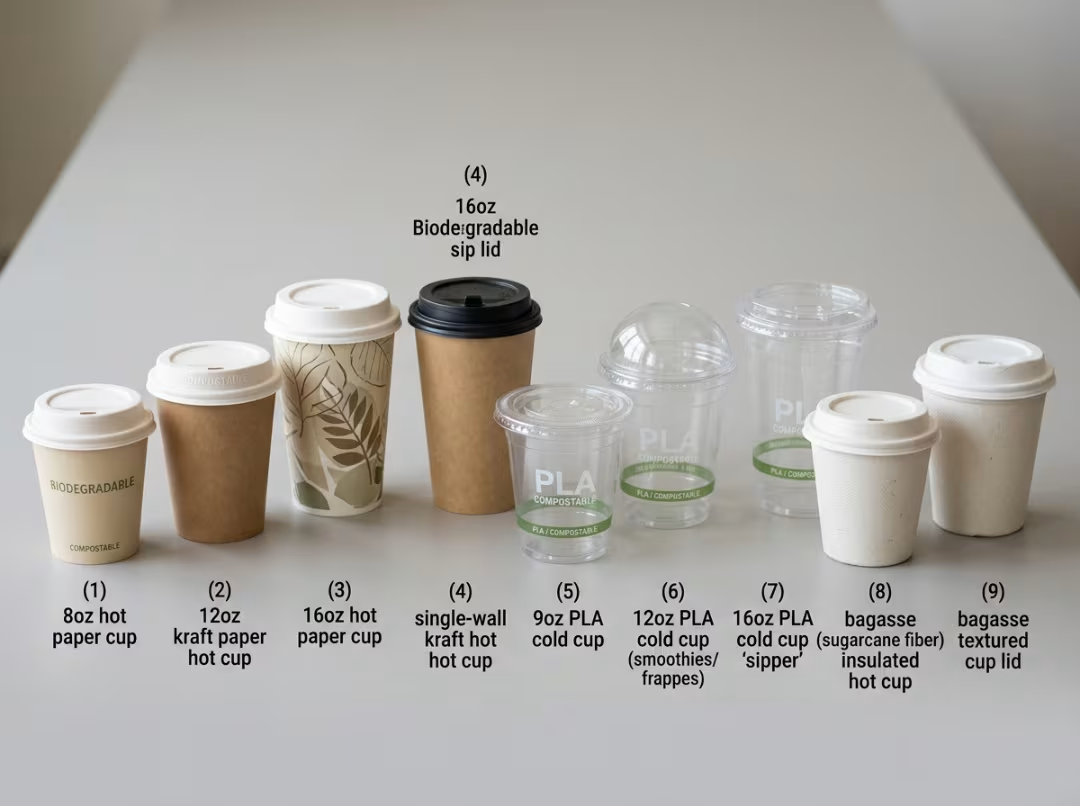
- Bagasse: A fibrous byproduct of sugarcane processing, molded into cups, lids, and food containers.
- Other plant-fiber blends: Bamboo, wheat straw, and similar fibers pressed into disposable cup and container shapes.
The word “biodegradable” tells you a material can break down eventually — it says nothing about how long that takes, what conditions are required, or whether it happens before the cup ends up buried under other trash in a landfill. That ambiguity is exactly why the distinction between biodegradable and compostable matters so much for purchasing decisions.
Biodegradable means a material will eventually break down through microbial activity, but there’s no standardized timeframe or required condition attached to that claim. A cup labeled biodegradable could take months or decades to decompose, depending on the environment it ends up in.
Compostable means a material breaks down within a defined period — typically 90 to 180 days — under specific composting conditions, such as controlled heat, moisture, and oxygen levels found in industrial composting facilities. Compostable products are usually backed by third-party certifications like BPI (Biodegradable Products Institute) in the U.S. or EN 13432 in Europe, which test for complete breakdown without leaving toxic residue.
|
Factor |
Biodegradable |
Compostable |
|---|---|---|
|
Breakdown timeframe |
Unspecified; can vary widely |
Defined, usually 90–180 days |
|
Required conditions |
Not standardized |
Specific (industrial composting) |
|
Certification |
None required |
BPI, EN 13432, or similar |
|
Typical disposal path |
Landfill, general waste |
Industrial composting facility |
The practical takeaway: a cup can be technically biodegradable and still behave almost like plastic if it ends up in a landfill without oxygen or moisture to support breakdown. This is also where greenwashing creeps in — a manufacturer can legally call a product “biodegradable” without any certification, timeframe, or disposal guidance attached. “Compostable,” by contrast, carries a testable standard behind it. If certified composting access matters to your sustainability messaging, a fully compostable option like Hongren’s Compostable Clear Cups offers that verified benchmark.
The Main Benefits of Biodegradable Cups
The benefits of biodegradable cups show up most clearly when you match the material to the right context and pair it with realistic disposal expectations.
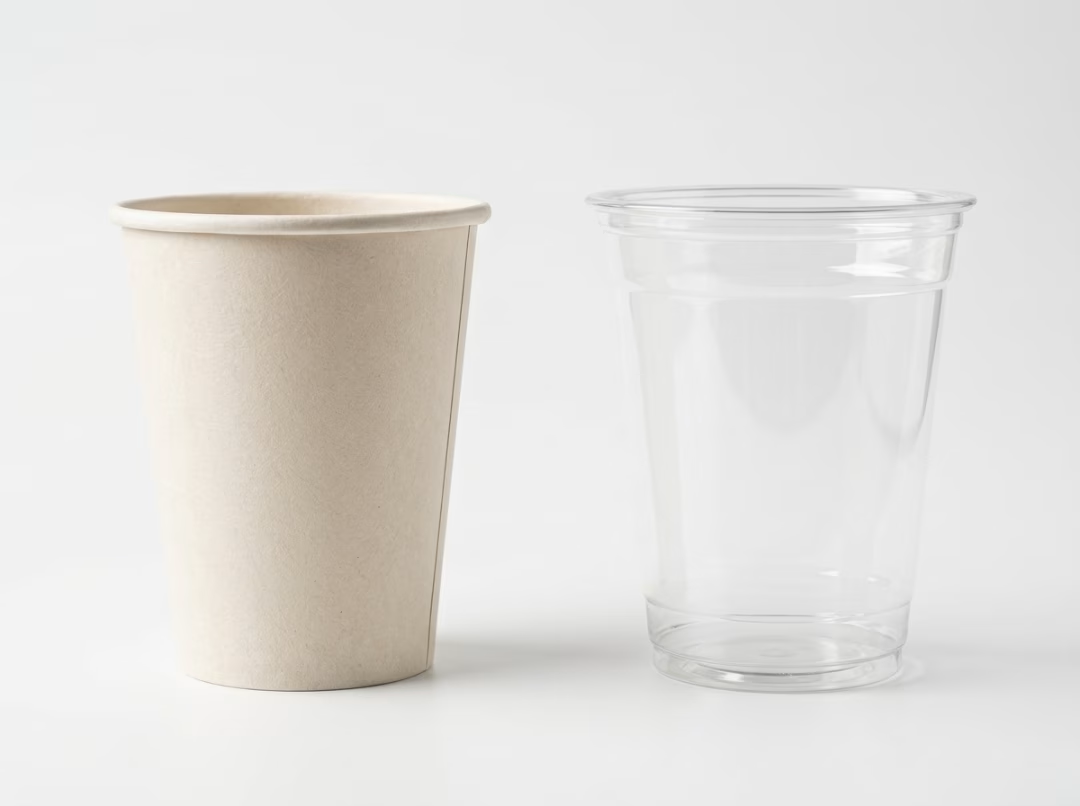
Reduce reliance on conventional plastic-lined disposables. Standard paper cups aren’t as eco-friendly as they look. Most are lined with polyethylene (PE) to keep liquid from soaking through the paper, and that plastic layer blocks both recycling and biodegradation. The cup ends up in landfill regardless of the paper content, because facilities can’t easily separate the plastic lining from the paper fiber. Biodegradable cups, particularly those lined with PLA instead of PE, remove that barrier and give the material an actual path to breaking down, assuming the right disposal environment is available.
Support brand sustainability goals and customer expectations. Cup choice has become a visible signal of a brand’s values, especially for cafés, quick-service restaurants, and hospitality brands where customers physically hold the packaging. Businesses adopting biodegradable or compostable cups often use that choice as part of a broader sustainability narrative, since it’s one of the few packaging decisions customers can see and evaluate firsthand at the point of purchase.
Offer more material choices for different use cases. Not every drink needs the same cup. PLA-lined paper works well for hot beverages that need heat resistance without a plastic liner. Bagasse and sugarcane fiber options, such as Hongren’s Bagasse Coffee Cup, suit cold drinks, food containers, or events where sturdier, molded packaging is useful. This variety lets buyers match the material to the product rather than defaulting to one generic plastic-lined cup for everything.
Improve alignment with waste-reduction initiatives. Many businesses and municipalities run waste-diversion programs aimed at cutting landfill volume. Biodegradable cups can support these initiatives, particularly when paired with composting programs, but they aren’t a standalone fix. A biodegradable cup thrown into general waste doesn’t advance a waste-reduction goal any more than a plastic one does — it still depends on where it ends up.
Create a practical transition step for businesses. For businesses not ready to invest in full composting infrastructure or reusable cup systems, biodegradable cups offer an accessible middle step. They reduce plastic content and improve end-of-life potential without requiring the operational overhaul that composting or reusables demand.
These benefits compound significantly when paired with proper disposal — which is exactly why where the cup ends up matters as much as the material itself.
Where Biodegradable Cups Make the Most Sense
Biodegradable cups aren’t a universal upgrade. They deliver the most value in specific, predictable settings.
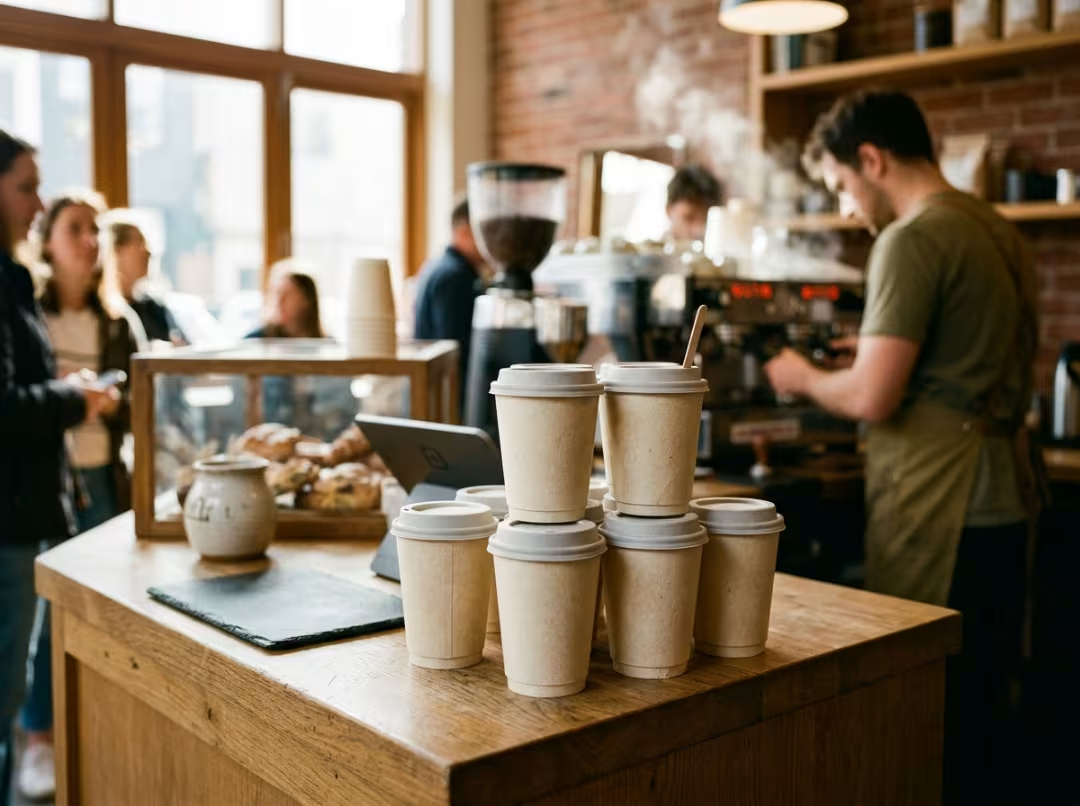
Cafés and takeaway counters. High single-use volume combined with a visible customer touchpoint makes cafés a natural fit. Every cup handed across the counter is a small, repeated opportunity to reinforce brand values, and the switch is usually straightforward since most cafés already use disposable cups as their default.
Offices and workplace pantries. Lower volume and a controlled environment make offices easier to manage than public spaces. Disposal is more supervised, which means biodegradable cups can more realistically be paired with internal composting or waste-sorting programs rather than getting mixed into general trash.
Events, trade shows, and public gatherings. High-volume, short-duration settings like events and trade shows often suffer from recycling contamination, since attendees rarely sort waste correctly under time pressure. Biodegradable cups reduce the risk of contaminating a recycling stream, even in venues without on-site composting, because they don’t introduce the same plastic-liner problem as standard disposables.
Brands targeting eco-conscious consumers. For D2C brands, hospitality businesses, and any company positioning itself around sustainability, packaging choice is a direct extension of brand identity. Biodegradable cups fit naturally into this positioning, particularly when the brand can back the claim with clear sourcing and disposal information.
The Limits of Biodegradable Cups Buyers Should Know
Breakdown conditions aren’t guaranteed. Biodegradation typically requires specific heat, moisture, and microbial activity. Landfills — where most municipal waste ends up — often lack the oxygen and moisture needed for that process to happen efficiently. A biodegradable cup buried under other trash can behave almost identically to a plastic one, breaking down far more slowly than the label implies.
Cost is higher than conventional plastic-lined cups. Biodegradable materials, particularly PLA and bagasse, typically cost more per unit than standard plastic-lined paper cups. For high-volume, budget-sensitive operations, that premium adds up fast and needs to be weighed against the sustainability benefit.
Performance trade-offs exist. Heat resistance, sturdiness, and durability vary by material. Some PLA-lined cups perform differently than PE-lined cups under high heat, and bagasse products may not hold up as well for long transport or extended use compared to standard plastic.
Labeling isn’t standardized. Because “biodegradable” isn’t a certified or regulated claim, manufacturers can use it loosely. This creates real greenwashing risk and buyer confusion, since two products both labeled biodegradable can behave completely differently depending on material and manufacturing process.
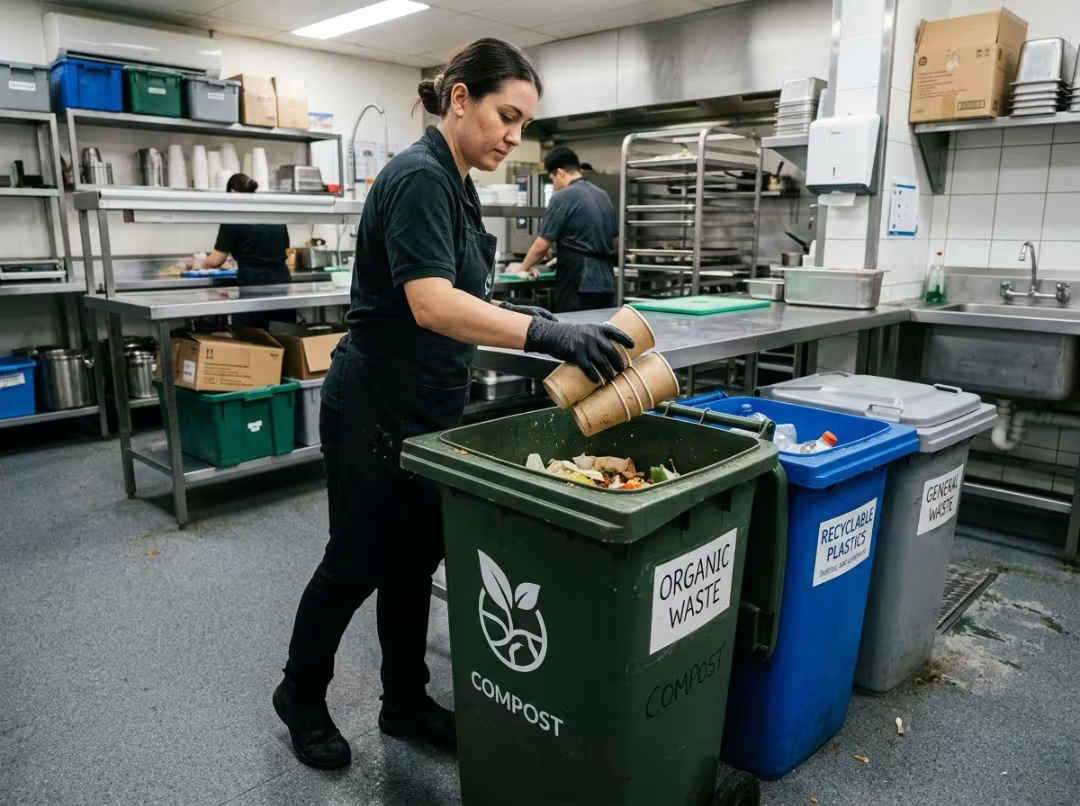
Disposal infrastructure is the real bottleneck. Even a well-made biodegradable cup delivers limited environmental benefit if the buyer’s region lacks industrial composting access or proper waste sorting. Without that infrastructure, the cup most likely ends up in the same landfill stream as any other disposable.
These limits don’t cancel out the benefits of biodegradable cups — but they mean the buyer’s disposal environment matters just as much as the cup material itself. That’s the logic that should drive the actual purchasing decision.
How to Choose the Right Biodegradable Cup
Once the trade-offs are clear, choosing the right cup comes down to five practical checks.
Match the cup to the drink type. Hot beverages need materials that hold up under heat without warping or leaching, which usually points toward PLA-lined paper cups. Cold beverages have more flexibility and can work well with bagasse or rigid PLA cups. Matching material to drink type prevents performance complaints down the line.
Check what the material actually is. Don’t stop at the word “biodegradable” on the packaging. Ask the supplier directly what the base material is — PLA, bagasse, coated paper, or another blend — and how it’s manufactured. This single question filters out a lot of vague marketing claims.
Look for clear disposal or certification information. Look for composting certifications like BPI or EN 13432, or explicit disposal instructions from the manufacturer. A supplier that can tell you exactly how and where a cup breaks down is a stronger signal of legitimacy than one that only uses the word “eco-friendly” without specifics.
Consider local waste-handling realities. The right cup depends heavily on what’s actually available in your area. Industrial composting access changes the calculation completely compared to a region with only landfill or general waste collection. Check with local waste management services before assuming a biodegradable cup will end up anywhere other than standard trash.
Balance sustainability with cost and performance. Factor in total cost of ownership, not just per-unit price. Consider expected volume, how much the cost premium affects your margins, and whether the performance trade-offs are acceptable for your use case. Choose a fully compostable, certified option if your disposal infrastructure supports it and sustainability messaging matters to your brand. Choose a simpler biodegradable option if budget constraints are tighter and composting access isn’t available, since it still reduces plastic content compared to conventional cups.
Before purchasing, run through this checklist: Does the material match the drink type? Is the actual base material verified? Is there certification or clear disposal guidance? Does local infrastructure support proper breakdown? Does the cost fit the budget without cutting corners on performance?
Are Biodegradable Cups Worth It?
Yes, conditionally. Biodegradable cups are better than traditional plastic-lined disposables in terms of end-of-life potential and material sourcing, since they remove the plastic liner that blocks both recycling and breakdown. But “better” depends on context — the buyer’s location, volume, drink type, and access to composting infrastructure all determine whether that potential is actually realized. A biodegradable cup in a region with industrial composting access delivers a meaningfully different outcome than the same cup thrown into a landfill with no composting program at all.
Before making the switch, run a two-step evaluation: first, assess your current cup usage against the selection criteria above, including material compatibility and operational needs. Second, evaluate your local waste-handling infrastructure to determine if it supports proper disposal of biodegradable cups. These focused checks provide a far more accurate basis for decision-making than relying on product packaging labels alone.
If you’re weighing biodegradable, bagasse, or fully compostable options for your business, get in touch with the Hongren team to discuss which material and specification fits your volume, drink type, and disposal environment.
Frequently Asked Questions
Are biodegradable cups actually eco-friendly?
Biodegradable cups reduce plastic content and improve end-of-life potential compared to conventional plastic-lined cups, but their environmental benefit depends on disposal conditions. Without proper composting or waste infrastructure, they may not break down significantly faster than standard disposables.
What’s the difference between biodegradable and compostable cups?
Biodegradable cups break down eventually under unspecified conditions and timeframes. Compostable cups break down within a defined period, usually 90 to 180 days, under specific composting conditions and are typically backed by certifications like BPI or EN 13432.
Do biodegradable cups cost more than regular disposable cups?
Yes. Biodegradable materials like PLA and bagasse generally cost more per unit than standard plastic-lined paper cups, which can be a significant factor for high-volume or budget-sensitive businesses.
Can biodegradable cups go in regular recycling?
No. Most biodegradable cups aren’t designed for standard recycling streams and can contaminate them. They typically require composting facilities or general waste disposal, depending on the material and local infrastructure.
Who should consider switching to biodegradable cups?
Cafés, offices, event organizers, and brands with visible sustainability positioning benefit most, particularly if they have access to composting infrastructure or want to reduce plastic-liner content even without full composting access.