


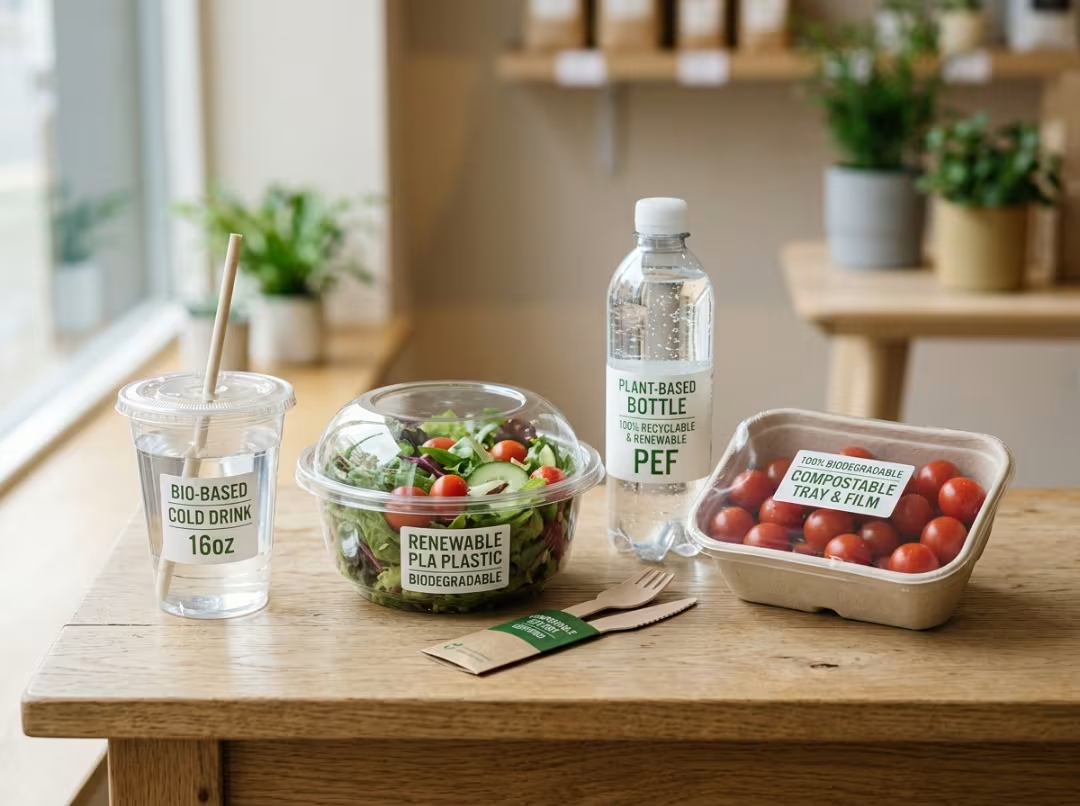
Bioplastics feel like a modern invention, but they date back to the 1860s—decades before petroleum plastics existed. The real problem today isn’t a lack of innovation. It’s confusion. Terms like “bio-based,” “biodegradable,” and “compostable” get used interchangeably on packaging, in marketing copy, and in casual conversation, even though they describe completely different things. That confusion is what drives bad purchasing decisions, failed disposal, and a fair amount of greenwashing. Understanding what these labels actually mean is the first step toward making choices that hold up beyond the shelf.
Bio-Based vs. Biodegradable vs. Compostable: Why the Terms Aren’t Interchangeable
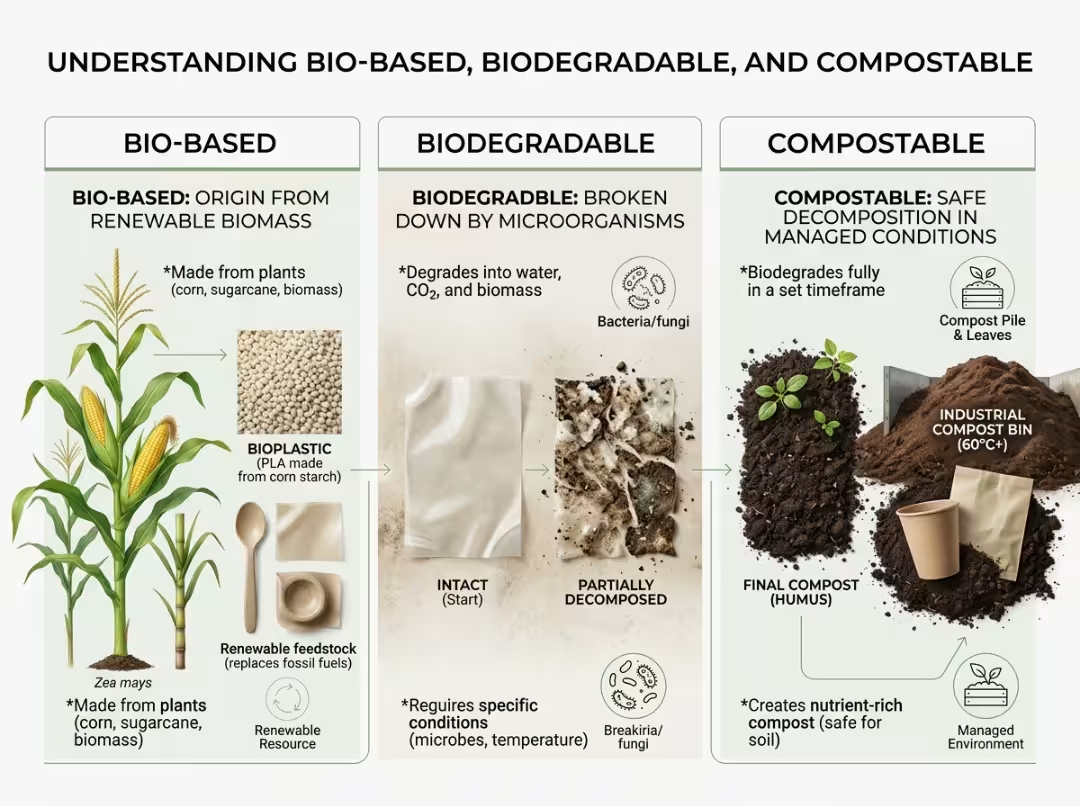
Bio-based refers to where a material comes from. It’s derived from renewable resources like corn, sugarcane, or cellulose, rather than petroleum. That’s it. Being bio-based says nothing about how the material behaves once it’s thrown away.
Biodegradable describes what happens at end-of-life: a material breaks down into natural byproducts through microbial activity. The catch is that “biodegradable” without context is nearly meaningless. The timeframe and environmental conditions—temperature, moisture, microbial presence—required for that breakdown vary enormously, and labels rarely specify them.
Compostable is a stricter subset of biodegradable. To earn that label legitimately, a material must decompose within a defined window—typically 90 to 180 days—under specific conditions found in industrial composting facilities. Certifications like ASTM D6400 in the U.S. and EN 13432 in Europe verify these claims and confirm the material leaves no toxic residue behind.
Bio-based does not mean biodegradable, and biodegradable does not automatically mean compostable. A material can be entirely bio-based and behave exactly like conventional plastic when discarded. Another can be biodegradable but fail to meet the standards required for industrial composting. Conflating these terms is where most bad decisions—both in product selection and disposal—begin.
A Brief History: How We Got Here
Bio-based materials aren’t playing catch-up to petroleum plastic. They came first. In 1862, British chemist Alexander Parkes introduced Parkesine, widely credited as the first man-made plastic, derived from cellulose to replace scarce natural materials like ivory. Celluloid followed in 1869, and casein plastics—marketed as Galalith and made from milk protein—were common in buttons and jewelry by the late 19th century. In the 1930s, Henry Ford even experimented with soy-based automobile panels, proving plant-based materials could hold up industrially.
So why did petroleum win? Three reasons, and they still shape material choices today: cheap oil made petroleum-based plastic dramatically less expensive to produce, the resulting materials were more durable and consistent, and manufacturing scaled far more easily for mass production. From the 1940s onward, petroleum plastic became commercially unbeatable, and bio-based alternatives were relegated to niche or novelty status.
Interest didn’t stay dormant. The oil shocks of the 1970s, when petroleum prices spiked and supply security became a national concern, reopened serious research into plant-based alternatives. That work laid the groundwork for the materials driving today’s bioplastics market—PLA and PHA. The lesson isn’t that bioplastics are new. It’s that they’re a return to where materials science started, revived by the same economic pressure that once pushed the industry away from them.

Today’s Materials: PLA, PHA, Starch Blends, and What “Drop-In” Really Means
The terminology from the first section isn’t academic—it directly determines which material fits which product.
PLA (polylactic acid) comes from fermented plant starches, typically corn or sugarcane. It’s one of the most common bioplastics in packaging and 3D printing filament, and it is compostable—but only under industrial conditions. PLA needs sustained heat and specific microbial activity that a backyard compost pile can’t provide. Calling a PLA product “compostable” without specifying that it requires an industrial facility is technically accurate and practically misleading.
PHA (polyhydroxyalkanoates) is produced through microbial fermentation, where bacteria consume organic material and produce a biodegradable polymer as a byproduct. The distinction that matters most: many PHA formulations are genuinely marine-biodegradable, breaking down in ocean environments where PLA generally doesn’t. For any product that might end up in an uncontrolled outdoor or marine setting, that’s a meaningful difference, not a footnote.
Starch blends combine plant starches with other polymers to compensate for the flexibility and moisture resistance pure starch lacks. The tradeoff usually shows up in strength and heat tolerance, which is why starch blends tend to appear in lower-stress applications rather than anywhere requiring structural durability.
Then there are “drop-in” bioplastics, like bio-PET and bio-PE. These are chemically identical to their petroleum-based counterparts—same molecular structure, same performance, same recyclability profile. The only difference is that the feedstock comes from biomass instead of oil. This is the clearest real-world illustration of the earlier terminology distinction: drop-in bioplastics are bio-based, but they are not biodegradable. Once discarded, they behave exactly like conventional plastic, because chemically, they are conventional plastic.
Choosing between these materials comes down to what happens after use. A product meant for a closed-loop event or foodservice composting program is a reasonable fit for PLA. A company trying to reduce the carbon footprint of packaging that will move through conventional recycling streams is better served by a drop-in bioplastic. Neither option is universally “better.” They’re suited to different disposal realities.
The Infrastructure Gap and the Greenwashing Problem
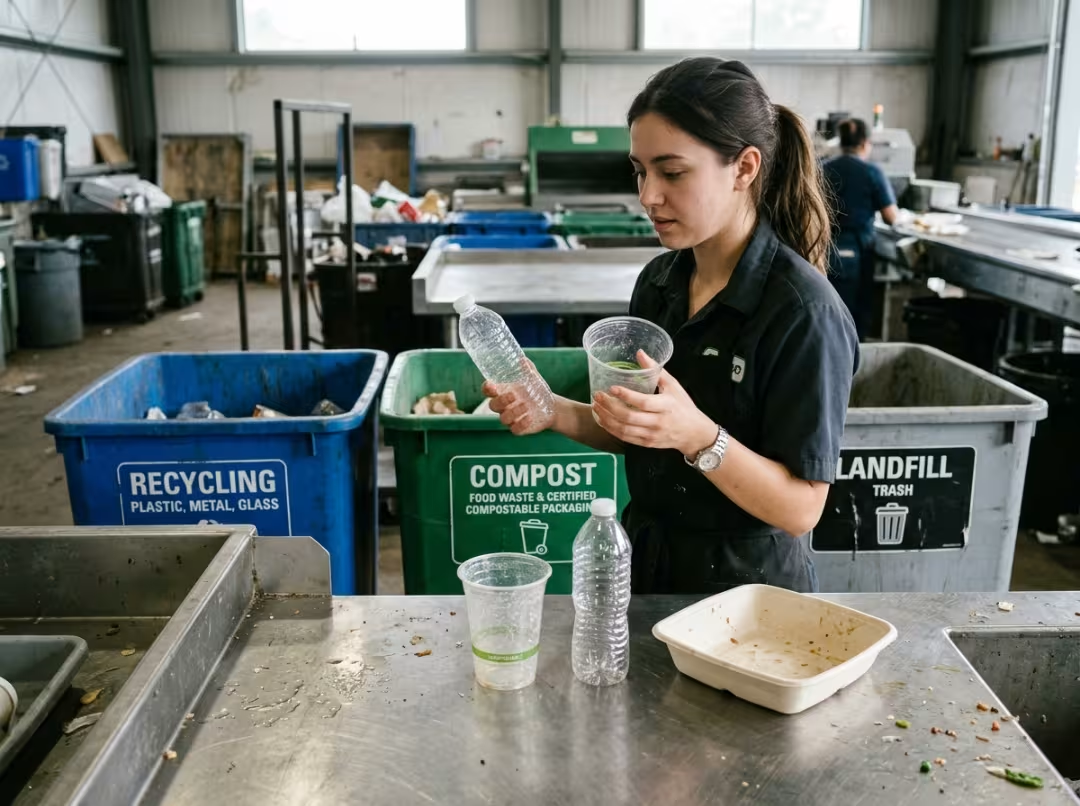
Most compostable plastics require industrial composting facilities to break down properly, and those facilities are scarce in many municipalities. When compostable products get tossed into regular waste streams, they often end up in landfills, behaving like conventional plastic despite the label. Compostability is only fulfilled if the right disposal infrastructure exists—and in most places, it doesn’t yet.
The problem compounds in recycling. When compostable plastics get mixed in with conventional recyclables, they contaminate the batch. Recycling facilities generally aren’t equipped to separate PLA from PET, and a contaminated bale often loses value or gets diverted to landfill entirely. Well-intentioned compostable packaging can end up dragging down recovery rates for materials that would otherwise have recycled successfully.
This is where greenwashing creeps in, and it’s not always deliberate. Labeling something “biodegradable” without disclosing the conditions and timeframe required is misleading even when it’s technically true. “Biodegradable under industrial composting conditions within 180 days” is a very different practical claim than a bare “biodegradable” sticker with no context—but on a store shelf, both look identical.
Material innovation has outpaced the systems needed to dispose of that material responsibly. PLA, PHA, and drop-in bioplastics are all functioning technologies. What’s missing is composting infrastructure, sorting capability, and labeling clarity to route each material to the right end-of-life pathway.
A Practical Framework for Evaluating Bioplastic Claims
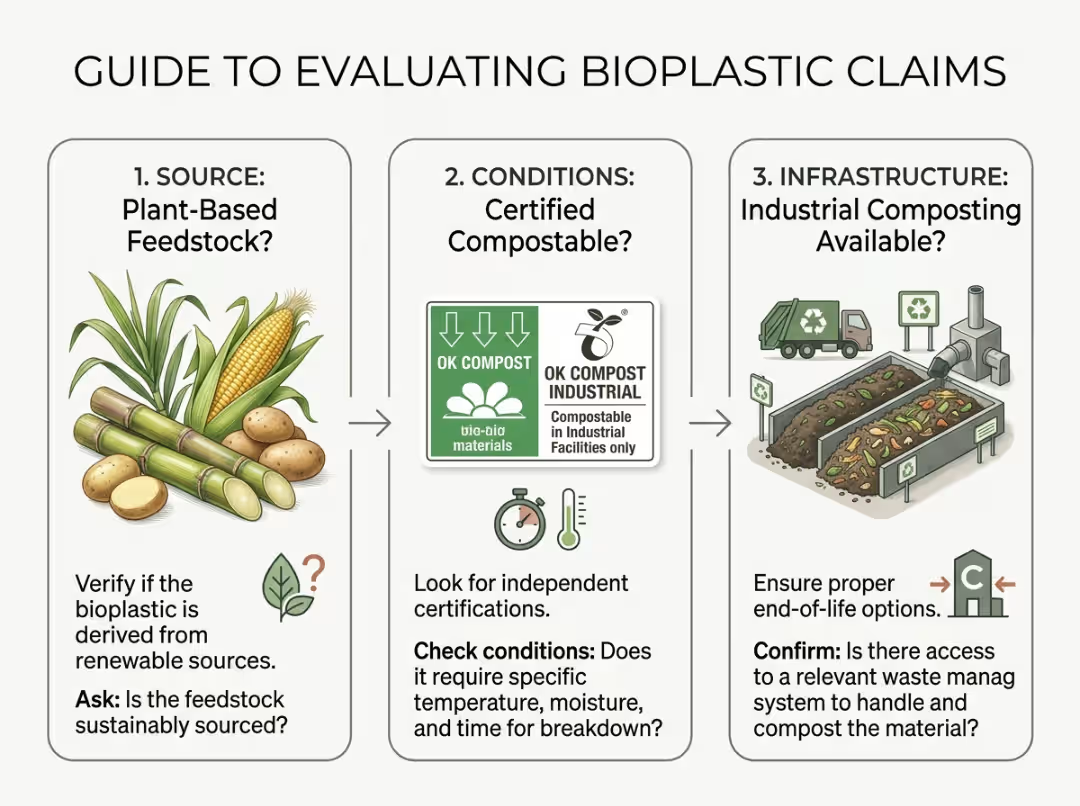
Cutting through marketing ambiguity comes down to three questions, asked in order.
First, does the claim refer to the source or the end-of-life? A bio-based claim tells you the material came from renewable biomass and says nothing about disposal. A biodegradable or compostable claim describes what happens after disposal and says nothing about where the material came from. Don’t let one stand in for the other.
Second, if it’s a compostability claim, under what conditions—and is there a certification behind it? Look specifically for ASTM D6400 or EN 13432. A compostability claim without a recognized standard behind it deserves skepticism. The certification also usually reveals whether the material needs an industrial facility or can genuinely break down at home, which is a meaningfully different practical outcome.
Third, does local waste infrastructure actually support that end-of-life pathway? A certified, industrially compostable product only delivers on its promise if an industrial composting facility exists nearby to accept it. Without that access, the product lands in a landfill or contaminates a recycling stream regardless of how well it was engineered. For a business choosing foodservice packaging—say, a bagasse coffee cup versus a PLA-lined one—this question often matters more than the material spec sheet, since the compostability advantage only holds if the local disposal system supports it.
Source, conditions, infrastructure. That sequence rarely fails to clarify what a bioplastic claim is actually promising.
The Bottleneck Is Infrastructure, Not Chemistry
Bioplastic chemistry has already met the demands of most applications it’s asked to serve. What hasn’t kept pace is everything downstream: composting infrastructure, sorting systems, and labeling standards precise enough to guide proper handling. Policy and infrastructure investment, not further advances in material science, will determine whether bioplastics deliver on their promise.
FAQs
Is bio-based plastic automatically biodegradable?
No. Bio-based describes where a material comes from—renewable biomass instead of petroleum. Biodegradable describes what happens to it after disposal. A plastic can be entirely bio-based, like a drop-in bioplastic such as bio-PET, and still not biodegrade any differently than conventional plastic.
What’s the actual difference between PLA and PHA?
Both are bio-based polymers, but their end-of-life behavior differs significantly. PLA generally requires industrial composting conditions to break down and doesn’t biodegrade well in marine or uncontrolled environments. PHA, produced through microbial fermentation, is often genuinely marine-biodegradable, making it a better fit for applications where the material might end up outside a controlled composting system.
Can I compost bioplastic packaging at home?
Usually not. Most compostable plastics, including PLA, are certified for industrial composting conditions that require sustained heat and specific microbial activity a home compost bin can’t replicate. Home-compostable bioplastics exist, but they’re the exception rather than the rule, and they should carry a distinct certification confirming that capability.
How do I know if a “biodegradable” claim is legitimate?
Check for a named certification—ASTM D6400 or EN 13432 are the standards to look for—rather than relying on the word “biodegradable” alone. Then ask what conditions and timeframe the certification specifies, and whether local waste infrastructure actually supports that disposal pathway. A claim without a certification or without disclosed conditions is worth treating skeptically.