


The best compostable plate depends on three things: what food you’re serving, whether industrial composting is actually available at your event site, and how much heat and grease resistance you need. Bagasse (sugarcane fiber) works for most hot, greasy foods. Palm leaf suits upscale, low-moisture presentations. PLA-lined paper looks premium but fails without industrial composting access. Match the material to your menu and your disposal reality — not just the label on the box.
The “compostable” label doesn’t mean what most buyers think it means
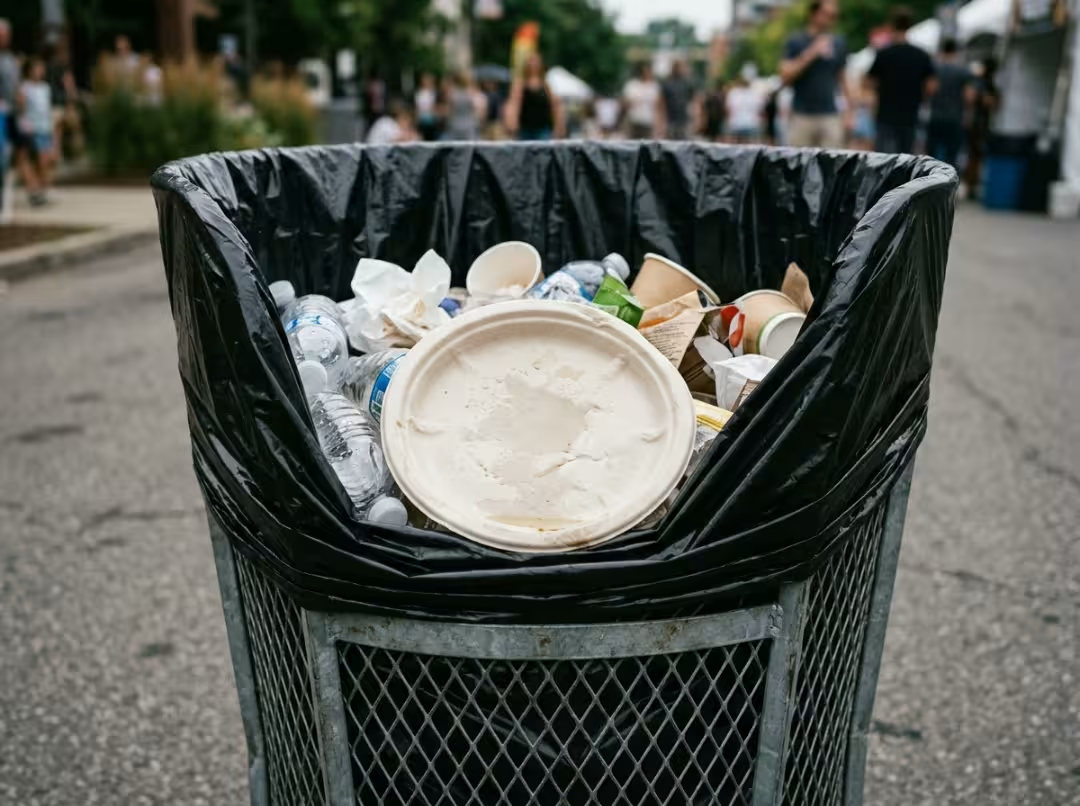
A plate can be certified compostable and still end up in a landfill, sealed in plastic for a thousand years. That’s not a contradiction — it’s how the current system works.
“Compostable” describes a material’s chemical potential to break down under specific conditions. It says nothing about whether those conditions exist near your venue. Event planners and food service buyers who skip this distinction often spend more money for a product that delivers zero environmental benefit.
This guide cuts through the greenwashing. You’ll get a four-factor framework for evaluating any compostable plate, a breakdown of the materials actually worth buying, and the questions that separate legitimate suppliers from marketing departments.
What actually matters when choosing a compostable plate
Every compostable plate decision comes down to four factors:
- Material – What it’s made from determines cost, appearance, and compostability.
- Resistance – How it handles heat, oil, and moisture without failing mid-service.
- Disposal – Whether your event or facility has access to the composting infrastructure the plate actually requires.
- Rigidity – Whether it can hold the weight and shape of your specific menu.
Most buying mistakes trace back to ignoring one of these four. A plate can excel at three and still be the wrong choice if it fails the fourth. A beautifully rigid, heat-resistant PLA-lined plate is worthless if your city has no industrial composting facility — you’ve paid a premium for landfill waste.
Industrial vs. home composting: the distinction that decides everything
Two certifications dominate the U.S. market: ASTM D6400, the standard for compostability in industrial facilities, and BPI (Biodegradable Products Institute) certification, which verifies products meet that standard. Look for these labels before anything else.
Here’s the part most product pages bury: ASTM D6400 certification means the plate breaks down in an industrial composting facility, which runs at sustained temperatures of 140°F or higher for weeks. Most home compost bins never reach that heat.
This means a plate certified “compostable” under ASTM D6400 may not decompose in your backyard bin at all. Some materials — bagasse and palm leaf, for instance — break down more readily in lower-heat environments. PLA-lined products generally require industrial conditions, full stop.
If your event or facility has no access to industrial composting, this distinction should drive your entire purchasing decision. More on that later.

The materials guide: what’s actually on the market
Bagasse: the workhorse
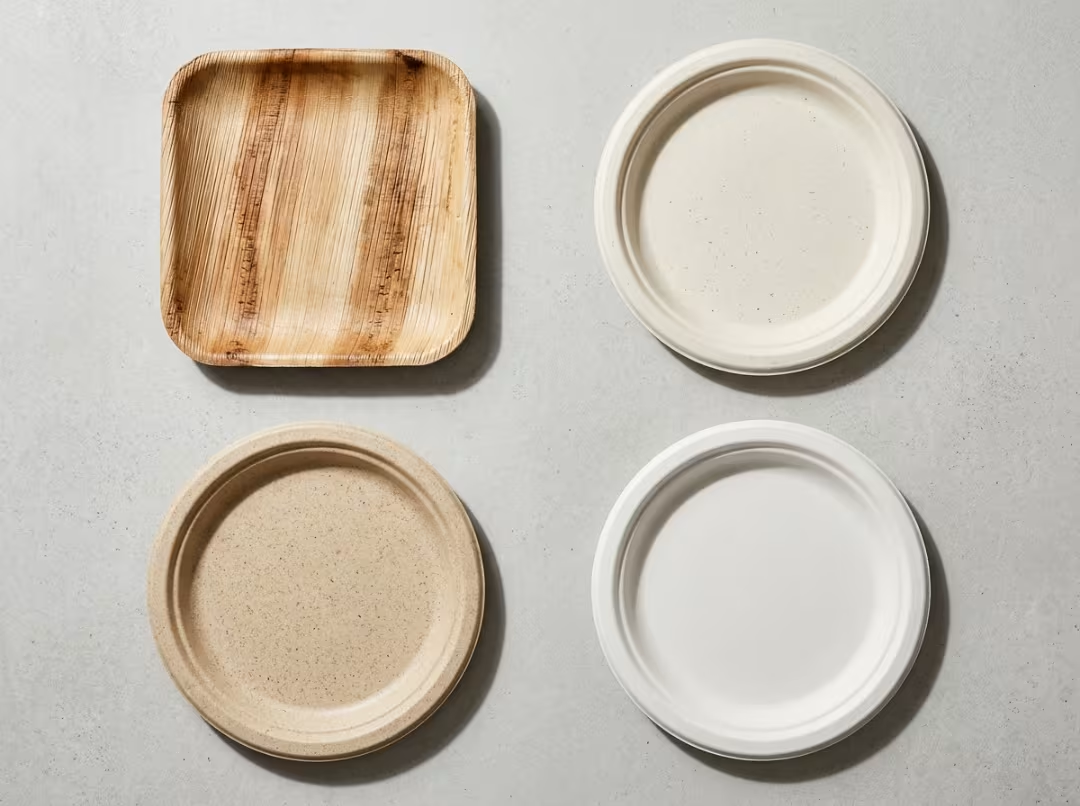
Bagasse is made from sugarcane fiber left over after juice extraction. It’s sturdy, naturally microwave-safe, and handles hot, greasy, and wet foods without much trouble. It’s also usually the most affordable compostable option at scale.
Choose bagasse if you’re serving hot entrees, sauces, or anything with oil, and you want reliable performance without a premium price tag.
Palm leaf: the premium natural option
Palm leaf plates are pressed from fallen areca palm leaves — no trees cut, no chemicals added. They have a rustic, upscale look that suits weddings and higher-end catering. They’re rigid and naturally water-resistant, but less ideal for extremely hot or heavily sauced dishes over long service windows.
Choose palm leaf if presentation matters as much as function, and your menu skews toward drier or room-temperature items.

Wheat straw and bamboo: the middle ground
Wheat straw and bamboo fiber plates split the difference between bagasse’s durability and palm leaf’s aesthetics. They handle moderate heat and moisture well and offer a clean, neutral look that works across most event types.
PLA-lined paper: the aesthetic trap
PLA (polylactic acid) is a corn-based bioplastic often used to line paper plates for extra moisture resistance. It looks and feels closer to conventional plasticware. But PLA requires industrial composting conditions to break down — it will not decompose in a home bin, and in a landfill it behaves almost like regular plastic.
Skip PLA-lined products unless you have confirmed access to industrial composting. Otherwise, you’re paying for appearance, not sustainability.
How these materials perform under heat and moisture
|
Material |
Heat resistance |
Moisture/grease resistance |
Best for |
|---|---|---|---|
|
Bagasse |
High |
High |
Hot entrees, sauces, greasy foods |
|
Palm leaf |
Moderate |
Moderate |
Dry or room-temp premium presentations |
|
Wheat straw/bamboo |
Moderate-High |
Moderate |
General-purpose event catering |
|
PLA-lined paper |
Low-Moderate |
High |
Cold or dry foods, where composting is confirmed |
Matching the plate to your menu and your disposal reality
Start with the food, not the material. A barbecue buffet with ribs and sauce needs bagasse’s grease resistance. A dessert table or cocktail hour with light bites can run comfortably on palm leaf. Buffet-style events with mixed hot and cold dishes usually do best with wheat straw or bamboo as a compromise.
Then check disposal. Call your venue or waste hauler and ask directly: is there industrial composting on-site or through a contracted service? If the answer is no, PLA-lined products are off the table entirely, no exceptions.
Common buying mistakes that waste money and undercut sustainability goals
- Buying PLA-lined plates with no composting plan. Without industrial infrastructure, these end up in landfill — no different from plastic, at a higher cost.
- Assuming “compostable” means “home compostable.” Most commercial-grade products need industrial heat. Check the certification, not the marketing copy.
- Choosing rigidity based on price alone. Thin, cheap plates fail under wet or heavy food, leading to spills, reorders, and a worse guest experience.
- Skipping bulk sample testing. A plate that performs fine for ten guests can buckle at scale under real service conditions. Test before you commit to a large order.
Each of these mistakes shares a root cause: buying the label instead of the material.
Questions to ask before placing a bulk order
Don’t take a spec sheet at face value. Ask suppliers directly:
- Is this product BPI-certified or ASTM D6400-certified? If neither, treat sustainability claims with skepticism.
- Does it require industrial composting, or will it break down in a lower-heat environment? This determines whether the product fits your disposal setup.
- Can you provide third-party lab test results for grease and moisture resistance? Marketing claims aren’t proof.
- What’s the minimum order for a sample batch? Test under real event conditions before buying pallets.
- Where is it manufactured, and what’s the supply chain lead time? This affects both cost and delivery reliability for time-sensitive events.
Suppliers who answer all five without hesitation are worth ordering from. Vague answers are a red flag.
What to do if industrial composting isn’t available
This is the question that determines whether your purchase means anything.
If there’s no industrial composting access, PLA-lined plates are the wrong choice — full stop. They’ll behave like plastic in a landfill.
Bagasse and palm leaf are the better fallback. Both break down more readily than PLA-lined paper, even without industrial heat, though results still vary by local conditions. Neither is a substitute for confirmed access to composting, but neither carries PLA’s outright dependency on it either.
The honest move: if you can’t verify a disposal path, don’t market the event as “zero-waste” or “fully compostable.” Say what’s true — you’re using lower-impact materials — and skip the claims you can’t back up.
FAQ
Are compostable plates worth the extra cost?
Only if you have a disposal path that lets them actually compost. Without industrial or confirmed compost access, you’re paying more for materials that end up in the same landfill as plastic.
Can I put compostable plates in my home compost bin?
Some can. Bagasse and palm leaf often break down in lower-heat home systems, though slower than in industrial facilities. PLA-lined products generally need industrial heat and won’t decompose reliably at home.
What’s the difference between biodegradable and compostable?
Biodegradable means a material will break down eventually, with no defined timeline or standard. Compostable means it breaks down into non-toxic material within a specific timeframe under defined conditions, verified by standards like ASTM D6400.
Which compostable plate is best for hot, greasy food?
Bagasse. It has the highest combined heat and grease resistance of the common options.
What’s the biggest mistake buyers make with compostable plates?
Buying based on certification alone, without confirming that a composting facility exists to actually process the material.
The bottom line: Match material to menu, confirm your disposal path before you order, and skip PLA-lined products unless industrial composting is guaranteed. Everything else is secondary.