



Packaging decisions carry operational and commercial consequences that go well beyond appearances. Businesses re-evaluating their packaging mix are doing so under two distinct pressures: tightening regulation and shifting consumer expectations on one side, and internal cost and logistics rationale on the other.
This guide explains how to assess whether kraft paper packaging fits your products and operations, how it compares against the alternatives, and how to make the transition without disrupting your workflows.
Why Businesses Are Switching to Kraft Paper Packaging
Regulatory pressure is the most concrete driver. The EU Single-Use Plastics Directive has progressively restricted categories of plastic packaging, and US state-level legislation — particularly in California, Washington, and New York — continues to narrow options for procurement teams buying in volume. These are active constraints, not future risks.
Consumer sentiment adds commercial weight to the regulatory case. Trivium Packaging found that over 70% of consumers say sustainable packaging influences their purchasing decisions; McKinsey data point in the same direction, especially among younger segments. The business consideration here isn’t values alignment — it’s category positioning and the risk of customer retention.
For some operations, the rationale is purely logistical. Kraft paper mailers weigh less than corrugated alternatives for non-fragile goods, which reduces dimensional weight charges in carrier pricing. On the returns side, paper is simpler to process than poly — no material separation, no sorting of mixed components. At high volumes, these efficiencies are measurable.
None of this makes kraft paper the automatic right choice. It explains why it has moved from a niche preference to a mainstream procurement conversation.
What Kraft Paper Packaging Actually Offers
Kraft paper’s physical properties — tensile strength, tear resistance, flexibility, and printability — determine where it works and where it doesn’t. Understanding them in practical terms is more useful than reviewing spec sheets alone.
Tensile strength and tear resistance vary significantly between virgin and recycled paper. Virgin kraft, produced from unbleached wood pulp, has higher burst strength and performs better under sustained load or contact with sharp edges. Recycled kraft trades some of that strength for better fiber-sourcing credentials, though quality consistency varies more across suppliers.
Flexibility makes kraft well-suited to wrapping applications and irregular product shapes. It conforms without cracking under normal handling — something corrugated doesn’t offer at the same weight.
Printability matters most for retail-facing packaging. Kraft paper accepts flexographic and digital printing reasonably well, but color reproduction differs from white substrates. Browns and earth tones print cleanly; bright colors and photographic imagery don’t. For brand-sensitive applications, this is a specification decision, not just an aesthetic preference.
Recyclability is the property most often overstated. Uncoated kraft paper is accepted in curbside programs across most US and EU markets. Coated, wax-treated, or laminated variants — added to improve moisture or grease resistance — are frequently excluded from standard streams. That distinction affects both your procurement specs and any external sustainability claims you make.
Where Kraft Paper Packaging Works Best
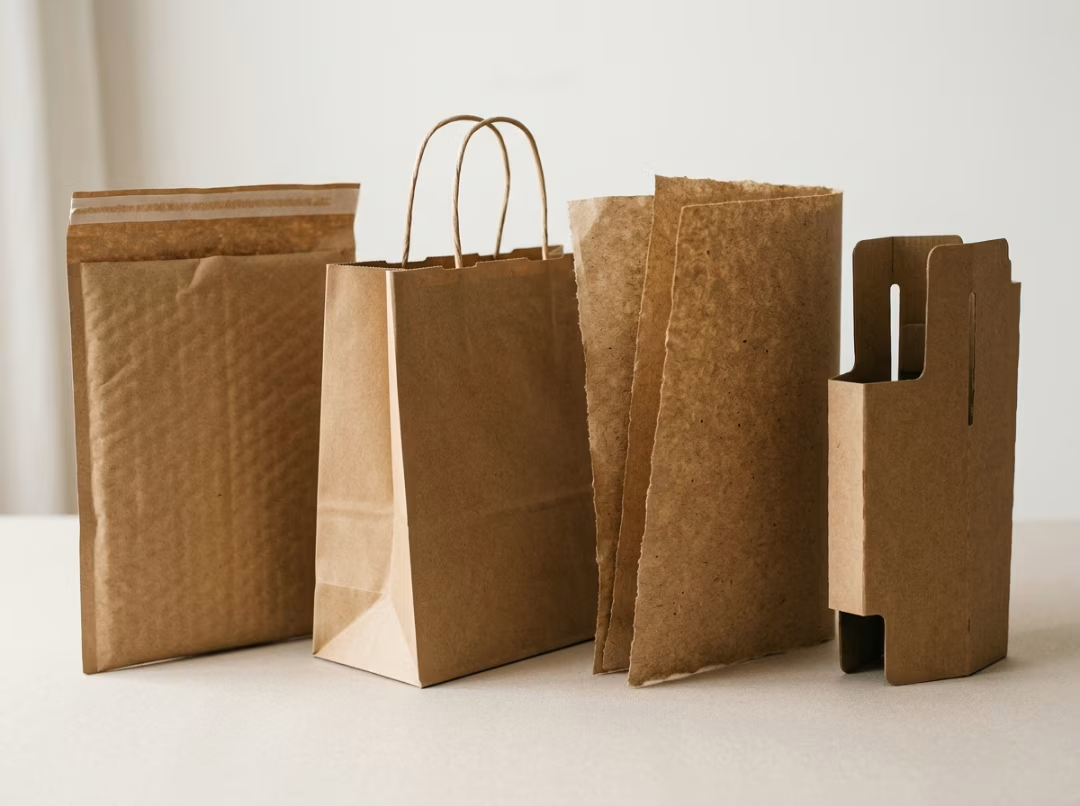
These are the applications where kraft paper delivers reliably, organized by function:
Retail bags and wrapping. Kraft handles weight well, accepts branding, and positions naturally in sustainable retail contexts. It’s a strong fit for fashion, gifting, and specialty food — any category where the carry or unboxing experience carries brand weight. Switching from glossy plastic bags to uncoated kraft mailers and tissue wrapping typically reduces material cost while improving perceived brand value, provided the products aren’t moisture-sensitive.
E-commerce mailers. Kraft mailers are cost-competitive with poly at mid-to-high order volumes and outperform them on recyclability. The constraint is moisture and product sensitivity. For non-fragile, non-moisture-sensitive goods — books, apparel, accessories, hardware components — kraft is a direct substitute for poly. For anything requiring a barrier layer, the trade-off calculus changes.
Void fill. This is the most common entry point for businesses moving away from plastic. Replacing bubble wrap or foam peanuts with kraft paper void fill carries minimal operational risk, and the performance gap for most transit applications is small. Testing is still advisable for fragile or high-value products, but this is a low-risk conversion category.
Boxes and sleeves. Kraft works well as a secondary packaging layer and in shelf-ready retail formats, typically combined with recycled corrugated. It adds surface protection and a usable branding surface without adding meaningful weight.
Industrial protective wrapping. Interleaving, surface protection for metal parts, and component wrapping are established kraft paper use cases with a long track record. Industrial grades are widely available, and the functional requirements — abrasion protection, surface preservation — are well-matched to what kraft paper offers.

Where Kraft Paper Is Not the Right Choice
Kraft paper performs poorly in these conditions:
High moisture environments. Even water-resistant grades degrade under sustained moisture exposure. Fresh produce, refrigerated shipping, and high-humidity transit routes all create conditions where standard kraft will fail structurally. Barrier-treated variants exist but introduce recyclability trade-offs that need to be assessed separately.
Oily or greasy products. Uncoated kraft absorbs oils and grease, leading to both structural and cosmetic failure. Barrier-coated options address this, but the coatings typically disqualify the packaging from curbside recycling.
Liquids. Kraft paper cannot serve as a primary liquid container without significant laminate layers — at which point the material loses most of its recyclability case.
Frozen goods. Barrier properties are insufficient for frozen food applications without laminates, for the same reasons.
Long-term barrier-sensitive storage. Products requiring airtight conditions or extended shelf life in challenging environments need foil or plastic barrier layers. Applying those to kraft creates a hybrid that carries the cost of both materials while compromising the recyclability of each.
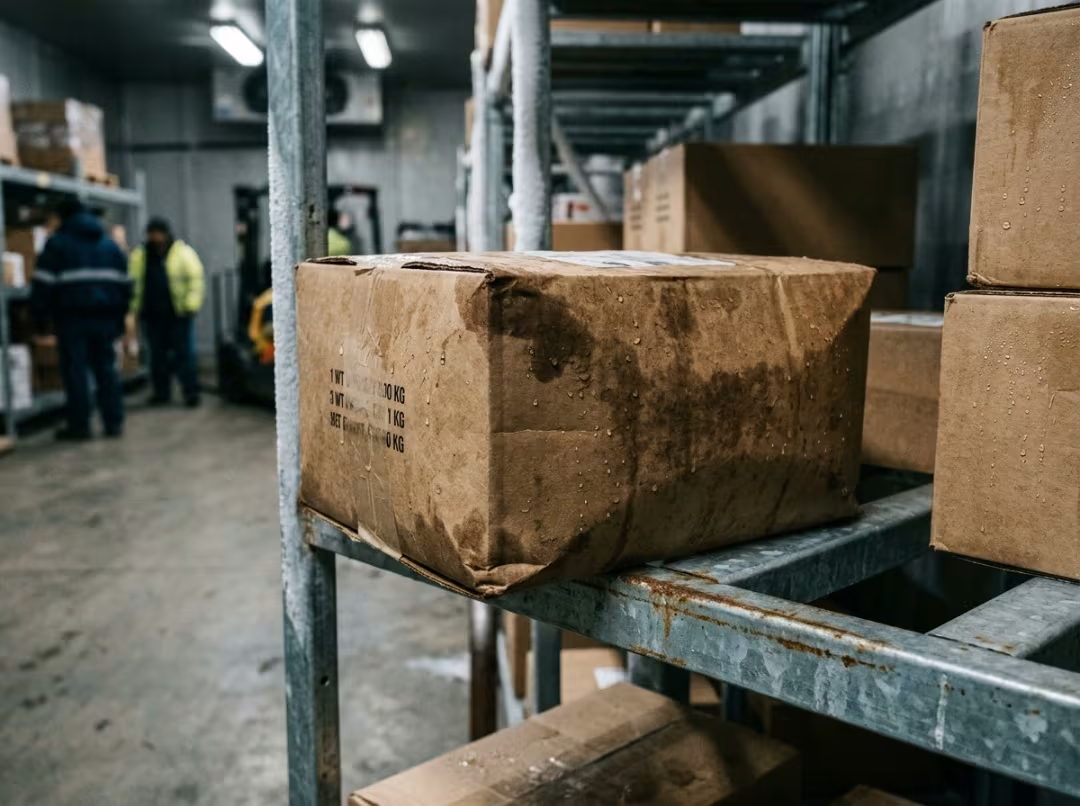
Businesses in these categories should evaluate barrier-coated paper composites, multi-layer flexible packaging, or other materials specced for the actual exposure conditions — rather than trying to fit kraft paper into applications it wasn’t built for.
Kraft Paper vs. Other Packaging Materials
The table below compares kraft paper against the most common alternatives across dimensions relevant to procurement and operations.
|
Dimension |
Kraft Paper |
Poly Mailers |
Corrugated |
Bubble Wrap |
Biodegradable Plastics |
|---|---|---|---|---|---|
|
Cost |
Mid |
Low |
Mid–High |
Low |
High |
|
Durability |
Good |
Very Good |
Excellent |
Good (padding) |
Moderate |
|
Moisture Resistance |
Low–Mid |
High |
Low |
High |
Low–Mid |
|
Recyclability |
High (curbside) |
Low |
High |
Low |
Variable (facility-dependent) |
|
Printability |
Good |
Moderate |
Excellent |
Poor |
Poor |
|
Shipping Weight |
Low |
Very Low |
Higher |
Low |
Low |
|
Brand Perception |
Premium/Sustainable |
Commodity |
Neutral |
Commodity |
Niche |
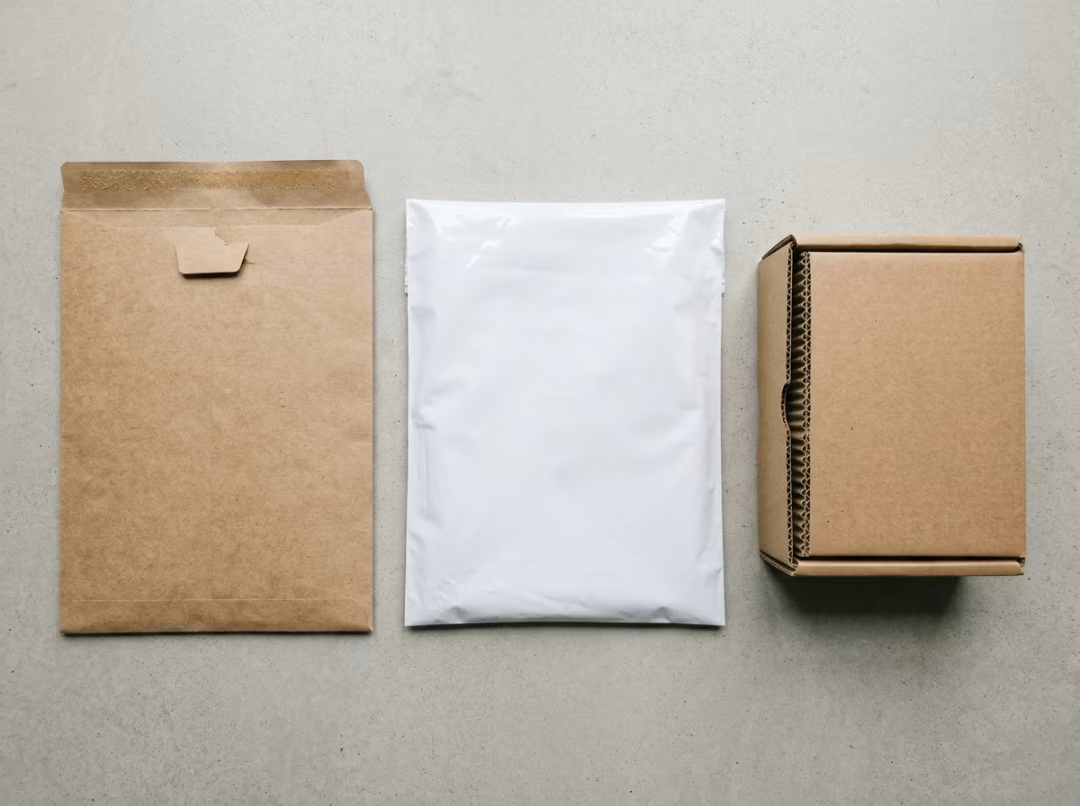
Poly mailers win on moisture resistance and per-unit cost, especially at volume. The critical gap is recyclability — most curbside programs don’t accept them, and drop-off infrastructure remains limited. For operations making recyclability claims to customers, poly mailers are increasingly difficult to justify.
Corrugated outperforms kraft on durability and printability but comes with higher material and dimensional weight costs. It’s the right call for heavy, fragile, or high-value products. For lighter, non-fragile goods, it’s often over-engineered.
Bubble wrap and plastic foam void fill are cost-competitive but face the same end-of-life problems as poly mailers. Void fill is one of the lowest-risk transitions to kraft — the performance gap is manageable for most applications, and the recycling story is significantly cleaner.
Biodegradable plastics (typically PLA-based) are widely misread. Most require industrial composting conditions to break down; standard curbside composting and landfill disposal both defeat the purpose. Unless customers have reliable access to industrial composting infrastructure, this category often underdelivers on its environmental premise while costing more than kraft paper.
The Sustainability Case — Without the Marketing Hype
Kraft paper’s sustainability argument rests on two verifiable properties: renewable fiber sourcing and end-of-life recyclability. Both hold up under scrutiny — with specific caveats.
Renewable fiber sourcing is real but not automatic. FSC (Forest Stewardship Council) and SFI (Sustainable Forestry Initiative) certifications are the recognized markers of responsibly managed timber sourcing. A supplier that cannot provide certification is a due diligence gap, not a minor detail — particularly as retailer documentation requirements continue to tighten.
Recyclability is high for uncoated kraft in most major markets, but drops sharply the moment coatings, laminates, or wax treatments are applied. Before making recyclability claims in any customer-facing communication, verify the specific variant with your supplier and check the acceptance criteria for collection programs in your primary markets.
Compostability deserves careful handling. Uncoated kraft is generally compostable in both home and industrial settings, but compostability is a material property — not a guarantee of outcome. Collection infrastructure for compostables remains patchy in most markets. Overstating this in sustainability communications creates credibility risk.
Carbon footprint is more complex than it looks. Virgin kraft paper production is energy-intensive. Recycled content reduces embodied carbon, but transport distances, packaging failure rates, and the carbon cost of damaged or returned goods all belong in a genuine lifecycle calculation. Treat carbon claims with proportionate care.
FSC and SFI certification is increasingly a condition of supply for major retail customers. For businesses selling through retail channels, treating certification as a supplier selection filter — not just a preference — has real commercial logic behind it.
How to Choose the Right Kraft Paper Packaging
Start with the Product
Define product requirements before evaluating any format. The relevant variables: weight and dimensions, fragility, moisture sensitivity, shelf life, and whether the product contains oils, chemicals, or other substances that interact with paper. These factors determine what the packaging must physically do — and they eliminate formats that can’t meet those requirements before cost or brand considerations enter the picture.
Match the Packaging Function
Determine whether the packaging is primary, secondary, or tertiary, and whether it needs to perform in transit, at retail, or both. A kraft sleeve serving as secondary packaging for a rigid product has different requirements from a kraft mailer that functions as the only protective layer in a courier network. Getting the function definition right before selecting a format is how you avoid misspecification.
Choose the Right Paper Grade and Format
Basis weight (gsm) is the primary variable controlling strength and cost. Lighter grades (70–90 gsm) suit tissue wrapping and light void fill; heavier grades (100–135 gsm and above) are appropriate for mailers, bags, and protective wrapping under transit stress.
Virgin versus recycled content affects burst strength and consistency of quality. For heavy, sharp-edged, or high-value products, virgin grades are the safer specification. Recycled grades are suited to lighter applications — void fill, secondary wrapping — where the strength differential matters less.
Coating versus no coating determines recyclability and moisture performance. If your application genuinely requires a coating, factor in what that does to the end-of-life story before committing.
Don’t rely on supplier data sheets alone. Request physical samples, run drop tests, and expose packaging to conditions representative of your actual supply chain before signing off on a specification.

Vet the Supplier Carefully
Request FSC or SFI certification documentation — not a general sustainability statement. Ask for recycled content percentages by weight. Review QC documentation and understand how the supplier manages quality variation, which matters most for recycled grades. Assess minimum order quantities against your volume requirements and consider whether single-source dependency creates supply risk.
How to Transition to Kraft Paper Packaging Without Disrupting Operations
Audit Your Current Packaging Mix
List active SKUs by packaging type and material. Apply the product requirements criteria above to identify realistic substitution candidates. Flag anything involving moisture sensitivity, oils, or barrier requirements — these are not candidates without significant additional specification work.
Prioritize by volume. High-volume SKUs justify the time and cost of a structured pilot. Low-volume, low-risk formats — void fill, for instance — can often convert without a formal pilot process.
Run Controlled Pilots
Select 2–3 SKUs for a structured pilot and define success criteria before you start: acceptable damage rate, customer complaint threshold, cost per unit versus current baseline, and dimensional weight impact where relevant. Keep pilots time-bounded — 4 to 8 weeks is typically enough to gather meaningful transit data. Document results systematically. A pilot that produces ambiguous data because success criteria weren’t set upfront delays the decision rather than informing it.
Transit Testing Before Scaling
Simulate real supply chain conditions before placing volume orders. Drop testing, stack load testing, and humidity exposure testing — where relevant to your routes — should be run on actual packaged products, not on the material in isolation. ISTA (International Safe Transit Association) protocols provide a widely recognized framework for e-commerce and freight applications.
For transitions from poly to kraft mailers specifically, pay close attention to seal integrity under handling stress and edge protection at corners and protrusions. These are the most common failure points.
Update SOPs and Train Staff
Packaging changeovers affect pick-and-pack workflows, storage requirements, and in some cases labeling and compliance documentation. Update standard operating procedures before rollout — not as a corrective response after problems surface.
Brief warehouse and operations staff on handling differences. Recycled kraft grades can behave differently under tension and in high-humidity storage conditions compared to poly or corrugated. Teams who understand this catch problems earlier.
Communicate the Change to Customers
For consumer-facing brands, a packaging change is an operational event that can also serve a communication purpose. A brief insert or order confirmation note covering what changed and why tends to generate positive response and reduce inbound queries. Keep the messaging factual.
For B2B shipments, notify key accounts in advance if the change affects their receiving, storage, or returns processes. That conversation is easier to have proactively than reactively.
Frequently Asked Questions
Is kraft paper packaging more expensive than plastic?
Per unit, kraft paper mailers are often comparable to or slightly more expensive than poly mailers, depending on order volume and paper grade. The gap narrows at scale. The more useful calculation includes full packaging performance cost: damaged goods from an under-spec material cost more than a modest per-unit increase, and carrier dimensional weight charges can widen or narrow the overall gap depending on format.
Is kraft paper recyclable curbside?
Uncoated kraft paper is accepted in most curbside programs in the US and EU. Coated, wax-treated, or laminated variants are typically excluded from standard streams. Before making recyclability claims in any customer-facing communication, verify the specific grade and coating status with your supplier and check acceptance criteria in your primary markets.
Is kraft paper compostable?
Uncoated kraft paper is generally compostable in both home and industrial conditions, but confirm this with your supplier for the specific product. Compostability is a material property — it doesn’t guarantee the packaging will actually be composted. Collection infrastructure for compostables remains limited in most markets, which makes this a secondary sustainability argument rather than a primary one.
How does kraft paper perform in humid or wet shipping conditions?
Poorly, without barrier treatment. Standard kraft loses structural integrity under sustained moisture exposure. If shipments regularly travel through high-humidity environments, refrigerated conditions, or carry risk of direct moisture contact, standard kraft grades are not suitable without additional barrier treatment — which, in turn, affects recyclability. In those cases, evaluate barrier-coated alternatives or a different material entirely.
Is virgin kraft paper significantly stronger than recycled?
Yes. Virgin kraft delivers higher burst strength and tear resistance than recycled grades, due to longer, more intact fiber chains. For heavy products, sharp-edged items, or applications where packaging failure carries high cost consequences, virgin grades are the safer specification. Recycled grades are appropriate for lighter applications — void fill, secondary wrapping, lighter mailers — where the strength difference is less operationally significant.
What certifications matter when sourcing kraft paper packaging?
FSC (Forest Stewardship Council) and SFI (Sustainable Forestry Initiative) are the primary certifications for responsible fiber sourcing and are increasingly required by major retail customers as a supply chain condition. For recyclability claims, request written documentation from your supplier rather than relying on marketing language. Ask specifically for recycled content percentage by weight and the recyclability status of any coatings or adhesives in the finished product.
Making the Decision
Kraft paper packaging is a strong fit for a defined range of applications and a poor fit for others. The difference comes down to product requirements and packaging function — not sustainability intent. Specifying it correctly, in the right applications, with proper supplier documentation, produces a durable outcome. Choosing it primarily because it looks sustainable — without the underlying specification work — tends to produce operational problems and credibility risk in roughly equal measure.
Four concrete steps for operations and procurement teams:
- Audit your current packaging mix and identify realistic substitution candidates based on product requirements
- Run a structured pilot on 2–3 high-volume SKUs with clearly defined success criteria before committing to a full rollout
- Complete transit testing against ISTA protocols before placing volume orders
- Vet suppliers on FSC or SFI certification and recycled content documentation before signing contracts
Switching packaging materials is an operational decision as much as a sustainability one. Getting the sequence right — requirements first, formats second, suppliers third — consistently reduces risk and produces better outcomes than working in the opposite direction.